GOAT CHEESE GNOCCHI

If you ever wanted to make pasta by hand but were too afraid to try, let me introduce you to gnocchi.  It’s a pillow-shaped pasta that the most timid cook can make without having to resort to a YouTube video.  The first step is to examine how different it is from flat pasta noodles.

The pasta we now buy dried and boxed was originally the preserve of live-in Italian nonnas who spent their waking hours mixing and rolling out dough with a slender tapered rolling pin.  These grandmothers knew how to wield this pin, modifying the pressure with each pass to create an impossibly thin sheet of dough which they then casually folded like a freshly laundered sheet and cut it into thin strips.  I’ve watched this process, and it is amazing.
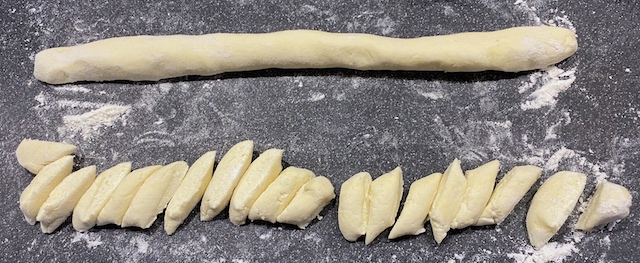
Less well known is the dumpling-shaped pasta known as gnocchi.  Mashed potatoes replace much of the flour in this dough making it firm enough to roll into logs like cookie dough and cut into into individual pieces.  The soft malleable gnocchi can take on any number of shapes from round, to oblong, to furrowed and stamped.   You can purchase a wooden board to imprint the pasta if you don't have a nonna handy.

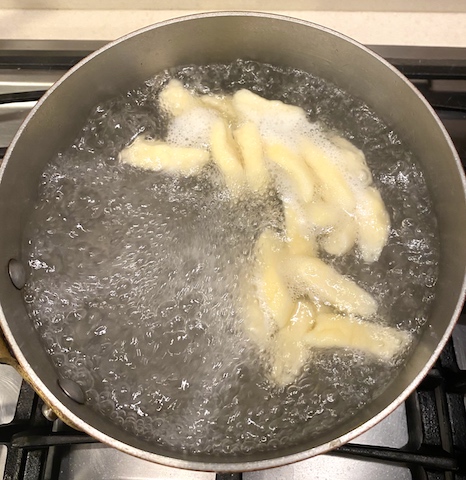
Today’s featured recipe is yet another, easier and unique gnocchi, called the gnudi, from the kitchen of Chef Sarah Stegner of Prairie Grass Cafe in Northbrook, IL.  In a recent Zoom session Sarah demonstrated her recipe that replaces mashed potatoes with artisan goat cheese from Judy Shad of Capriole in Greenville, IN.  Sarah blended goat cheese with flour, grated Parmesan and an egg in a stand mixer, but stirring the ingredients together by hand works just as well.  The dough required just little extra flour on the work surface to roll out and cut into pieces.  Like all fresh pasta, the gnudi cooked in 2 minutes and rose to the surface to be skimmed off  I complete the whole process at home in less than half an hour.
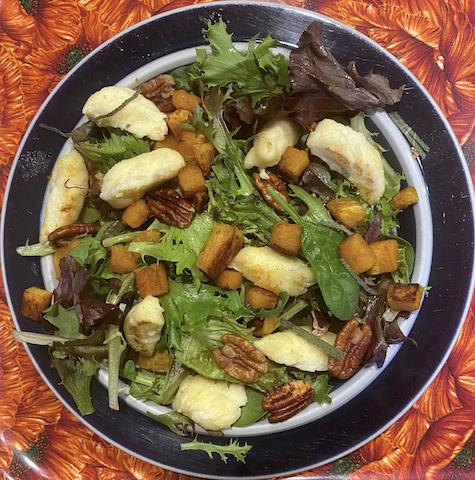
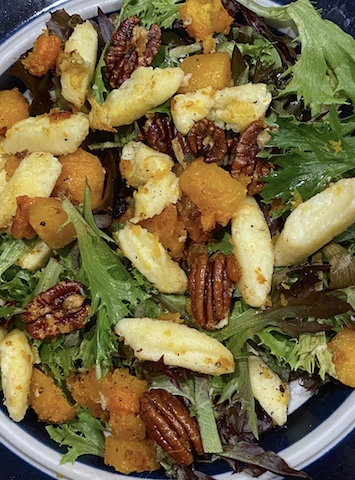
Gnocchi and gnudi are traditionally sauteed or baked in browned butter with fresh sage leaves.  Sarah substituted horseradish leaves and tossed the gnudi into a pan with browned butternut squash and pecan halves.  Once all the ingredients were hot and coated in butter, she squeezed on fresh lemon juice and scattered them over plates cover with salad greens.  Think tart, tender pasta, sweet, buttery squash and roasted pecans with a touch of lemon to accent the flavors and fresh crisp greens.

I can't think of a better combination for and early Fall meal. PS. The gnudi freeze easily and are destined to become a year-round staple at my house. (see note below.)

 
GOAT CHEESE GNOCCHI WITH BUTTERNUT SQUASH AND PECANS

Pasta for 4 servings:

8 ounces (scant cup) Capriole goat cheese
1/2 cup all purpose flour
1/4 cup grated Parmesan or pecorino Romano cheese
1 large egg, beaten

Squash and Pecans:

4 tablespoons clarified butter or half butter, half vegetable oil
4 cups butternut squash, peeled and diced
3/4 cup pecan halves, toasted in a 350 degree oven for 10 minutes
1/4 cup sage leaves, thinly sliced
Juice of 1/2 lemon

Bring 4 quarts of lightly salted water to a boil in a large pan.

Pasta:  Blend together the goat cheese, flour and grated cheese.  Mix in the beaten egg to form a cohesive dough.  Transfer the dough to a floured work surface and divide into 4 pieces.  Roll each piece into a log 1/2" thick and cut them diagonally into bite-size pieces.  Drop the pieces of each log in boiling water and wait for them to rise to the surface, about 2 minutes.  Remove them with a slotted spoon to a sheet pan and repeat until all the pieces are cooked.

Squash and Pecans:  Saute the diced squash in the hot butter turning the pieces until they are cooked through and have begun to brown.  Add the pecans and sage leaf slices and continue cooking to heat them through. Add the gnudi and continue tossing the ingredients as the pasta reheats and browns lightly.  Squeeze on the lemon juice and divide the mixture among plates covered with fresh greens.

Additional Notes:

Freeze uncooked pasta pieces on an oiled baking sheet.  Slip them into a freezer bag.  Transfer them directly into boiling water from the freezer and cook until they rise to the surface.

Sarah sautes cooked gnudi in butter for her daughter who prefers them fried.  
GOING BIO IN PARIS

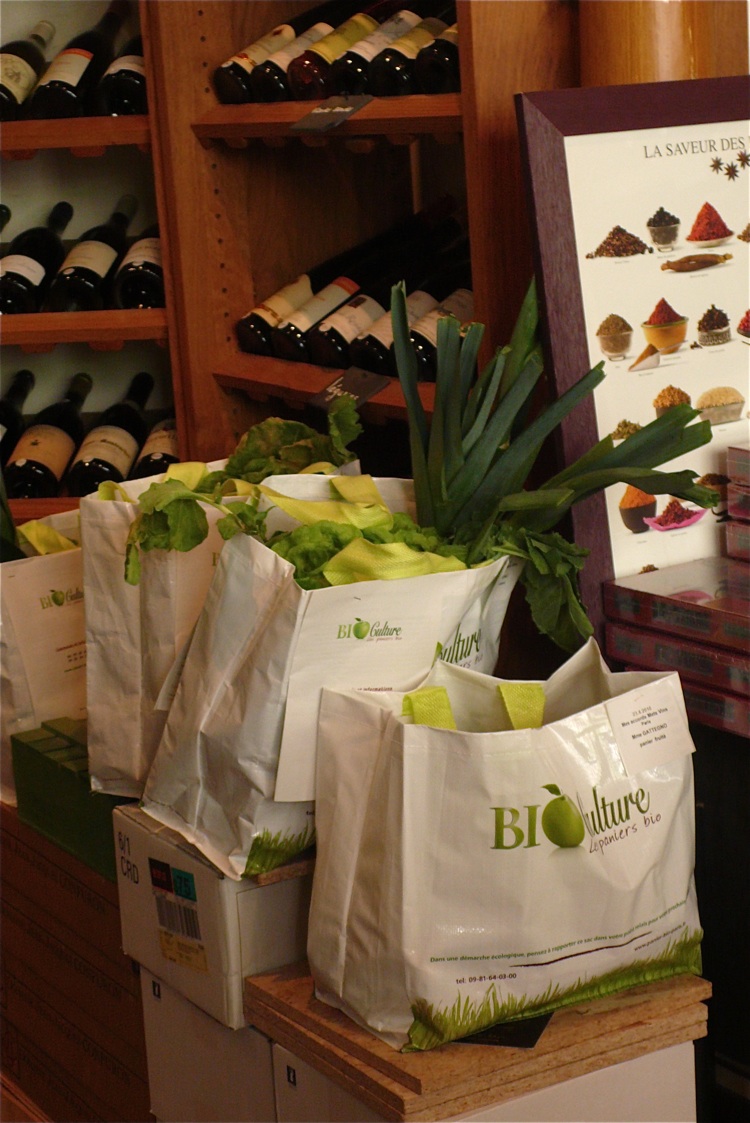
In Paris vegetable and fruit market stalls are everywhere.  Their colorful displays used to be so tempting.  Now, not so much.  After I took an early morning tour of Rungis, the city's enormous central market, it dawned on me that ingredients grown and delivered on this scale were not the same fruits and vegetables that make French cuisine great.  Where could I find them?

wine shop wine shp int

GROCERY STORY DIARY


aisle3

What began as a standard run to my local grocery store turned into a major frustration last week.  As I entered, everything appeared perfectly normal.  There were the usual bright lights, clean floors, icy air conditioning.  But when I started looking for items on my list, I discovered they were not where I expected to find them.  The aisles where I could have shopped blindfolded for the past 25 years had been completely reshuffled.

Tom, the store manager, was very sympathetic.  No, I wasn’t losing my mind.  Why the change?  Younger women customers had complained that the cleaning supplies were too close to the boxed foods across the aisle.  I’m not making this up!

GROCERY STORY DIARY PART 2


costcoentry
No sooner had I flashed my newly minted membership card at the door of the nearby Costco than I began to shrink.  Everything before me was larger than life - including my double-wide shopping cart!  The savings were big too: on enormous flat-screen monitors, the newest computers and digital cameras; even diamond jewelry. So what if I didn’t need any of it?  Like Alice in Wonderland, I was overwhelmed by the super-sized world of Costco.


HIDDEN TREASURE: STEWED RADISHES

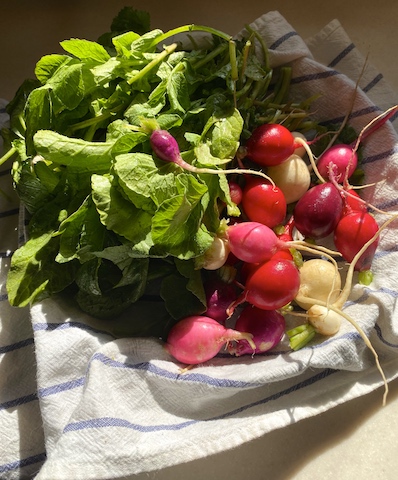
One of my favorite vegetable families is invisible to anyone taking a casual stroll in the garden.  Members grow enlarged, underground roots that gather a wealth of nutrients from the soil and turn amazing colors.  I eagerly reach for maroon carrots, yellow beets and purple potatoes when they appear in the market.  My most recent fetish has been for the little round ball the size of a shooter marble dressed in Easter egg colors.  The radish bears the Greek name for the entire family, radix.


Radishes are a nutritional powerhouse largely overlooked in American cooking.  Red radishes appear in a crudités basket at the cocktail hour where their signature hot, mustard flavor and crunchy texture provide a refreshing break between sips.   Even in an unpretentious role as a canapé, its black cousin  can inspire awe when served on a thickly buttered slice of country bread with a sprinkle of truffle salt.  But I digress.


Meanwhile above ground, radish greens offer a rich array of antioxidants as well as Vitamin C and Calcium.  Rather than throw them out, the French turn this humble green into substantial soup enriched with chicken stock, potatoes and cream.  In summer I prefer to cultivate the mild mustard taste of radish greens wilted with sauteed red onion and green pepper from the garden.


A  recipe for stewed radishes as a stand-alone vegetable is a rare find, but Jacques Pepin offers a quick technique that preserves the radish’s agreeable crunch and color while it reduces its heat.  This recipe takes less than five minutes cook, and combines steaming with stewing to produce a perfect al dente texture.

Not every bunch of supermarket bunch of radishes meets the freshness test for this recipe.  They may be a produce staple, but they are surprisingly sensitive to handling.  Avoid roots that have developed cracks and greens that show signs of wilting. Separate roots from greens once you get them home.  The greens in particular require rinsing in several changes of cold water to remove dirt or grit hiding among the stems.  I spin and towel them dry and prepare them in the next two days before the leaves lose their bright, green color and firmness.

Stewed 'Easter Egg' radishes (or red ones) and their greens make an attractive and unexpected side dish with grilled meat or fish.  In my next blog, this radish stew will garnish Crab Cakes served with a Jalapeño Cream Sauce.  Stay tuned.


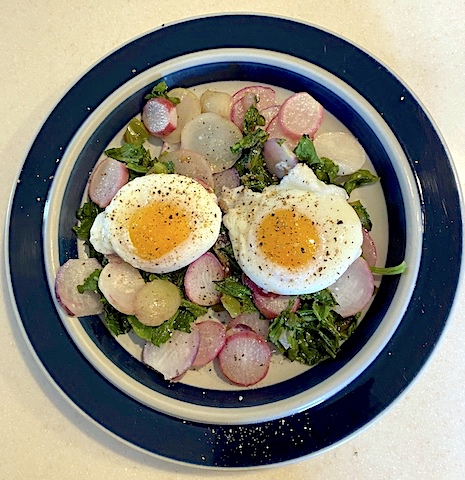
STEWED ‘EASTER EGG’ RADISHES WITH POACHED EGGS


Ingredients for 4 servings:


2 bunches ‘Easter Egg’ or Red radishes
1 tablespoon walnut, other nut oil or olive oil
2 tablespoons unsalted butter, divided
1 tablespoon water
1/8 teaspoon salt
1/3 cup diced red onion
1/3 cup diced green pepper
Greens from 2 bunches radishes, cut into 1” long strips
2 tablespoon vegetable broth or water
Salt and ground pepper, to taste
8 large eggs
Smoked Spanish paprika (optional)


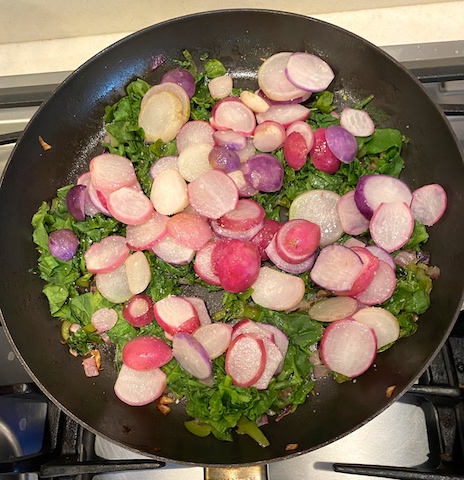
Radishes:  Trim off stem ends and tails from the radishes and slice slice them 3/4” thick.  Bring oil, butter and water to a simmer with salt in a large skillet.  Stir in the radish slices, cover the pan and cook for 2 minutes.  Uncover and continue cooking until the moisture has evaporated, another 3 minutes or so.  The radishes should be just tender.  Use a flat sieve to remove the radishes into a bowl and set aside.


Greens:  Melt the remaining tablespoon of butter in the skillet.  Sauté the onion and pepper pieces over medium heat until the onions soften.  Add in the radish green slices, broth or water and cover the pan for 2-3 minutes to wilt them.  Uncover the skillet and stir in the sliced radishes.  Cook another minute to evaporate any remaining liquid.  Season with salt and pepper.  Distribute the radishes on 4 plates.


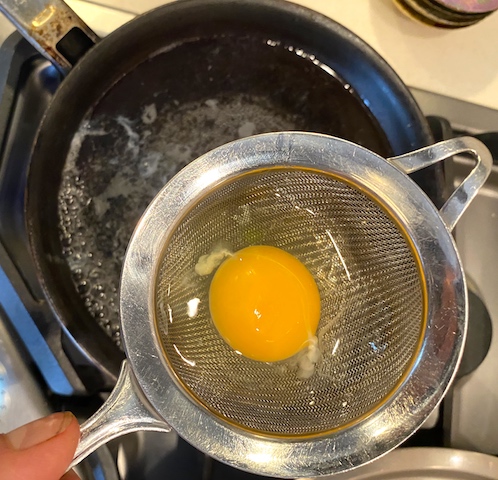
Eggs:  While radishes are cooking, bring a quart of water to a boil.  Rinse out the skillet and pour in enough water to come 2” up the side of the pan.   Break each egg into a small strainer over a bowl and let the loose albumen drain out.  Turn out each strained egg into the simmering water, and cook until the egg yolks are just set, about 3 minutes.  Lift out each egg with the flat sieve, and distribute two to a plate on the radishes.  Season with salt, pepper and optional paprika.  Serve immediately with sliced baguette or English muffins.