
CELEBRATING JUNETEENTH


It required an act of Congress to bring a centuries-old African "red drink" into the culinary spotlight.  This year, chilled glasses of this brilliant Sorrel Tea will be raised on June 19 to celebrate our new federal holiday, Juneteenth.   Forbes has taken note and dubbed this teathe biggest flavor of 2022” as if it had just arrived from abroad. Hiding in plain sight is a better description of a drink that has been commonplace in African American homes and restaurants for centuries.


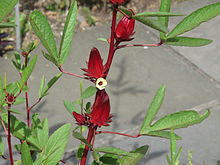
Sorrel is the name Jamaicans gave to the dried seed pods of a tropical hibiscus plant shared by West African slaves en route to the States in the 17th century. Bissap is its name in Senegal, where it may have originated, and where it is still prescribed to treat common ailments and to celebrate important occasions. As this drink grew popular in the islands it was embellished with cinnamon, nutmeg, ginger, bay leaf and sugar. Initially difficult to grow in the States, African Americans improvised red drinks with strawberries and cherries and red Kool-Aid. Every community devised their own recipe and name for the 'red drink'. In parts of the South, hibiscus punch is called "Florida Cranberry". Eventually Caribbean immigrants brought sorrel to the States and cultivated it here.


White Americans are familiar with the floral notes and bright red color of hibiscus in packaged teas and cocktail infusions, unaware of its storied past Curiosity led me to order a Bissap Sorbet at Moi Moi, an African restaurant off Farragut Square in Washington DC on a recent trip.   My friends and I were gobsmacked by its refreshing blend of sweet and tart flavors.  The sorbet was consumed more quickly than any other of the desserts, including a flourless chocolate cake. 


Sorrel Tea is the ideal drink with which to celebrate the first anniversary of Juneteenth, as the day, June 19, 1986, when Texas recognized the end of slavery, more than two years after Lincoln signed the Emancipation Proclamation.   It exemplifies the tenacity of a cultural tradition that spans continents and centuries.


SORREL DRINK 


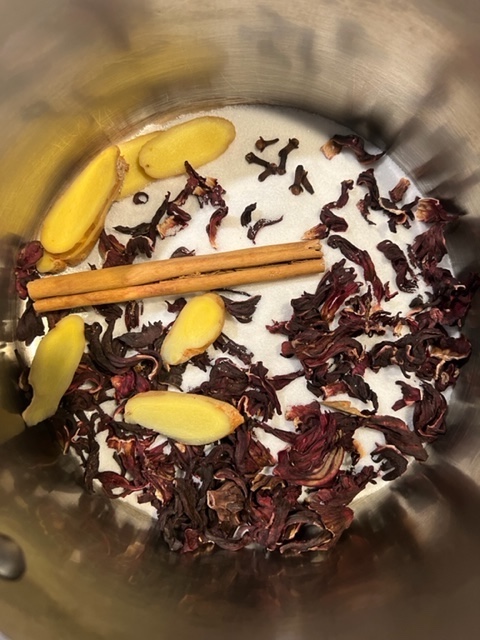
2 cups dried hibiscus/sorrel 

½ lemon 

2 cinnamon sticks 

1/3 cup fresh ginger root, chopped 

2 cloves 

1 cup sugar 

10 cups water 


Combine all the ingredients in a pot and bring to a boil. 

Simmer, uncovered, for 5 minutes. 

Cover and steep for 2 hours or overnight. 

Strain into containers and refrigerate. 


Chateau Life in Rural France

If you ever thought you might be even a little French, a visit with Claude and Jacques de Ste. Croix at Chateau Sannat will make you want to tear up your passport.   The Ste. Croixs hospitality is so generous you’re ready to become their long-lost cousin.  Chateau de Sannat  has the distinction of  being a registered historic landmark and a four star Table d’hote in the Limousin, an under-appreciated region in the heart of France.  It’s a treasure hiding in plain view, and over the past 15 years, I have brought numerous culinary tours here in summer, fall, even the winter months to discover chateau living in the French countryside.

Claude Monet's Stay-At-Home Chocolate Gateau


With the expectation that two lonely weeks of social isolation would be our last, I got out a bottle of bubbly, some party hats, and my favorite chocolate cake recipe.  This plan was dashed yesterday when the President ordered a continuation of the school and business shut-down for an additional month.  Well, at least we can eat cake.

Before we get to dessert, I want to update my best practices notes on grocery shopping.  There are still no state or national guidelines to protect customers and staff in the stores.  Safeguards vary considerably from store to store.  I was ‘carded’ at Whole Foods during the hour reserved for seniors.  (Reminded me of the ‘good old days’.) I have heard Mariano’s offers shoppers gloves to wear, and Trader Joe’s limits the number of shoppers in the store at any one time.   I know for a fact that Jewel Osco has not made any changes, and I complained. 

Person to person contact remains the biggest risk factor for contracting coronavirus.  Whole Foods has made noticeable changes in this regard.  In addition to instituting a special shopping time for at-risk customers, check-out lanes in the store are staggered and  shoppers are physically separated in waiting lines by improvised barriers.  More importantly, a screen of clear plastic the size of a motorcycle windshield separates the check-out worker from the customer.  This is proactive.  The employee behind the register is both exposed and the potential source of exposure to everyone in her line all day.  Grocery workers are beginning to complain.  My advice is to wear a mask if you have one and a pair of gloves when shopping


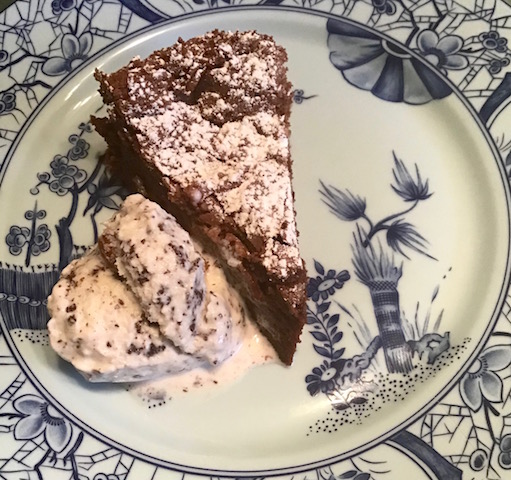
ChezM subscriber Jeff Abell sent me the link to a YouTube video entitled What did Claude Monet Eat in a Day?    He remembered my class at the Alliance Française in 2012 that featured recipes from Monet’s cooking notebook.  The chocolate cake we made that day has since become a favorite for us both. 

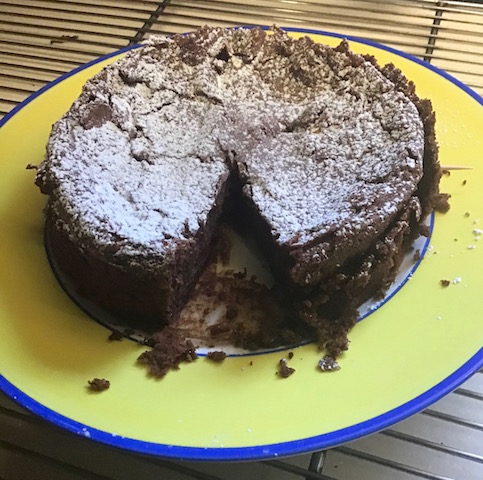
In true 19th century fashion, this gateau has only five ingredients.  Dark chocolate and butter are the major players followed by eggs and sugar, and there’s just a little flour added into the mix.  The resulting cake has the impact of a dark chocolate candy bar with the mouthfeel of a soufflé.

I have taken the liberty of doubling the recipe to accommodate 21st century dessert expectations.  The cake may fall a bit as it cools.  You can fill the center with whipped cream if it bothers you.

CHOCOLATE GATEAU

Ingredients for 8 to 10 servings:

4 ounces semisweet chocolate 

1/4 cup water

8 tablespoons (one stick) unsalted butter

4 large eggs at room temperature, separated

1 cup confectioners’ sugar

1/4 cup flour

Preheat the oven to 325 degrees.  Generously butter a 8” cake pan.  Line the bottom with parchment and butter it.

 Break up the chocolate bar into a glass bowl, add the water and microwave on full power for one minute.  Remove the bowl and stir until the mixture is smooth.  Whisk in the butter, one tablespoon at a time, until smooth.

Beat the egg yolks until they ribbon using an electric mixer.  Stir in the chocolate mixture, then sift on the sugar and flour and blend them in carefully.  Beat the egg whites to firm peaks and fold them into the batter in 3 installments.  Carefully pour the mixture into the prepared pan and bake for 30 - 40 minutes.  The fully baked cake will be firm in the center and begin to pull away from the sides of the pan.  A digital thermometer inserted in the center will register 200 degrees.  

Let the cake cool on a rack for 15 minutes.  Run a knife around the edge of the pan, and unmold onto a serving platter to cool completely.  Dust with confectioner's sugar before serving.


COFFEE RITUALS

espresso1

The most conspicuous ritual in Parisian life is celebrated every time someone orders a café.   The French coffee ceremony - the way a cup is ordered (Un cafe s’il vous plait), served and drunk – is probably unchanged since the first coffee house, Le Procope, opened here in 1689.

COMFORT FOOD FROM ALSACE

What you see before you may look like a misshapen pizza created by a crazed German. Take a closer look.  This is a splendid flatbread from Alsace, Tarte Flambée,  made of thin layers of fresh cheese, onion and bacon on a cracker crust.  It is comforting cold weather fare for supper and the perfect appetizer for a crowd over the holidays.  The best part?  You can assemble a tarte flambée in the time it takes to preheat the oven to 500 degrees.


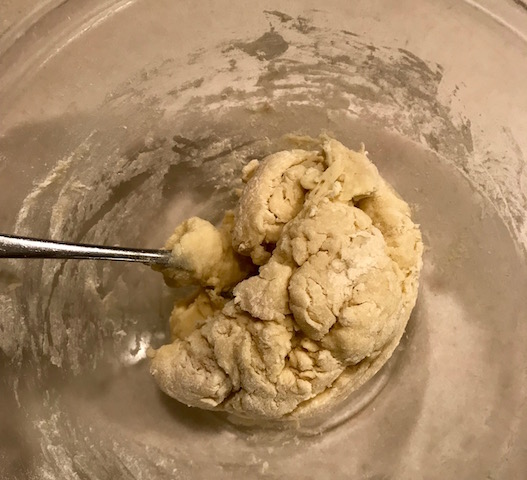
Step 1: Mix the dough in the traditional way:  blend dry ingredients, make a well for wet ingredients and stir wet together before incorporating them into the dry.  Use a fork to mix, a mixer isn’t necessary.  Add more flour by the tablespoon in the bowl until it no longer sticks to the sides.  Knead briefly on a lightly floured surface.  Let the dough rest while you prep the topping.
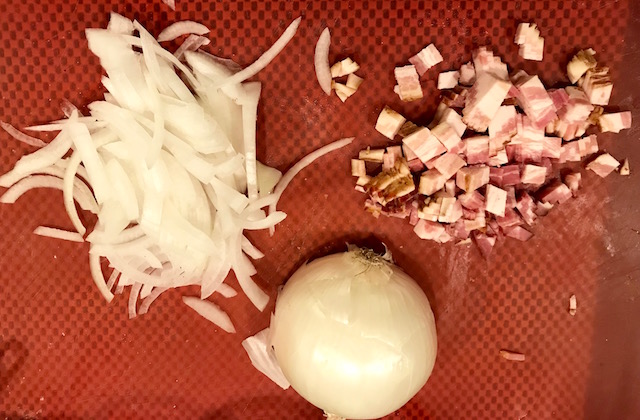
Step 2: Thinly slice a white onion and cut thick-cut bacon into small pieces. (ChezM tip: Lightly salt the onion slices with kosher salt to create a thin layer of moisture that will protect them from oxidizing and developing a sulfurous aroma.) 

Sept 3:  Blend together equal parts Neufchatel (cream cheese) and creme fraîche, then lightly seasoned with salt, white pepper and nutmeg.  This step is not illustrated, but you get the point. 
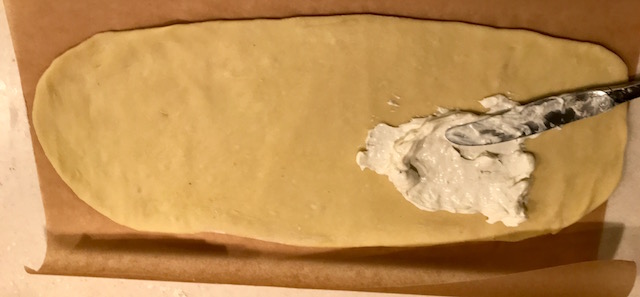
Step 4: Roll out the dough on a lightly floured work surface and slide it onto a sheet of parchment.   Cover the dough with cheese mixture to within one-half inch of the edge.  Scatter on the thinly sliced onions and bacon in an even layer. 
Step 5:  Bake for 7 - 10 minutes, until the edges of the dough are highly browned.  Cut into pieces with a pizza wheel, and serve with salad for supper, or cut into small squares to serve as an appetizer.  Pour a glass of semi-dry Alsatian wine, hard cider or beer to enjoy with your tart.


Backstories:  Some accounts say this tart was created to check the temperature of a baker’s wood burning oven before thermometers came into use.  The time it took for the thin crust to darken was a gauge of the oven’s heat.  Other sources report the tart was baked in the hot oven after the baking was finished.  In either case, the baker would slather it with heavy cream so as to make a tasty treat.  It was never baked until it actually flamed as the name implies. 
 ChezM Tips: For best results make sure your oven is at 500 degrees.  My favorite tool for this purpose is an infared thermometer that reflects the heat off the back of the oven.  Second best is a mercury thermometer that hangs from a rack in the middle of the oven.  Baking on a pizza stone is undoubtedly the best way to simulate the original recipe.

Link the recipe:TARTE FLAMBÉE Recipe