This is the moment when cooks can feel closest to nature. The bounty of freshly picked fruits and vegetables are piled high on tables at urban farmers market tables and rural farm stands. Some of us are harvesting from plants in our own backyard. Cooking ingredients only hours out of the ground makes for the best eating. It’s a difficult goal in our distracted lives, but worth the effort to try.
Few farmers markets specialize in sustainably raised and organic produce. For the past fifty years American agriculture has favored large corporate farms that serve as laundries for the federal government and the agrochemical industry. Organic farms account for less than half a percent of total acreage today, although many of them grow foods that form the basis of our diet. It's worth seeking them out for the added nutritional value and flavor they contain.
My persistent search for the taste of what grows naturally in America defaults to plants native to the western hemisphere: corn, peppers, squash and tomatoes. Native, in this case, is not the same as local. These crops were originally cultivated by the indigenous people of Mexico and Central America. Spanish explorers took them home as trophies, and a century later European settlers brought them to North America. Never mind, we embrace them as our own.
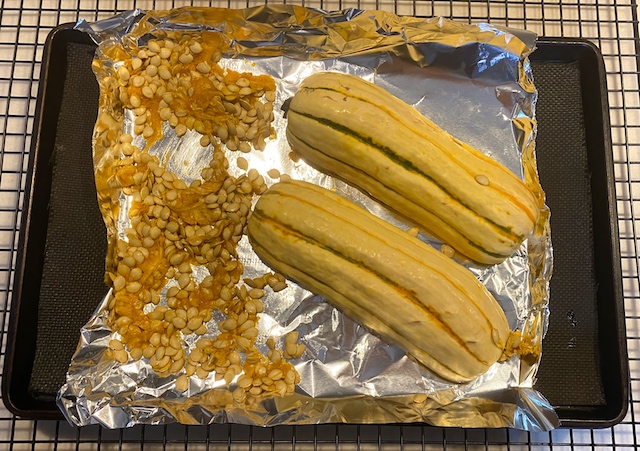
The specific inspiration for this Harvest Gratin was a cylindrical, cream-colored squash, scored with thin green and orange stripes. The arrival of the DELICATA is often overlooked among its larger, more flamboyant hard shell cousins. To me it's a sign of fall as surely as the first robin heralds Spring's arrival. It’s thin shell makes it easier to work with than most winter squash. I wash it but never peel it. And you don’t have to take my word alone. On more than one occasion the delicata was my cooking students' favorite in taste-tests with acorn, butternut, buttercup, turban and spaghetti squash.
This gratin is tests the old adage: ‘plants that grow together, go together’. How much affinity will these ingredients that originated in the wilds of Central America have for one another? How does that work, and does it matter as long as its delicious? You can decide for yourself, and enjoy!
AN AMERICAN HARVEST GRATIN: DELICATA SQUASH, TOMATOES, PEPPERS AND CORN
Ingredients:
1 pound delicata squash
1 tablespoon salad oil
1 pound fresh tomatoes, cored and thinly sliced
1 cup green bell pepper, diced
Kernels from 1 large ear of corn
2/3 cup homemade Tomato Sauce*
Kosher salt
1/2 cup fine Panko crumbs
1 tablespoon nut or vegetable oil
1 teaspoon smoked Spanish paprika
Preheat the oven to 350 degrees. Line a baking pan with aluminum foil.
Squash: Halve the squash and scrape the seeds out into a strainer. Place the squash halves cut side down on the foil. Rinse the seeds free of their fiber and pat them dry. Toss them with 1 teaspoon of oil and spread them out around the squash halves on the foil. Bake for 30 minutes.
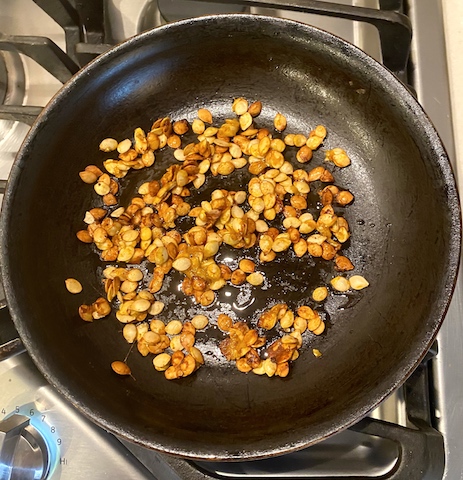
Remove and turn over the squash halves. When cool enough to handle, cut them in to 1/2” slices. Toast the seeds in 1 teaspoon of oil over medium heat until they are deep brown.
Assembly: Oil a 1 1/2 quart baking dish with the remaining teaspoon of oil. Make a layer with half of the tomato slices. Lightly salt. Follow with 1/2 of the diced peppers and 1/2 the corn kernels. Scatter on 1/3 of the toasted squash seeds and the slices of one the squash halves. Lightly salt again. Drizzle on 1/3 cup of Tomato Sauce. Repeat this layering ending with the squash seeds and a light coating of Panko crumbs. Cover the dish and bake for 45 minutes in the 350 oven.
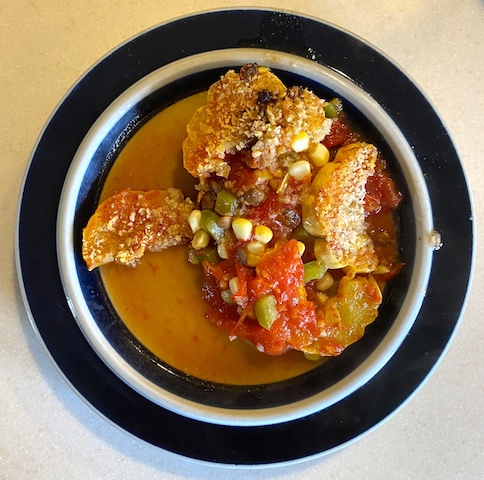
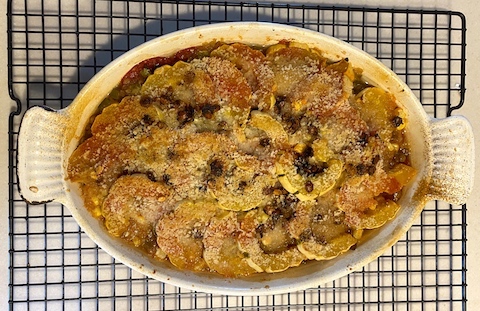
Finish: Remove the dish and lift off the foil. Drizzle on a remaining tablespoon of nut or vegetable oil. Return to the oven and turn the oven to 400 degrees. Bake for 15 - 20 minutes or until top is browned. Dust with paprika before serving.