"Touchez! Sentez! Goûtez!" Learning How to Taste


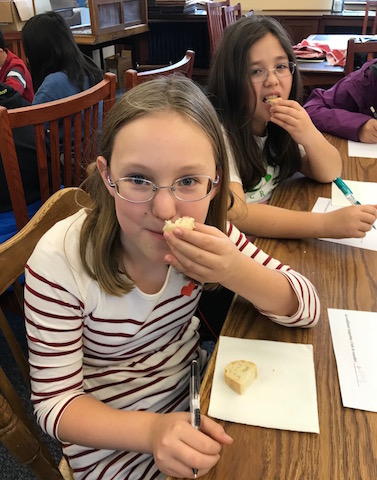
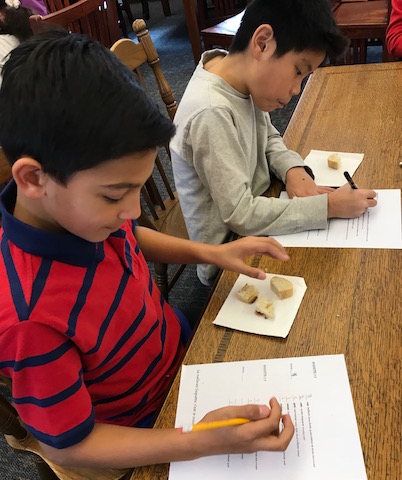
Ten-year-old Katie smelled the bread sample, thought for a moment, and wrote a number on the printed sheet. She could have been in science lab, except for the fact that her teacher Mme. Clivaz was speaking French. “Sentez! Touchez! Goutez!,“ These students were using their senses to test the quality of the French baguette.

Earlier that week the fifth graders at Avery Coonley School in suburban Downers Grove had watched a YouTube video interview with Djibril Bodian, the Montmartre baker who has won The Best Baguette in Paris competition twice in the last decade (https://www.youtube.com/watch?v=K7N.)  They watched as he handled each loaf and listened as he described how attention to detail, patience and sheer repetition made his baguette better than more than 100 others. How can there be that much variety in bread that consists simply of flour, water, salt and yeast?
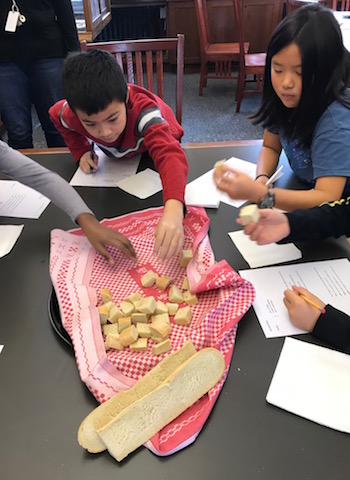


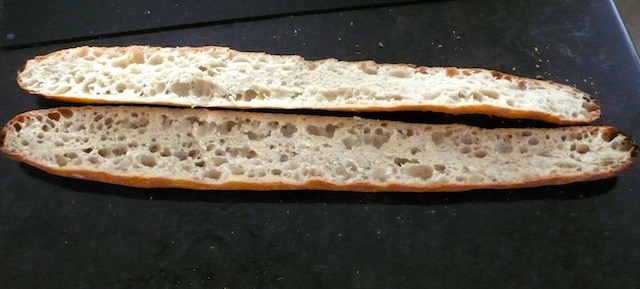
To prepare for a baguette tasting the students learned the French terms for their five senses as well as key words to describe each sense. By the time I arrived they were ready to judge four examples Mme. Clivaz and I had purchased. Together they observed the bread crusts for color and thickness (thin is better than thick). They listened for a cracking sound when the bread was broken. They all sniffed their samples for aroma, prodded, squeezed and tasted for texture and flavor. One loaf of each sample was halved lengthwise so they could examine its trous, the complex web of holes that indicates a perfectly risen loaf.


The students’ favorite baguette was one from Labrea Bakery (sold at Jewel/Osco) followed by La Fournette (1547 N. Wells, Chicago), Whole Foods and the Jewel bakery brand. Spoiler alert: The Labrea and La Fournette baguettes were made with a starter which gave them a flavor edge over those with dried yeast. The La Fournette baguette had a discernable tang which was less appealing to the young palates, although it had won a Best Baguette of Chicago competition at Hotel Sofitel in 2017.  Taste aside, the crusts and interiors of the Whole Foods and Jewel’s loaves did not measure up in quality to the other two.
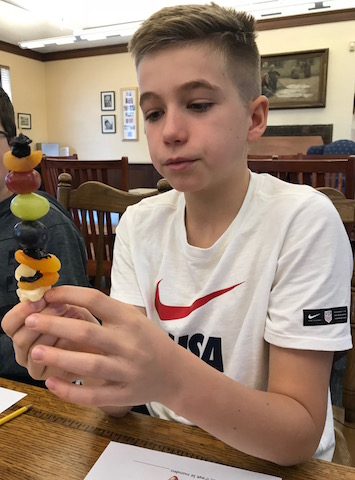


With their mission completed, the class relaxed and watched as classmate, Genvieve, demonstrated a dessert of colored grapes and dried fruits strung on a skewer (brochette de fruits). They quickly assembled colorful batons and carried the remaining baguette samples to lunch with them. Mme. Clivaz and I swept up the crumbs.

The Back Story: This novel experiment for fifth graders in suburban Chicaog is modeled on an annual event in France called La Semaine du Goût.. During a specified week in October, food and health professionals visit elementary classrooms to demonstrate their skills and speak of their passion for their calling. In this way the French reinforce their cultural values at a time when more industrial food products are available to tempt busy parents to take shortcuts.


A "Real" Food Adventure

My New Year's resolution is the unachievable kind.  I'm good with that; I intend to renew it.  It's my intention to move out of my comfort zone in the kitchen.  That zone has become too restrictive now that I am relying more on plants for protein.  I'm on a quest to broaden my approach to seasonings.  What better way to start than with a firsthand experience with one of the world's oldest vegetarian cuisines? 

So, I spent two weeks last month in India on a "real" food adventure with Intrepid Travel.* The trip exceeded my expectations every day.  Here are three quick luncheon scenarios to give you some idea of where our itinerary took us:  


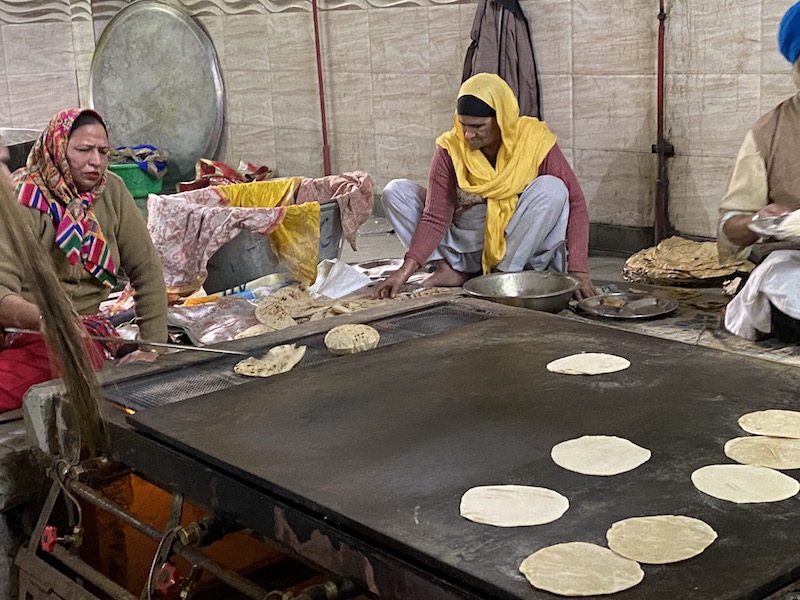
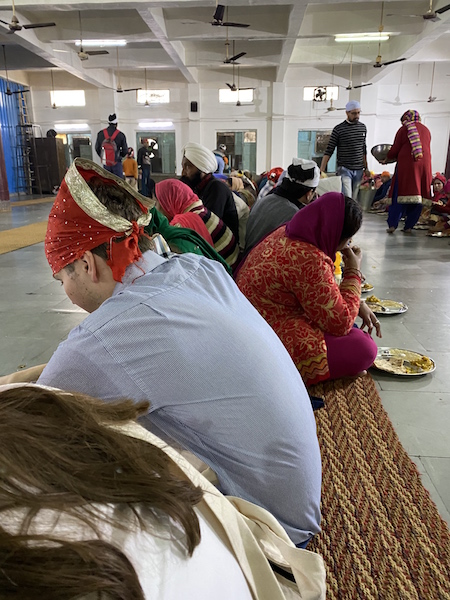
On our first full day in Delhi we joined hundreds of guests that were served lunch in a Sikh temple. First we removed our shoes, and sat with worshipers for a few minutes.  Our guide then led us on a quick tour of the adjacent kitchen containing a row of bubbling cauldrons and a griddle the size of a double bed.  Teams of volunteers were cleaning, cutting, cooking and serving lunch to a steady stream of diners all seated cross-legged on the floor in the temple’s large dining hall.  We joined them and received ladles-full of curry served with warm chapati.   


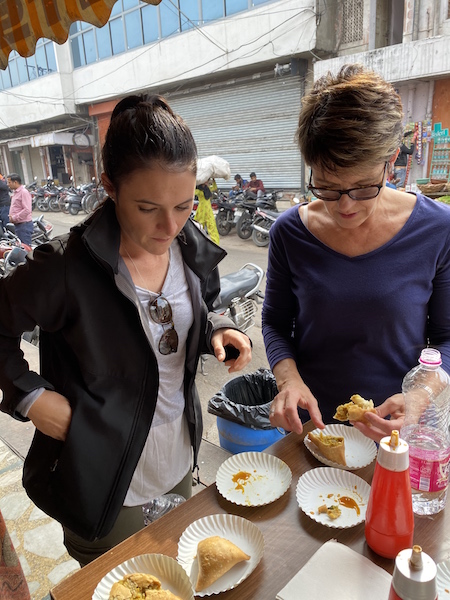
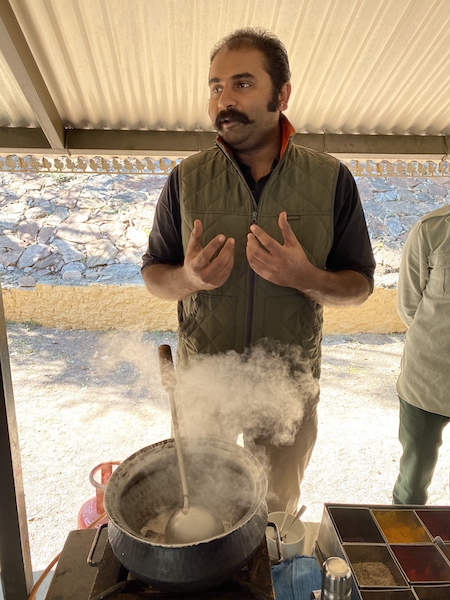
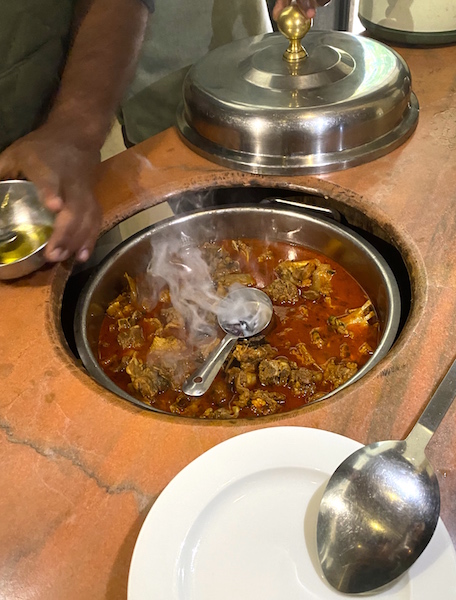
At lunchtime two days later we standing up around a table in an open market on the corner of a busy intersection in Jaipur hungrily snarfing up the street foods our guide brought us.  (The sweets were just as tasty.)  We had another memorable lunch three days later at the end of a morning Jeep safari through a village and surrounding farm land in rural Bijaipur.  The setting was a lake resort where the resident chef demonstrated an elegant smoked mutton (aka goat) curry.  

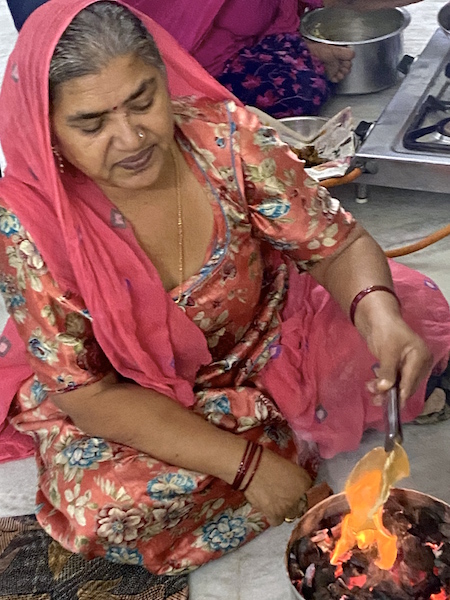
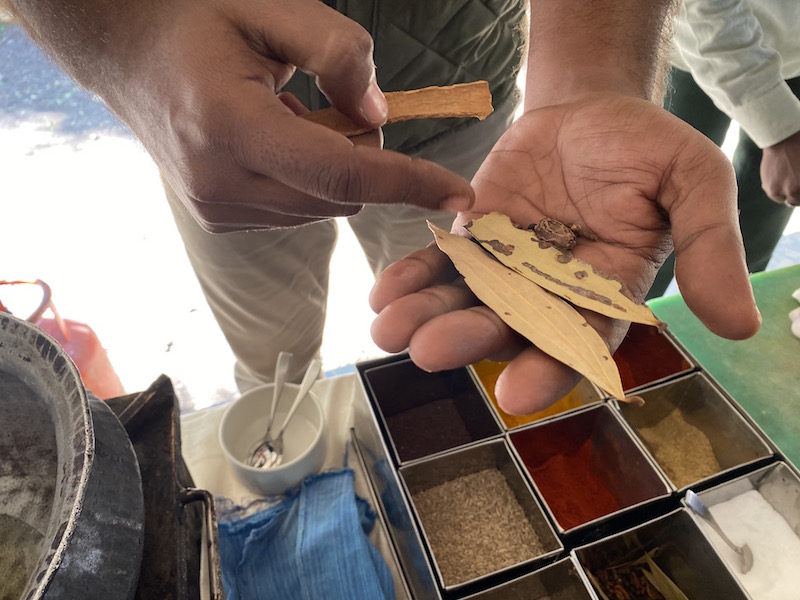
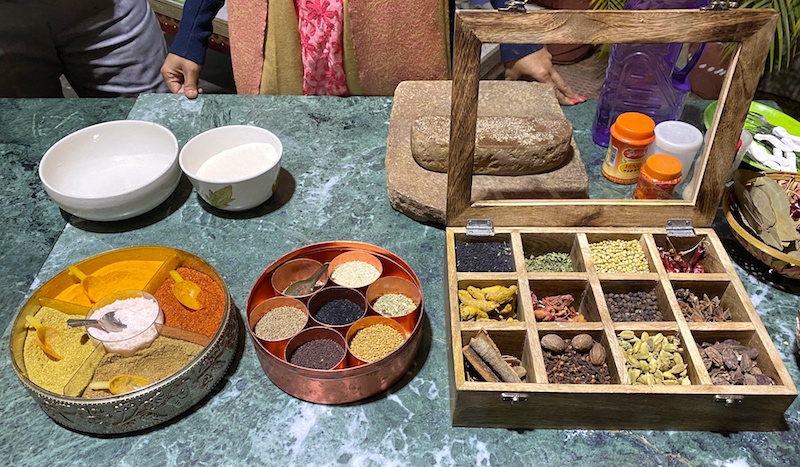
Soon after returning home, I made a pilgrimage to Chicago’s Little India which occupies a strip along Devon Ave on the city’s far Northside.  There I purchased the most important piece of equipment in a North India kitchen: a spice box.  Mine holds seven metal cups filled with seasonings essential to North India cooking: ground chili, cumin, garam masala, coriander and turmeric as well as green cardamom pods and cumin seeds.   (There is a photo of a complete spice collection at the top of the page.  It was taken in a private home home in Jaipur where we observed our hosts prepare a thali dinner.)

With my new spice box and recipes saved from the trip at my side, I am attempting to recreate the meals we prepared.  The results have been good enough, but something is always lost in translation.  The differences in equipment is not an issue.  The meals prepared for us were cooked on portable gas burners in heavy, handle-less round pots for which we have good replacements.  Sauces were puréed in blenders less modern than our own.  The most time-saving device I observed was a pressure cooker which was used to cook chickpeas and dals.

The basic techniques of North Indian cooking appear easy to learn. A curry begins with the addition of garam masala spices to what we would consider a copious amount of hot oil.  Chopped or sliced onions and a paste of garlic and fresh ginger follow.  Beans and vegetables go into the pot or are prepared on the side and in added later.  Small amounts of various powders and seeds are added at specific times, and this is the hard part of mastering Indian cooking.  Secrets are hiding in plain sight as each cook chooses which and how much of a seasoning to add.  Learning to use Indian spices is akin to learning a new language.

The flavors of India are slowly working their way into my cooking.  It has become my habit when making oatmeal to first drop garam masala spices into boiling water.   Mustard oil sometimes replaces olive oil in my salad dressings. My granddaughters are learning to roll out chapatis and paratha dough filled with chopped curry, fenugreek and mint leaves.  

This Saturday's knife skills class at the Alliance Francaise in Chicago will also benefit from my experience in India.  The class will make a Vegetarian Cassoulet with a garam masala of French seasonings.  Is that even possible?  Come join us to find out, and stay tuned to this blog!

**********

I highly recommend the Intrepid Travel’s tour called, India “Real” Food Adventure (HHZM)

Request Tour Leader: Ghanshyam Singh Rathore. 

If you have questions about travel to India, feel free to contact me at This email address is being protected from spambots. You need JavaScript enabled to view it..


A BURGER MAKE-OVER

Burger1


I’m happy to report my recent dining conversion from knife-and-fork wielder to a pick-it-up-in-your-hands fan of America’s iconic hamburger and fries. For so many years I have regarded the hamburger as an over-laden sandwich of so-so beef in a soggy bun that had to be wolfed down before it dripped on your clothes. I wrote off burgers as a comfort food people ate out of habit not for pure pleasure.

That all changed recentl when Jimmy Bastable, an avid cook who would make a great chef if quite his day job, described his favorite burger mixture of equal parts ground beef short ribs, brisket and chuck.  It sounded delicious.  Whole Foods Market stores grinds up a limited amount of this premium mix for customers on summer weekends. But, it is not a proprietary formula. Any butcher can prepare this ground meat, although you may have to commit to purchasing more than a pound or two.  Yes, it's more expensive than ground round steak, but it’s worth it.

A burger this delicious deserves to be eaten slowly on a bun firm enough to hold the contents, tender enough for a child to chew, yet dense enough to absorb meat juices. Store-bought hamburger buns are cloyingly sweet, soft as Kleenex and filled with additives not found in nature.  So, like the little red hen, I elected to make my own hamburger buns using a recipe adapted from the King Arthur Flour's website. I eliminated the sugar and added more butter.  (Recipe link)

Preparing fries to accompany this splendid burger was another challenge until I realized they didn’t have to be made with potatoes. Polenta fries are easy to make ahead and finish at the last minute.   Cooking the corn grits takes five minutes. Once it has cooled to a firm consistency in a bread pan, I cut it into half-inch-thick fries and brown them under the broiler while the burgers are grilling. (Recipe link)

A dinner plate  at our house is not complete without some greenery. My favorite quick salad this summer is a kale slaw made by tossing thinly sliced curly kale (stem removed), red bell pepper and scallions in a classic mustard vinaigrette (Recipe link).

I’ve finally arrived at a plate of hamburger and fries worth picking-up and savoring slowly at my summer table. Thanks, Jimmy!

A CREPE A DAY...

GEBfishing

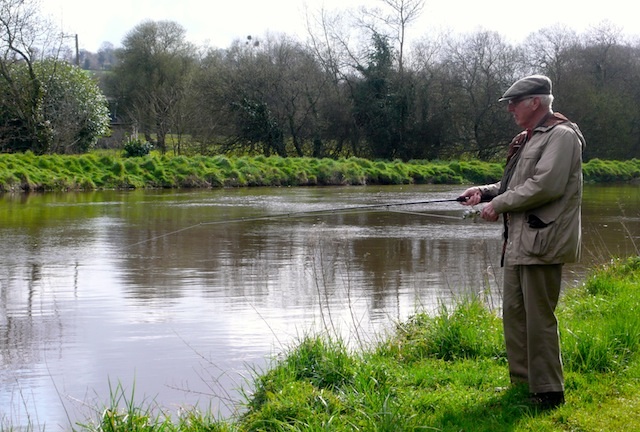
We headed for the backroads of Brittany in early April with dangerously high expectations of catching a salmon.  Traveling off the beaten track is has always appealed to us.  Early on we carried backpacks into the wilderness; these days we travel by car and sleep indoors.  As always, in anticipation of eating locally.

A GUIDE FOR SEAFOOD SHOPPERS


Wild salmon from the Copper River is as much a part of our culinary heritage as Thanksgiving turkey and a lot easier to prepare. Remains of grilled salmon were recently identified along the migratory landbridge from northeastern Asia.  Now, more than 11,000 years later, I wait for late May when robust young king, sockeye and coho begin their run from icy Alaskan streams to the ocean initiating a brief three months of salmon fishing in Pacific waters.  Why is cooking this fish so inspiring?

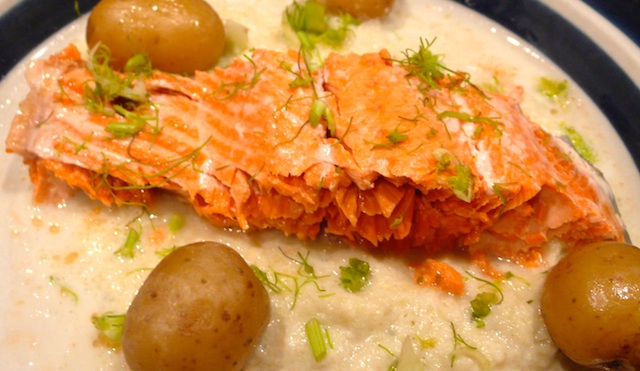
These salmon are lean, firm fleshed and a beautiful deep orange color from a diet of krill.  The meat roasts (as do all fish) in just 10 minutes per inch (measured at its thickest point) in a 425 F oven.  I remove it when white drops of collagen (fat) begin to dot the surface.  This fat contains the highly prized long-chain Omega-3 fatty acids.  It's a nutritional windfall.  (Forget outdated advice to cook fish until it flakes!)

The demand for salmon has exceeded supplies of wild stock for a generation, well before the American Heart Association issued its recommendation that we eat two servings of fish a week as a preventative measure.  Today farmed Atlantic salmon accounts for 70% of salmon in the marketplace.  It is raised in marine pen nets principally in Norway, Chile, Scotland, north Atlantic and Washington State.  


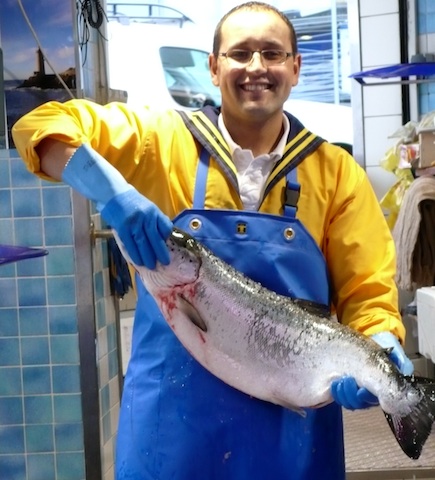
Look carefully, and you can distinguish the difference between farmed Atlantic and wild salmon when the two lie side-by-side on a seafood counter.  Farmed salmon appears paler in color, plump and soft-fleshed from its higher fat content.  The flavor of this salmon is mild with a richer mouth-feel and, occasionally, a musty aroma.  Two important selling points account for its popularity.  It offers consistently higher Omega- 3 levels and a price point considerably lower than its wild cousins. 

Aquaculture has been a big business since the 1980‘s but its risks to the environment have been slower to penetrate consumers’ consciousness.   Americans look for the lowest priced commodity rather than the highest quality when they shop for food.  Fortunately, the ecology of the world's oceans is an international priority.  In 1994 the World Wildlife Fund, USA initiated the first of eight Aquaculture Dialogues involving 2000 participants that over two decades has forged codes of standards for 12 species of seafood raised in confinement. Standards for salmon were concluded in 2012 .   


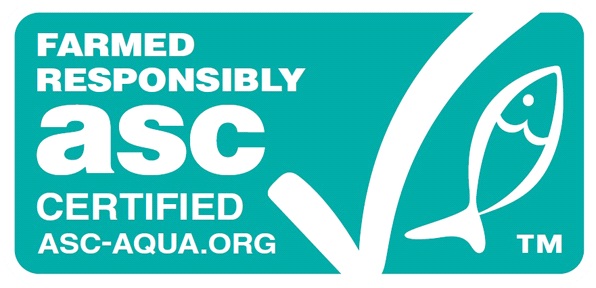
Enter the Aquaculture Stewardship Council, a non-profit international group formed in 2010 that offers certification to fisheries that meet the WWF Dialogues standards.  ASC has a sister certification Council with a similar looking label, the Marine Stewardship Council (MSC).  This consortium was formed in 1996 to certify wild fish stocks.  ASC and MSC are currently working together on certification standards for the next wave of aquaculture businesses: seaweed farms.

The ultimate way to shop for seafood is with the mobile app from the Monterey Bay Aquarium’s Seafood Watch.  The MBA focuses at the granular level looking at each seafood purchase as it impacts the health of the ocean.  The Watch relies on science based peer reviewed methods to evaluate wild stocks and fisheries . It ranks choices in one of three categories:  Best Buy, Good Alternative and Avoid.  Each rating includes the variety of fish, (in the case of salmon, whether it is  Chinook, Sockeye, Coho or Atlantic), how it is raised or how it was caught if it is wild, and where it originates.  The MBA maintains ties with producers, retailers and chefs; it has resources in the medical and scientific communities, and updates its listing every six months.


I recently gave my Seafood Watch mobile app a test drive.  I looked for an ASC logo next to the display of plump, glistening farmed salmon at my local Jewel-Osco (owned by Albertsons).   When the Jewel employee couldn't tell me anything about its origin, I asked to see the label from its shipping container.  This paper had an unconvincing small, black and white ASC icon in one corner.  Perhaps it was a sign of pre-certification? The name of the Chilean fishery was not one of those listed in the Seafood Watch guide. I decided to shop elsewhere.

On to Whole Foods where the choice was between a fresh farmed salmon at $10 per pound and pale, previously frozen Chinook salmon steaks at $30 a pound. The salesman (who happened to be the department manager) proudly told me that the farmed salmon came from Blue Circle Fisheries in Chile which is listed as a 'Good Alternative' on the Seafood Watch list.  He then pointed to the large blue ASC plaque behind him on the wall.  I placed my order.