I was among what a friend called 'the crazies' who traveled by air to visit family over the holidays. I left Chicago a day before the 24 hour Covid test went into effect and arrived in Montreal the afternoon the city closed all but essential businesses. With useless food guides in hand, I stepped out of the tourist office into a winter wonderland. The deserted streets in the Old Port quarter looked like a holiday movie set covered in lightly falling snow.
This much was clear. What I learned about Montreal in the coming week would be confined to walking its streets and visiting its food markets. That suited me just fine.
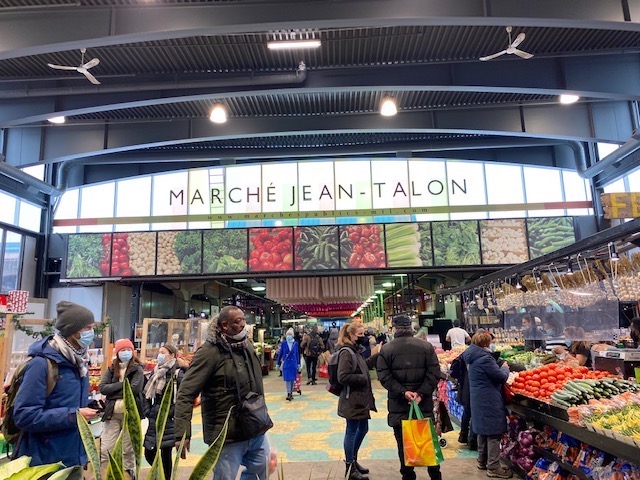
The Quebecois are as gourmand as Parisians when it come to the quality of their ingredients. Paris relies on a central market the size of Monaco for its ingredients. Montreal supports no fewer than twelve daily farmers’ markets. The largest, Marché Jean Talon, fills an entire block and can swell to 300 merchants in the summertime. The streets surrounding this covered market are packed with brick and mortar specialty shops and ethnic cafes. One corner is anchored by the government-run liquor store. Montreal’s Little Italy groceries are a five minute walk and were stocked with holiday delicacies the week of my visit.
Montreal, like Paris, began as an island community that grew exponentially, but the Montrealais can still experience the wilderness that their city displaced. Two-thirds of the province is still covered with boreal forest, a unique ecosystem owned and managed by the Canadian government. It’s spruce and birch trees absorb and repurpose carbon dioxide while providing year round hunting, fishing and vacation opportunities.
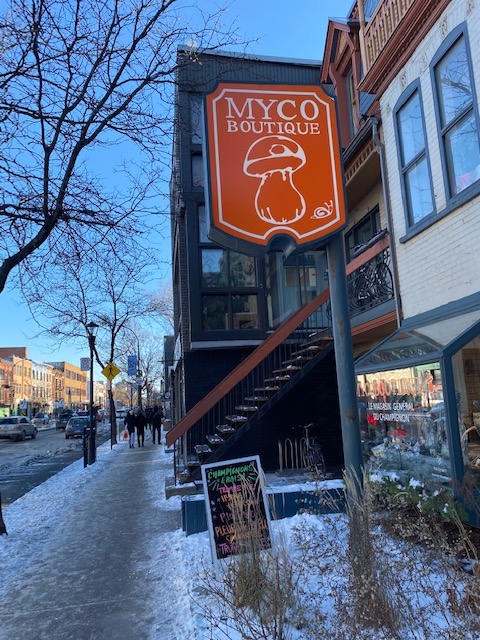
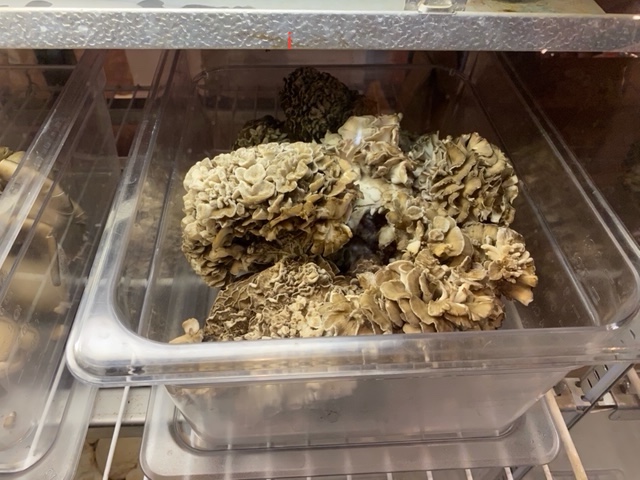
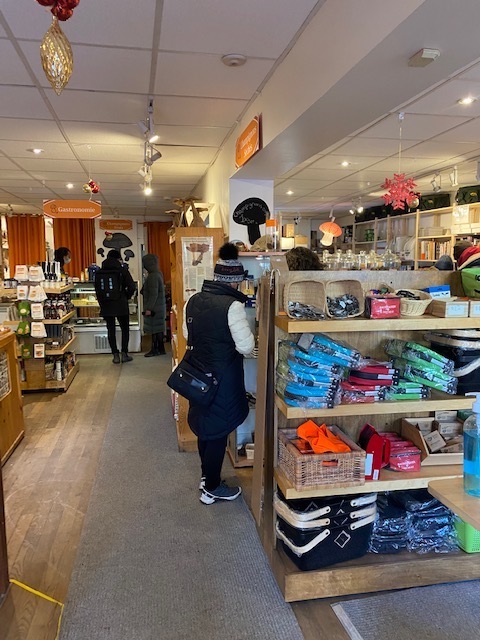
It’s no surprise then that Mycoboutique has sprouted in downtown Montreal. This small shop sells everything having to do with mushrooms including kits to grow mushrooms at home. A morning spent browsing in this shop will turn a confirmed carnivore into mushroom geek. Of course, there is a vendor of fresh mushrooms at Jean Talon market. As we purchased an oyster mushroom the size of a giant zucchini, the enthusiastic salesman instructed us to thinly slice and spread it on that evening’s pizza before it went in the oven. The results were delicious!
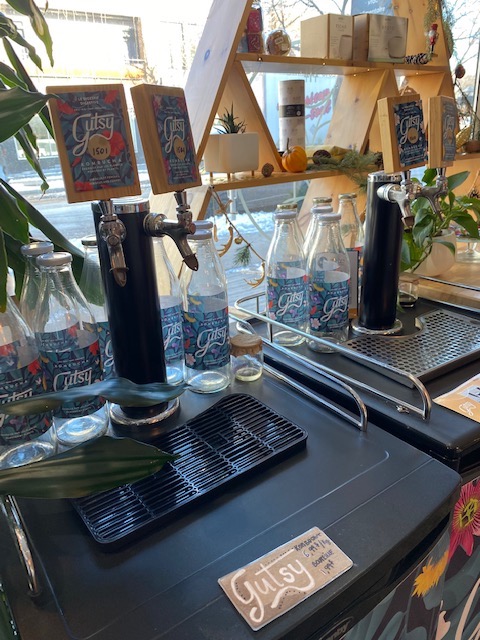
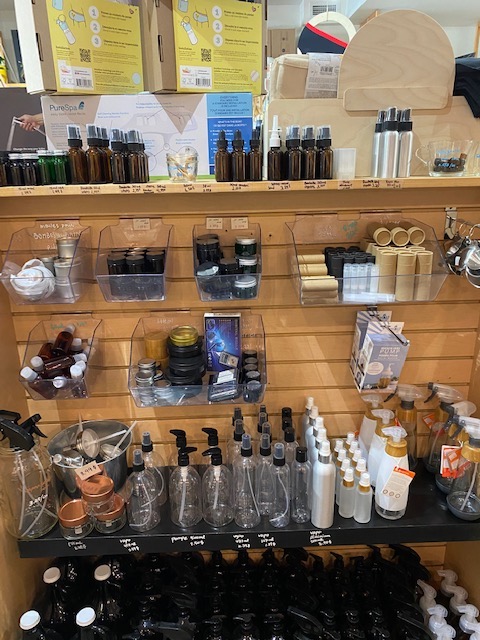
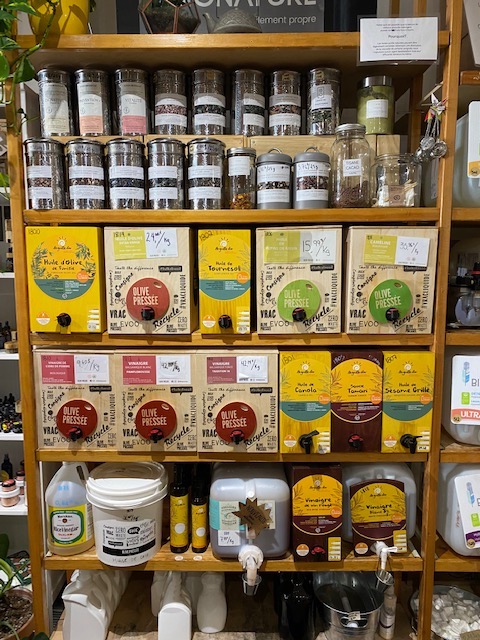
A growing number of small, no-waste (zero dechet) groceries is another example of Montreal’s eco-consciousness. My daughter gathered glass jars to fill during our visit to La Reserve Naturelle down the street from her home. This shop serves the neighborhood much as general store did in the frontier era. Shoppers fill their containers with cleaning supplies, kitchen staples, cosmetics and skincare liquids from bulk containers. Glass and reusable plastic containers are for sale to newcomers who arrive empty-handed. Where else could one find two flavors of kombucha on tap?
Just down the block from this progressive shop is a delightful strip of small storefronts that stretch the term ‘eclectic’ about as far as it can go. Among the predictable bookstores, cafes, even an upscale restaurant, is a building rented to the Universelle Church of Christ at ground level and a yoga studio with harnesses and straps hanging in the window upstairs. Male and female mannequins wearing X-rated lingerie fill two full-length showroom windows of Seductions across the street. At La Maison de Mademoiselle Dumpling, a few doors away, four Chinese cooks dressed in white stand around a table in the front window rolling and stuffing dumplings. Nearby, Boutique Medievale Dracolite will delight anyone ready for something completely different. Twelfth century home furnishings and an extensive period dress selection for the chivalrous nobleman and his wife are packed into two floors. One could walk out dressed and armed for an appearance in Game of Thrones.
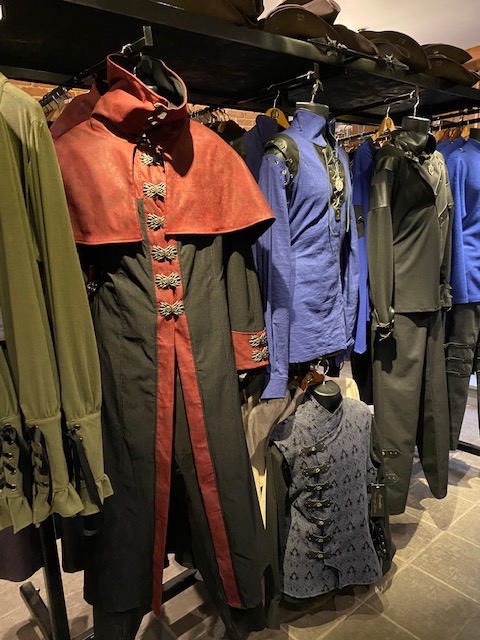
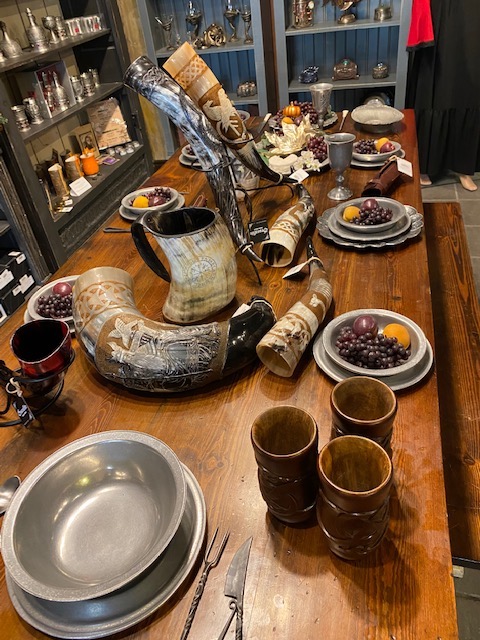
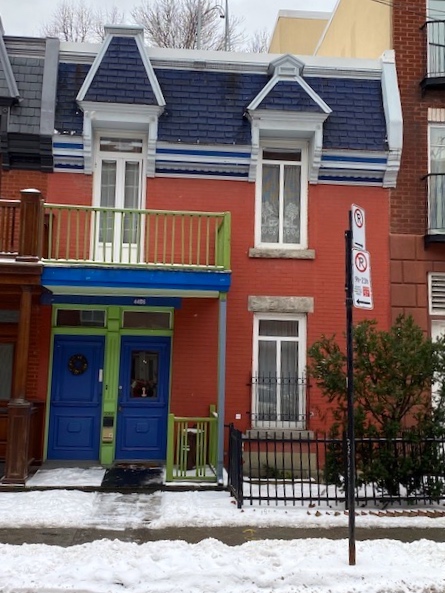
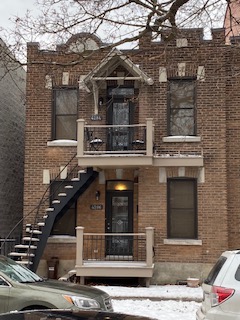
The well-groomed homes that line streets we walked in The Plateau neighborhood have enough visual details to engage a pedestrian navigating an icy sidewalks. Three-story houses are packed side-by-side and distinguished by an occasional architectural flourish or unusual color scheme that breaks up the uniformity. Each house may contain as many as five units determined by counting the number of doors that are accessible from ground level to a graceful outdoor metal stairway.
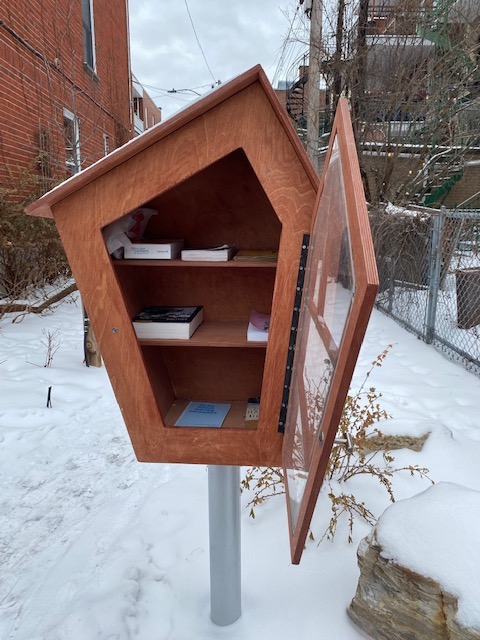
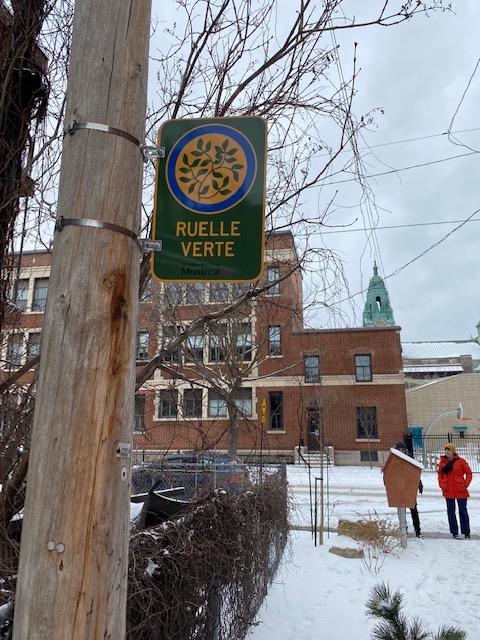
Other finds along our route included what appeared to be an outsized bird feeder that turned out to be filled with books to exchange for free. Every few blocks the entrance to an alley was posted with a Ruelle Verte (green lane) sign. In the Spring, these alleys will be cleared and landscaped by those who access them for the pleasure of locals and the public. The Ruelle Verte improvement project began in 1997 and now numbers more than 400 alleys in Montreal. A published guide to the 20 best alleys for walking testifies to its success.
I look forward to getting to know Montreal better when Covid subsides and the snow melts.
Best wishes to all for a healthy and productive New Year!