"B" is for Bechamel

MacCheese 

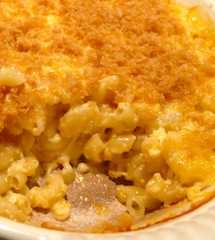
French Mac and Cheese

What does a French chef eat on his day off?  You'd be surprised.  It is often a childhood favorite - roast chicken or a simple omelet.  These are comfort foods mother or grandmother used to make.  They remain the source of a  love of food and cooking that began at home.
"Chopped" Comes to Chicago


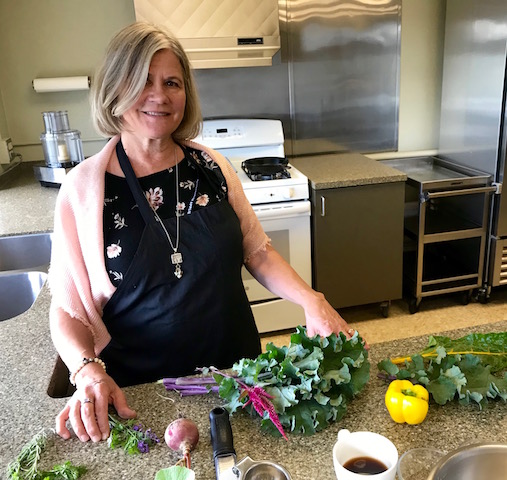
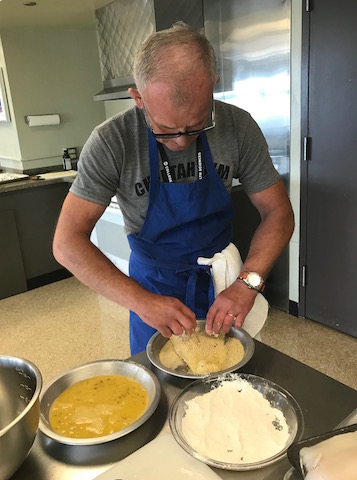
A "Chopped Challenge" worthy of the Food Network was staged in a spacious kitchen on the University of Illinois Chicago campus last Saturday.  Three teams of nutrition students and alums gathered around stainless steel tables prepared to plan, cook and plate an original dish.  The time had come for these budding health professionals to illustrate how well they they could show that food is the best medicine. 
 
 
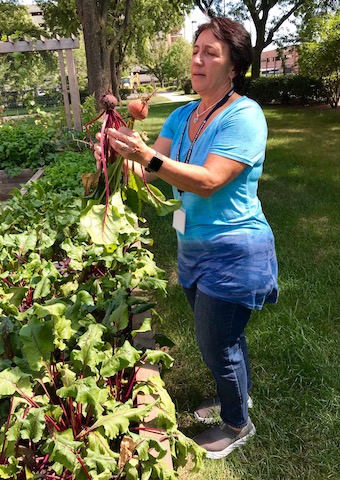
The event began in the luxuriant kitchen garden planted behind the Applied Health Science building where contestants picked vegetables, edible flowers and herbs for their creations.  They had access to the kitchen's pantry but picked sparingly from an array of purchased grocery items at their disposal.  Each team was assigned a nutrition student to run the food processor, saute onions and act as a gofer.  
 
The pressure was on once they began.  Contestants had forty-five minutes to complete a dish while keeping in mind the ten judging criteria as well as the USDA's MyPlate Dietary guidelines. Their challenge didn't end there.  The mystery ingredient that day was the notoriously bland, firm-fleshed filet of fresh cod.


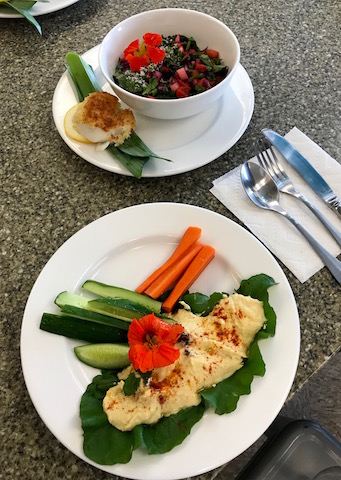
The first team created a meal rather than a dish. It consisted of a hummus starter, a mixed vegetable salad and an entree of pan-fried cod.  Team members had agreed on three elements, made assignments and worked without conferring with each other. When it came time to plate their dish, the lack of coordination was obvious.  The three preparations didn't fit on the plate nor did they complement one another.  The cod was properly cooked and crispy but lacked enough seasoning. 


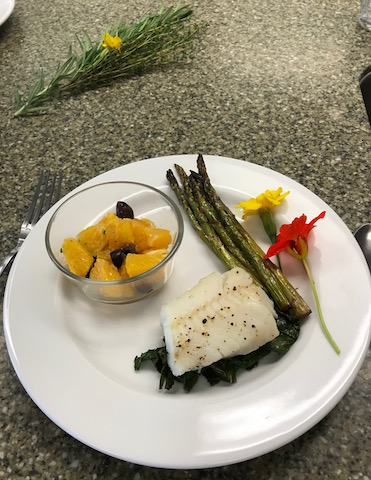
The second team developed a Mediterranean theme binding the elements on the plate with the flavor of oranges.  The roast cod filet was glazed with orange juice and nested on a bed of  sauteed kale.  Slim roast asparagus stalks were also brushed with fruit juice.  The compote of orange sections and black olive turned out to be the most flavorful element on the plate.  For all this harmonious flavor interplay, the disjointed plating made eating difficult. The asparagus stalks required a knife and fork. The flaky cod proved hard to balance on a fork with the kale.  And the compote fell off everything but a spoon.  Enjoying all these flavors in one bite was nearly impossible.
 
 
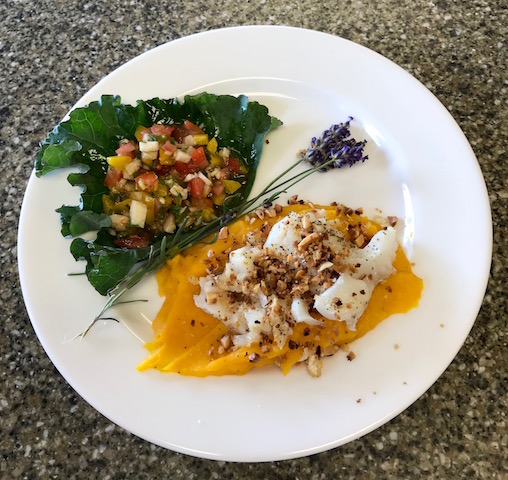
The preparation of the winning plate began with a setback that the team turned into an advantage.  When baked butternut squash came out of the oven, it was too soft to cube as planned and had to be pureed.  It made a delicious and attractive bed for skillet-baked cod.  This team overcame the cod's large flake texture by breaking the filet into pieces as it cooked.  The garnish of toasted garlic and chopped almonds was an inspired, sophisticated and delicious.   A crunchy raw kale leaf filled with a salsa of fresh fruits, vegetables, lime juice and cilantro was a refreshing complement.  And it was easy to eat! 


"D" is for Dill Sauce

Dill2

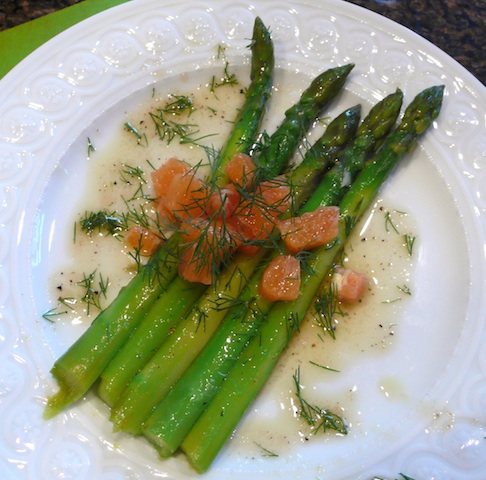
ASPARAGUS SALAD WITH ORANGE DILL VINAIGRETTE

I chose Dill Sauce for "D" in my alphabet of French sauces the moment I pressed a bouquet of soft, feather fronds to my face at my local market.  Aromas of caraway, orange and clove transported me back to a cold April day some forty years ago when I planted my first herb garden.  To this day, the scent of dill holds the promise of renewal.

"F" is for Fennel Sauce

Fennel1


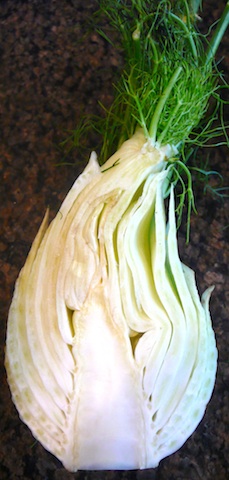
When I promised you an alphabet of easy French sauces, I was thinking eggs, milk, butter, olive oil.  Anything but vegetables.  That was last January. It’s July, my refrigerator is bulging with produce and a vegetable sauce now seems like the perfect complement to a summer meal.

"G" is for Sauce Gribiche (the 'Other' Mayo)

Gribiche1


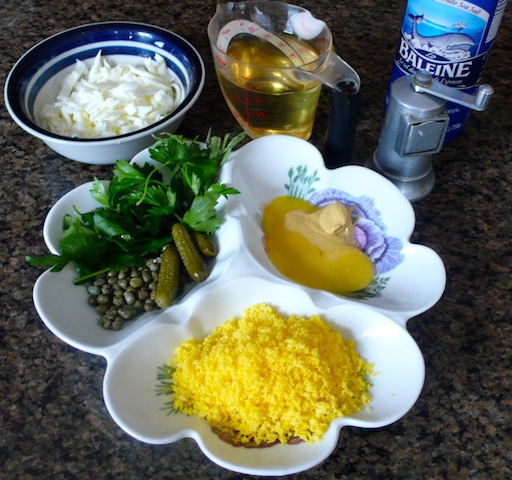
Why learn to make mayonnaise when it's so affordable and easy to find at the market?  For beginning cooks this is not a rhetorical question.  If you've not done it before, binding oil with water can be as intimidating as making your own water from hydrogen and oxygen.  But after students actually make their own mayo and taste it alongside store-bought (I keep a jar on-hand just for this purpose) they're forever sold on the homemade variety.