What does a French chef eat on his day off? You'd be surprised. It is often a childhood favorite - roast chicken or a simple omelet. These are comfort foods mother or grandmother used to make. They remain the source of a love of food and cooking that began at home.
"Mother Sauces" is the term Auguste Escoffier chose to define the fundimentals of French cuisine a century ago. First among them is a milk-based sauce that begins with the letter "B", Sauce Bechamel, whose principle ingredients are butter, flour and milk. A bechamel is quickly made: cook equal parts flour and butter to create a roux, add milk, and heat to a simmer. Heated milk can be stirred quickly into the roux; cold milk is added slowly to avoid lumps from forming.
It's ironic that a sauce of such humble components should bear the name of a seventeenth century nobleman, the marquis de Bechamel. He was a rich financier whom Louis XIV named to the honorary position of chief steward. We would call him the king's chief event planner. What inspired the king to name a white sauce after Bechamel? You had to be there. One thing is certain, the sauce was in use well before it received its titled name.
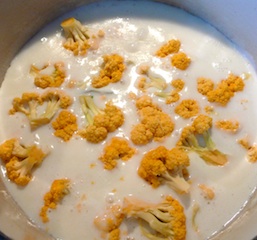
Orange Cauliflower Soup 1
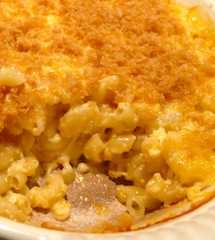
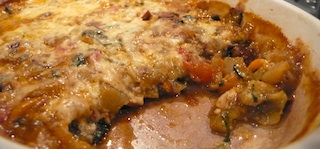
There are several ways to incorporate a light, soothing Sauce Bechamel into your daily cooking routine. During cold weather I use it as a soup base, add cauliflower and bake it in the oven. I make a winter gratin of ratatouille by spreading on a light blanket of Bechamel. Here's another idea. Ask a child to help you fold macaroni and cheese into a Sauce Bechamel, scatter on browned bread crumbs and bake. This household staple, prepared from scratch, sends a message to the next generation cooks, and might even inspire a future chef!
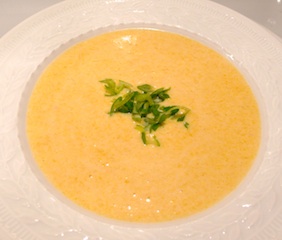
Cauliflower Soup 2 (aka Creme de Berry)
