Summer fruits and vegetables bring out the artist in every cook. Nature provides these ingredients in a palette of colors, shapes and textures with which a cook can conjure a edible still life on a plate. After all, we all eat first with our eyes.
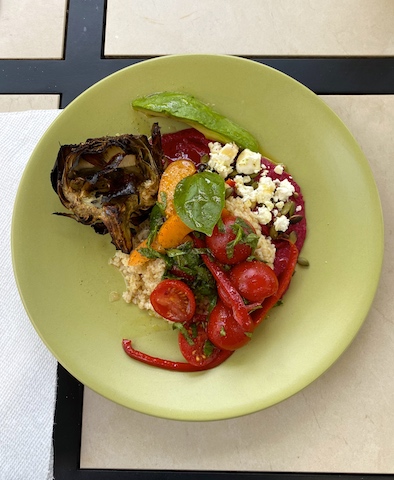
This year, the plate that Chef Suzanne Florek set before me at the lunch we share to celebrate our June birthdays was over the top. It looked too beautiful to eat. (Appetite won out over aesthetics in the end.)
When I asked Suzanne for the recipe to accompany my photo for his blog, she sent a list of ingredients rather than a recipe, per se. Her combination of a beet mash, tabouleh and fruit salad was a one-off of elements she will modify to suit her mood the next time she makes it. That ability to improvise is worth cultivating, and summer offers many opportunities for us to express ourselves as cooks.
Suzanne’s cooked bulgar wheat was unadorned in the truly deconstructed sense of the word. She wrote that she will soak it next time. I took her cue and soaked it, a move that preserves the rough texture of the wheat, and added chopped tomatoes, mint, parsley and olive oil. The beet mash adds brilliant drama to the plate and an earthy flavor with a tart, and yogurt finish. I used what I had on hand for the salad with an eye to including several colors and a fresh, green leaf or two.
The only element of the plate I could not pull off was the grilled artichoke quarter which I attempted indoors using a Le Creuset grill pan. If you want to try it outdoors, be sure to generously oil the cut sides of the artichoke, and scoop out the fuzzy choke portion before serving.
I would love to see your deconstructed summer salads. Please take a photo beforehand and send them to me with your ingredients.
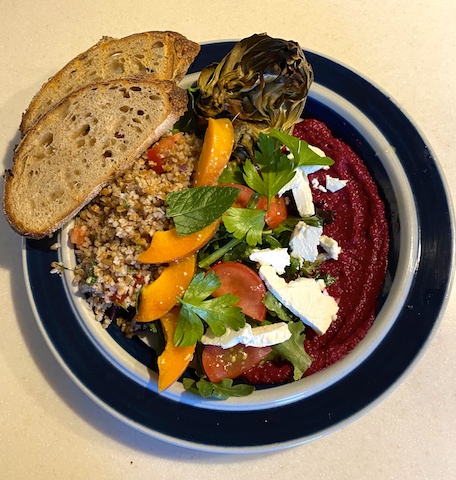
DECONSTRUCTED TABBOULEH WITH BEET AND SWEET POTATO MASH, SIDE SALAD AND FETA CHEESE
MASH
2 1/2 cups beets (1 lbs) cooked
1 cup cooked sweet potatoes
2 cloves grilled garlic
1/2 teaspoon fennel seed, toasted
1/2 teaspoon coriander seed, toasted
1 carton (5.3 oz) Skyr yogurt (Siggi’s)
1 tablespoon freshly squeezed lemon juice
1/2 teaspoon kosher salt
Freshly ground black pepper, to taste
TABBOULEH
1 cup cracked wheat
1 cup boiling water
1 tablespoon olive oil
1 teaspoon fresh mint, minced
1 teaspoon fresh cilantro or parsley, minced
1 small tomato, diced
1/2 teaspoon kosher salt
Freshly ground black pepper
VINAIGRETTE
1 tablespoon Sherry vinegar
3 tablespoons olive oil
Salt and pepper to taste
SALAD
4 cups fresh green
1 ripe apricot
1 tomato or 6 cherry tomatoes
2+ tablespoons feta cheese
8 slices grilled sourdough or baguette slices
MASH: Bake beets and sweet potato in a 400 degree oven. Trim, rinse, dry and wrap beets in foil. Pierce sweet potato twice. Sweet potato will cook in 30 minutes; beets will take an hour. Let the vegetables cool, peel, cut them. Reserve.
Toast the garlic cloves, unpeeled, in a dry skillet until they are fragrant and soft. Remove, add fennel and coriander seeds and toast, shaking the pan occasionally until they start to color and become fragrant. Crush the seeds in a mortar and pestle or process them for 1 minute in the food processor before adding the vegetables. Pulse a dozen times, then run the processor until the mash is smooth. Add the yogurt and lemon juice and continue mixing another 15 seconds. Pulse in salt and pepper to taste. Reserve.
TABBOULEH: Add boiling water to the tabbouleh and allow to stand as directed on the package. Place grain in a towel or cheese cloth and twist out residual water. Turn the bulgar into a bowl and add the herbs, tomatoes and olive oil. Toss well and season to taste with salt and pepper.
SALAD: Mix the vinaigrette in a jar with a cover or whisk in a bowl. Toss the salad greens with 3/4 of the dressing. Toss the tomatoes and apricot combo with the rest.
ASSEMBLY: Spoon on the Beet and Sweet Potato Mash on one side of the place in the shape of a large comma. Nest the greens in the center of the plate. Mound a portion of the tabouleh facing the comma. Top the greens with the vegetables and spread the crumbled or sliced feta over the mash. Serve with grilled bread.