DINING CHEEK TO CHEEK

aupieddefouet1a

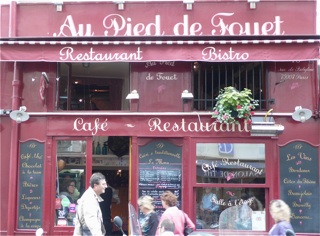
You can gauge the age of a Parisian restaurant by its size. The older it is, the smaller and more crowded. Americans have no idea what it’s like to dine in a space that’s 150 years old (the bathroom is across the courtyard).  But if you want to eat with Parisians, then a meal at Au Pied de Fouet is a must

DOWNSIZING IN PARIS

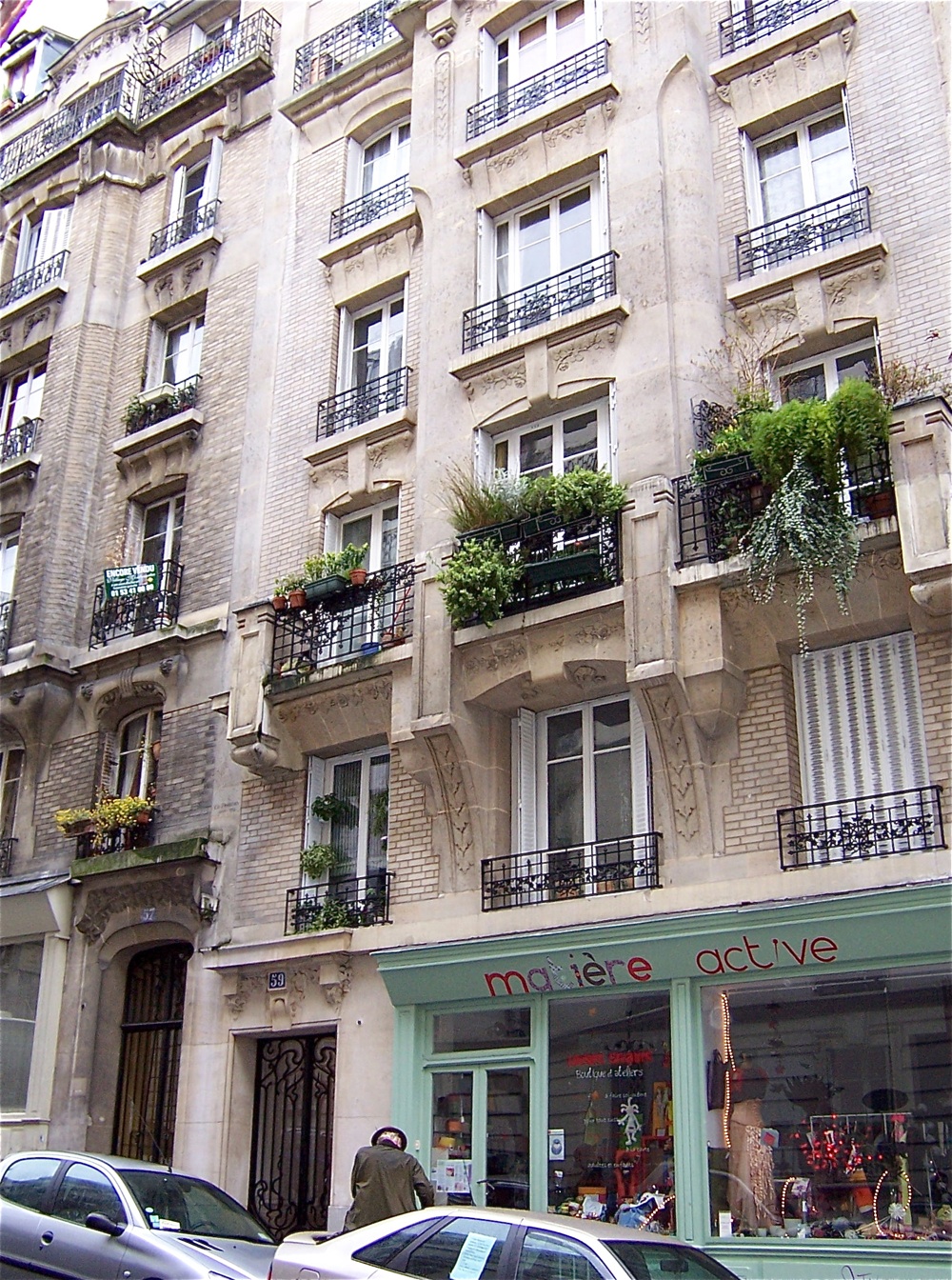
59montcenis


I can’t imagine ever referring to myself as ‘retired’.   After teaching French cooking for thirty-five years, a sensible woman might welcome the opportunity to literally throw in the towel.   Me?   I’ve down-sized and am continuing to teach in an apartment kitchen. My motto to ‘keep it simple’’ is no longer an option.


Before you think I’ve lost my mind, let me add: my new kitchen is in Paris.  We purchased a place in Montmartre that had what the French call a
cuisine americaine: a ten-foot-long bar separated the kitchen and dining area.

EATING WELL IN PARIS

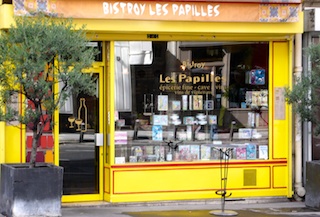
Les Papilles1


On occasion, I will enjoy a restaurant meal so much that I leave wishing I could move next door.  This happens rarely, even in Paris where the opportunities to find an unforgettable meal seem endless.  Finding a perfect combination of atmosphere, cuisine and service at a reasonable price is worth sharing.   That's why I want to tell you about my recent lunch at Les Papilles.

Even the most direction-challenged visitor can’t miss this bistro’s bright-yellow store front flanked by olive trees near the corner of Blvd St Jacques and rue Guy Lussac (5th).  The owner Bertrand BLUY greets you warmly as you enter and directs you to one of the small tables that line the walls.  The decor here is worth scrutiny because this place is also an épicerie, a grocery store.  What can a diner expect from a restaurant named 'taste buds' that sells squid ink pasta and tinned sardines?  

The relaxed setting at Les Papilles did not prepare me for the gastronomic meal I was about to enjoy.  In fact, such a possibility appeared unlikely after I peeked in the kitchen and found it is about the size of a closet in suburban Chicago.  I couldn’t imagine how the chef and his one sous-chef managed to stay out of each other's way!   

Given the size of the kitchen, Les Papille’s single menu format is not surprising.  Diners can order all four courses (there is also salad option), or any combination à la carte.  I opted for a starter and main course.
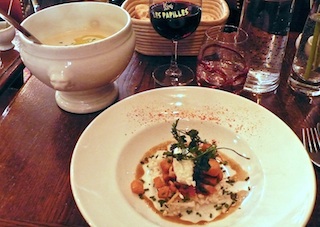
Les Papilles2


My order of cauliflower soup was served in two parts.  First the waiter place a large porcelain generously filled bowl on the table.  It was followed by a large soup dish containing a scoop of creme fraiche the size of a large egg, bits of raw cauliflower, tiny buttery croutons, a stem of fried parsley and a drizzle of olive oil.  I was instructed to ladle the thick soup into the dish and stir well before tasting.  It was delicious.


The main course of lamb shoulder with provencal vegetables was presented in a copper gratin dish still hot from the oven with a plate on the side.  Once again, every aspect of the dish, from the tender meat, al dente vegetables and silken demi-glace was perfectly executed.  The chef’s added garnish of cloves of garlic confit and a layer of sugar-snap peas and onion slices provided a bright, sweet accent without distracting from the traditional theme..  I could imagine the fanfare with which he stuck the sprig of fresh thyme into the meat just as it left the kitchen.
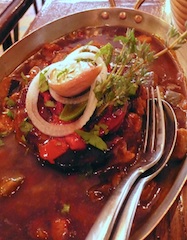
 

Les Papilles3


I'd forgotten how nice it is to serve yourself from a generous portion.  It gives the diner a sense of familial participation.  Too often restaurant food arrives posed and contrived. This fall I’ve been underwhelmed on occasion by meticulously arranged plates garnished with fruit.  Two examples come to mind: octopus with melon and pickled cherries, also watermelon and radish slices with veal.  I suppose I was primed to appreciate the skill and humility of the traditional cuisine at Les Papilles.

With a glass of red wine from southwest France and a coffee, my bill came to 36 Euros.  Had I been able to eat the cheese course which was  Forme d'Ambert, a mild blue cheese from the Auvergne, with prunes and one of the two cold desserts choices that day, the meal would still have been less than 50 euros. My papilles are still smiling.
EMILIO'S TAPAS MAGIC

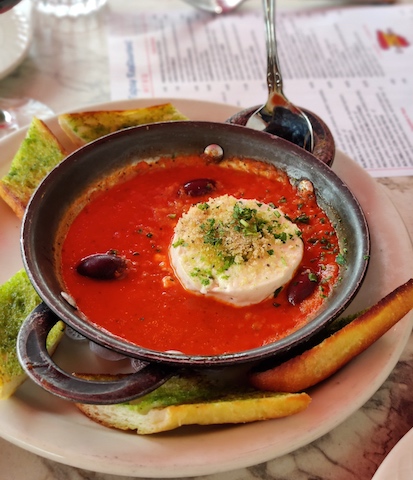
Goat cheese baked in tomato sauce with olives and garlic bread

The moment I finished my first meal at Emilio’s Tapas, I wanted to move next door.  You may roll your eyes, but the creation of an extraordinary dining experience is an indelible kind of seduction. In the 33 years since that evening, I have learned to appreciate the ways in which this former tavern on a nondescript highway in Chicago’s western suburbs generates its magnetic appeal.

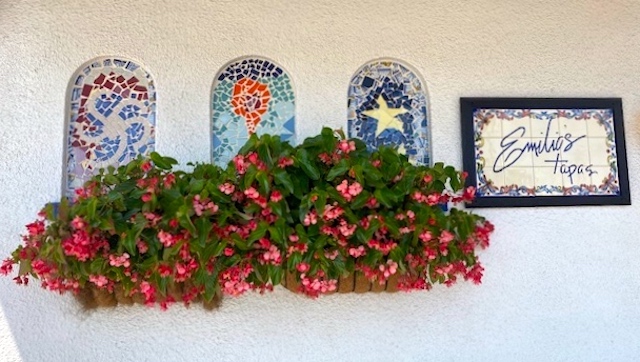
The entrance to Emilio's Tapas


The opening of an exotic tapas bar and restaurant in a local dining desert caused a sensation among adventurous diners in 1988.  Emilio Gervilla had won recognition in 1985 as chef at Chicago’s first Spanish restaurant, Cafe Ba-Ba-Re-Ba.  That opening was the culmination of a number of successful ventures with Lettuce Entertain You.  Once on his own, Emilio chose a property in Hillside near his own home for this first solo venture.  That location is a clue to the restaurant’s rational.
First time customers found Emilio’s to be a study in contradictions.  The restaurant is situated between to giant fast food franchises: a Wendy’s drive through on one side and McDonald’s on the other.  Upon entering the restaurant a new customer feels the interior's  strong ethnic character.  The surfaces and tables in the bar as well as the floors are covered with Spanish tiles:.  The walls of the main dining room are painted with scenes of village life.  This intensely festive space radiates informal, rustic cooking with one telling exception.  The room is filled with tables covered in white table cloths, a signal the chef has set demanding culinary goal for himself.


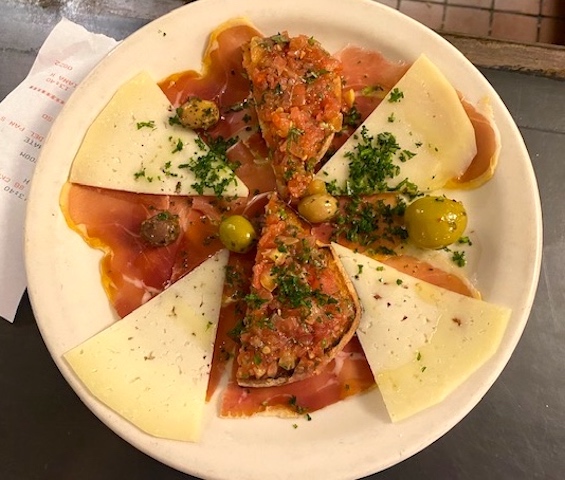
Serrano Ham, Manchego cheese, marinated olives and tomato bread

Tapas in Spain are complimentary appetizers served with bar drinks as covers to keep flies out of the glass.  Emilio has adapted the tapa concept to a restaurant setting in which diners order several small plates from a list of hot and cold choices and pass them around the table.  There are no 'side'  tapas.  Dishes of garlic potato salad and goat cheese floating in tomato sauce are stand-alone classics.  Each plate features a carefully curated, perfectly realized Spanish speciality, from paper-thin slices of Serrano ham, to tangy Manchego cheese and grilled seafood.  

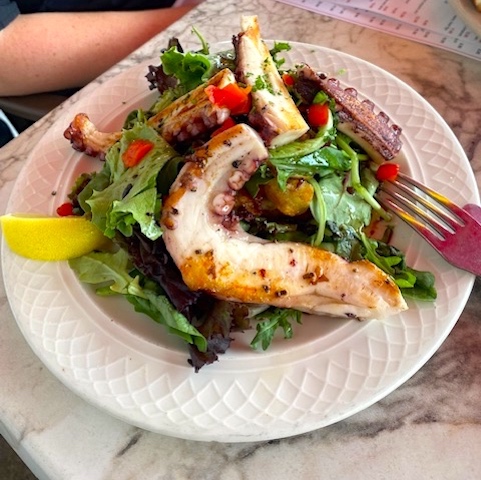
Grilled octopus served with mixed greens, roasted potatoes and balsamic vinaigrette

The small plate concept subtly alters the entire restaurant experience.  Diners share each plate, mop up juices with a bread round and grab a clean plate when the next dish arrives.  The opportunity to deconstruct a meal into several bites of an intensely satisfying ingredient creates a ‘kid in a candy store’ sense of freedom and elation.  A succession of plates also has the effect of extending the meal and, at the same time, maintaining a sense anticipation and that stimulates conversation.  The only time when this formula weakens is when it's time to order dessert.  A serving of Emilio's rich homemade flan, profiteroles or roasted banana with caramel sauce are generous enough to shared but, even though sated, noone wants to.

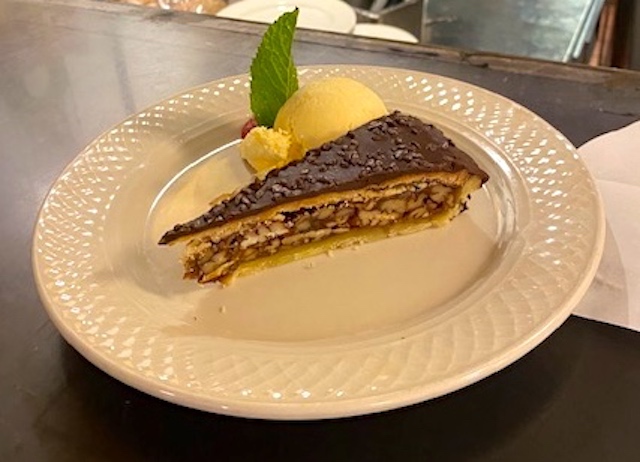
Caramelized walnut pastry with chocolate buttercream

At the heart of Emilio’s appeal is its owner’s management style.  The quality of the food and service has never faltered, even during the years when Emilio was busy supporting other tapas restaurant startups in nearby suburbs.  (I can count six over the years.)  When he opened, Emilio hired employees who worked for the previous owner, and he has kept most all his current employees through the pandemic.

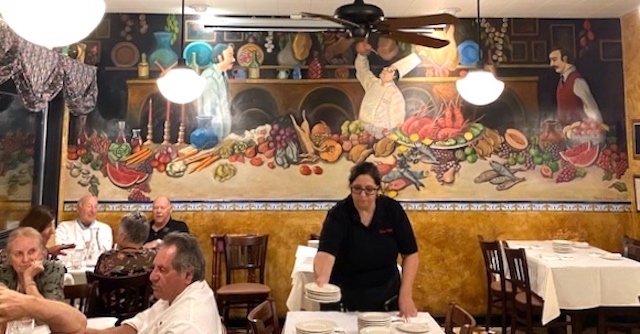
Late Saturday night with Emilio bottom left and center in the mural.

At a time when most chefs have retired, Emilio is in the kitchen and dining room to this day, moving from table to table chatting with guests.  His hospitality begins with a small complimentary tapa that arrives at the table of every newly-seated customer.  Emilio claims he’s there because the kitchen, where almost everything is done by hand, requires supervision to maintain its quality.  We know that this restaurant is his real home. and we are comfortable in the embrace of his nurturing spirit.


EMPTY-THE-REFRIGERATOR FRIED RICE


Our stay-at-home status has forced everyone to confront the contents of their refrigerator.    I suspect that resulted in the senseless stampede to the supermarket to buy toilet paper and bottled water rather than deal with cooking leftovers.  What recipe includes toilet paper and bottled water?  I’d rather not think about it.

Happily for readers of this blog, Katheryn Weiss, responded swiftly to my call for easy recipe for the homebound with  Empty-the-Refrigerator Fried Rice.  Thank you, thank you Katheryn. 

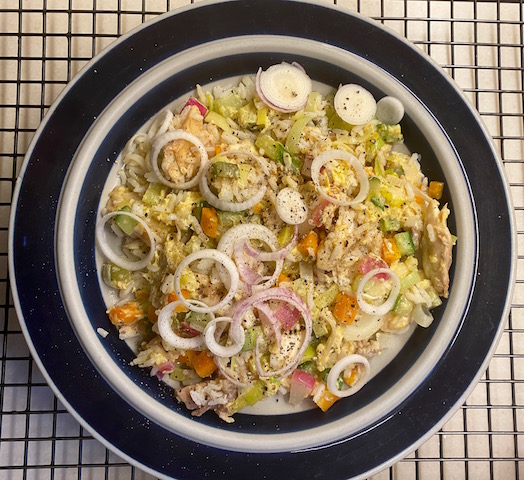
 The proportions of the ingredients, order of their addition and quick timing are more important than the ingredients when making this dish.   Rice is the usual base but another grain or dal would work.  I substituted striped bass for meat and salad vegetables (carrots, cucumber and radish) in place of mushrooms and asparagus.  You will need an egg or two and soy sauce. 

The photo at the top of the page illustrates my ‘test drive’ of Katheryn’s recipe. The directions worked as did the timing,  The results were delicious.

 What’s on your table?  Please feel free to contribute.  A recipe and photo of the finished product is all that’s required.  While I wait, I’m going to clean my refrigerator.

 EMPTY-THE-REFRIGERATOR FRIED RICE

1 cup cooked white rice, cooled
2 tbsp cooking oil divided (peanut, olive, whatever you have)
1/4 cup or more of dry white wine or chicken stock
1 leek (white part only) sliced in half and then sliced thinly (or sub onion or shallots)
1-2 garlic cloves, minced
1-2 cups of cooked meat, chopped. I used some leftover steak, chicken and pork loin
1-2 cups of vegetables, chopped into bite-sized pieces, if necessary. I used some asparagus and a package of mushrooms that were on their last legs.
1 tbsp soy sauce
1-2 eggs, lightly beaten (I only used one because I'm rationing)
3-4 green onions, sliced
Salt
Pepper
Prepared Asian condiment, if desired

Prepare a cup of white rice and set aside to cool.
Dice leftover meat, mix with soy sauce, add pepper to taste and set aside.
Heat 1 tablespoon oil in a large skillet.  Add leek and sauté on medium until golden. Add wine or chicken stock and stir. Add additional vegetables and sauté until brown (2-3 minutes). 

Add 1 tablespoon of oil. Stir in egg(s) and quickly scramble them. Fold in diced meat with soy sauce and rice. Cook on medium heat until rice is heated through and ingredients are well blended. Season with salt. Add a spoonful or two of Asian condiment, if desired. I had some fermented chile sauce in the 'fridge.

Fold in half the scallions and scatter remaining scallions on top. Serve.