Even a diner accustomed to reading menus in French will reach for their copy of LaRousse when fig clafoutis appears on a dessert list. There’s no shame in that. The clafoutis, a spinoff of the rustic Limousin flognard, hasn't been popular in restaurants for more than a century. Like most site-specific dishes, this crustless custard baked in a shallow tart mold was designed to showcase a tiny, heart-shaped cherry, coeur de pigeon (pigeon heart). This rustic dish studded with unpitted cherries evolved into a fashionable fruit-filled pudding with an Occitan name in the 19th century.
The first tours I led to France in the 1990’s took us into the Limousin heartland with its rolling hills of orchards, grazing animals and ancient forests. We prepared our first flognard with raspberries in the spacious kitchen at Chateau de Sannat where we lived an idyllic life and cooked with provisions from the central market in Limoges. Every summer tour since then has included this simple dessert with whatever fruit was ripest at that moment.
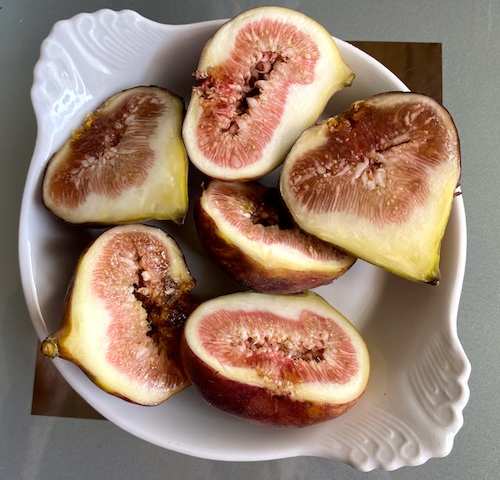
These pleasures were far from my thoughts last week as I entered my local supermarket at 7 am wearing face mask and gloves. Suddenly, there they were in the display case: a carton full of ripe figs. One look at those plump, beauties brought back memories of serving roasted whole figs on a goat cheese salad in our Paris apartment, sautéing figs to garnish duck breast in a Luberon vineyard setting and, yes, baking fig clafoutis in Uzes.
A clafoutis made with figs has great eye appeal and harbors a fascinating story of plant and insect coevolution. The fig fruit's petals are on the inside and serve as a nesting place for designated fig wasp eggs the contents of which hatch, pollinate the fig’s seeds and depart through the furry-looking passage in its base. I couldn’t make up a story this amazing. For those who worry about eating the remains of male fig wasps, the fruit produces a natural enzyme, ficain, which dissolves them before they arrive in our kitchens.
Assembling a fig clafoutis takes about as long as it takes for your oven to reach 400 degrees. The custard is the consistency of a crêpe batter which has a similar composition. I make it first and let it rest while preparing the fruit. You may want to substitute a flavored liquor or fruit brandy that matches the stone fruit or berry you are using. Clafoutis are also wonderful in winter filled with pears or apples. Enjoy!
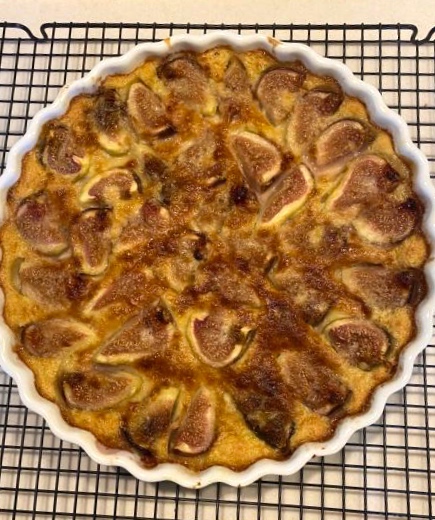
FIG CLAFOUTI
Ingredients for 8 servings:
9 12 fresh figs
2 tablespoons sugar
2 tablespoons Port
Custard:
2 teaspoons each unsalted butter and sugar (for the mold)
3 large eggs at room temperature
3/4 cup sugar
6 tablespoons unbleached flour, sifted
1 1/2 cups milk
Preheat the oven to 400 degrees. Generously butter and sugar a 1-1/2 quart baking dish.
Blend the eggs in an electric mixer until frothy. Gradually add the sugar, flour and milk. Mix well, for 2 minutes. Let this batter rest while preparing the figs.
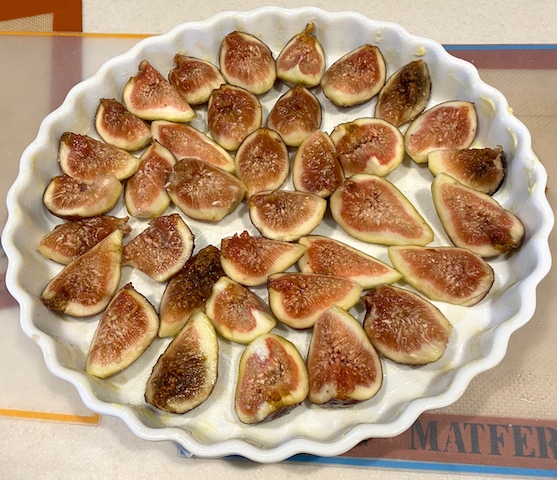
Trim off tough stem end of the figs, quarter each and place in a bowl. Sprinkle fruit with sugar and Port. Toss occasionally while assembling the other ingredients.
Distribute the fig pieces evenly over the bottom of the baking dish. Spoon the batter over the fruit. If you have extra batter, add it after the pudding has been in the oven for 10 minutes.
Bake for 30 minutes or until the custard is set and lightly browned. Cool on a rack. Serve warm or at room temperature.
