

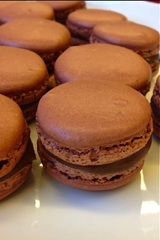
The macaron’s new popularity is the result of a make-over worthy of Oprah. What was once a shy, pastel tea cookie can now be found dyed in unnatural colors, filled with banana nutella and candy corn buttercreams, even sprinkled with smoked salt and lined up in high-end Paris and New York pastry shops like so many exotic showgirls. The macaron has become a platform for confectionary brinksmanship.
Novelty is not the only factor driving its current celebrity status. The macaron’s seductive powers are for real. You only have to try one. The glossy shell crackles with promise when you bite through it. The meringue’s soft sweet interior melts on your tongue then yields to a richly flavored filling. It’s a roller coaster ride in your mouth and positively habit- forming.
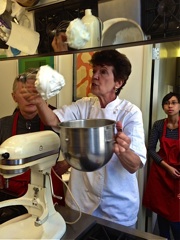
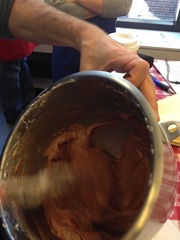
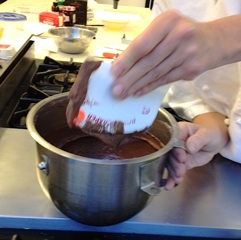
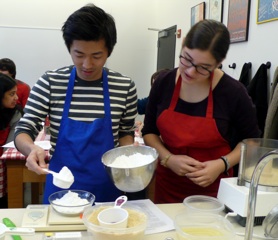
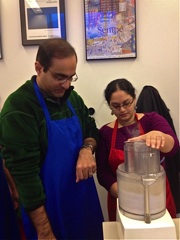
I should mention at this point that new recipes have not made baking macarons easy. The process requires measuring ingredients by weight with a digital scale, the use of a box sieve (tamis) as well as a modern food processor and a heavy duty mixer. All this to bake a meringue consisting of almond meal, sugar and egg whites! Are you still with me?
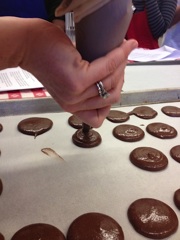
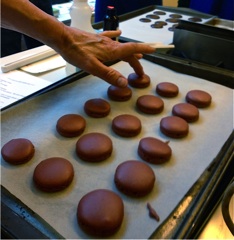
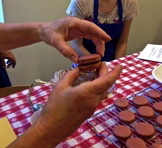
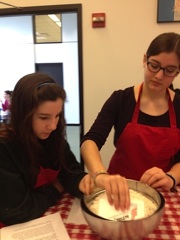
We successfully baked several batches at two sold-out classes in the kitchen of Chicago’s Alliance Francaise this fall. Photographs from the classes illustrating the process accompany this post.


What I would really like to know is how those Florentine pastry chefs made these delicate treats by hand in 16th century.
A special thanks to Sabrina Tyus and Jeff Abell for sharing their photographs for this post.
