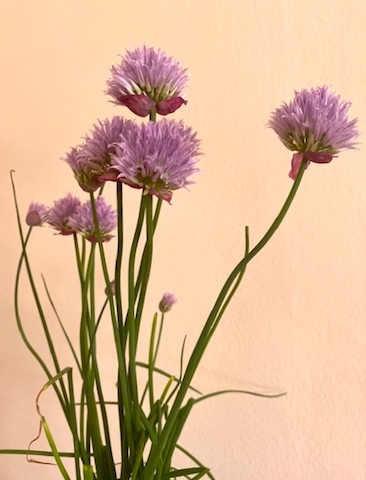
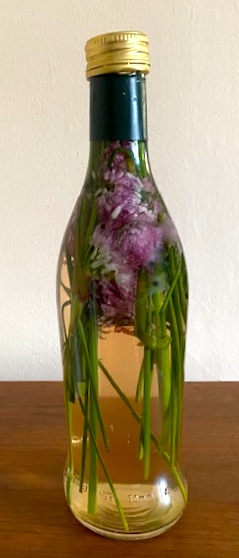
HOW TO GET HIGH ON HERBS


Everything in Nature smells especially fragrant this summer, even the humdrum scent of freshly cut grass.  If I could distill that smell, bottle it as L'Eau de Pres and spray it on,  I would wear it daily.  I suspect many of us recently vaccinated are experiencing an olfactory high now that safety restrictions are easing.  Suffice it to say, my nose is already primed to add fresh herbal scents to my cooking in the coming months.


The care and use of culinary herbs is as easy as you wish to make it.  Simply keep in mind that each plant has a fixed amount of its essential oil,  This rich single note is both fragile and volatile.   It dissipates quickly when leaves are cut and cooked which is why herbs are more often used in their dry, concentrated state.  Dried herbs have staying power when cooked, but the special element of freshness has been lost to oxidation in the drying process.

The most effective way to use fresh herbs is to add them as the last ingredient with salt and pepper.  If you have a garden, a single plant of a perennial such as thyme, oregano, sage, mint, tarragon and chives will keep you supplied for the next six months.  These hearty herbs thrive on inattention and will return the following year.  Tender herbs such as parsley, cilantro, rosemary, basil grow quickly in a pot on the patio or in a sunny window sill with an occasional watering.  This month is the best time to get started.

A bunch of fresh herbs purchased at the grocery or farmers' market is an equally good way to start cooking with herbs.  It's a better choice than decimating a newly planted herb when preparing a Carrot Salad with Parsley.  There's also no reason to scrap herb leaves leftover on the counter.  They can be easily preserved in an Herb Butter or Bouquet Garni Vinegar.  With these two products you have instant aromas at your fingertips.

Wishing you many aromatic highs this summer!



HOW TO OVERCOME SOCIAL DISTANCING

Welcome to a double helping of updates from my holiday kitchen.   


The list of items I check before leaving home grows longer in December.  To the essentials - car keys, credit cards, phone – I add a jar of preserves.  Whomever I’m going to meet will receive a small treat from my kitchen.  The fact that my friend doesn’t expect a gift makes the moment all the more pleasurable.  Homemade gifts have the power to overcome social distancing.   


I have made it a calling to streamline fruit preserving techniques to their utmost efficiency.  If sales of my cookbook, Artisanal Preserves, are any indication, the desire to make preserves has boomed this past year while we were all at home.  Amazon deserves a shout-out for continuing to save us time for making gifts at home.  Vacuum sealable glass jars in the half-cup gift size are now in stock at supermarkets,  hardware stores and, naturally, Amazon.  There are even more reasons to try your hand at fruit preserving this year.


My recipes are scaled produce four or more jars of gift-size preserves. Winter fruits like oranges and cranberries contain copious amounts of pectin that allows them to gel quickly when sufficient sugar is added.  These fruits also encourage the creation of delicious new flavor combinations when mixed with low pectin fruits.  We’ll get into that another time. 


A spoonful of homemade preserves calls for a slice of homemade bread (although some friends have confessed consuming the contents right out of the jar).    Challah and brioche are the usual choices during the holidaysrecently discovered that the dense texture and whole grain flavor of Brown Soda Bread makes an addictive pairing with winter fruit preserves, and it’s easy to bake.  What took me so long?   


***********


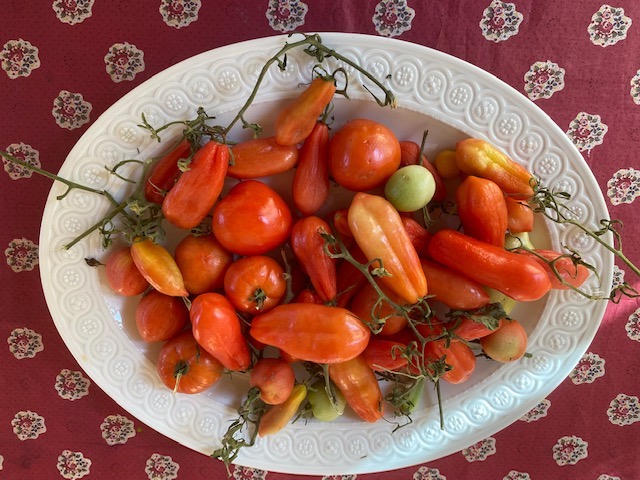
Last month I reported hanging several pounds of unripened tomatoes from twine in my basement when frost threatened in October.  I wasn’t kidding.  These tomatoes have slowly ripened in the cool, semi-darknessthe little ones wrinkling a bit with age.   I picked over the past two months them as they turned red and added them to sandwiches, salads and sauces.  Picking tomatoes in the basement felt strange, but it worked.


Yesterday was harvest day for the remaining pound or so of slow ripeners.  I culled those that were more red than green, cooked them in water and passed them through a food mill to remove their skin and seeds before I tasting the results.  The flavor was, unsurprisingly, that of an unripe tomato. 


But I’d come too far to give up on my summer dream of growing tomatoes I summoned my inner Julia and created a soup  modeled after her Potage Magali ( Mastering the Art, vol. 2) without chicken stock, her Cordon Bleu staple, and with a fair amount of tomato paste and sugar.  The resulting soup was thick with the satisfying taste of tomatoes  Mission accomplished. 


Best wishes to all for a relaxed and satisfying holiday season! 


We will return with new cooking classes and travel destinations in 2022,


HUNGARIAN GREEN BEAN SOUP


My father lived as an American citizen for more than five decades, but his appetite stayed firmly attached to the cuisine of his native Hungary.  He passed on pizza, hamburgers, French fries and remained faithful to the flavors of pork fat, sour cream and paprika his entire life.   

My mother tried her best to please him with a diet of meat and potatoes à la Indianapolis, her home town. Much later, I would drive to Chicago's only Hungarian butcher on the far north side to purchase fresh blood sausage and other cuts of meat we had enjoyed on a family trip to Budapest in 1985.  I learned to prepare his favorite dishes, but my heart wasn't in it.

 A search in my Hungarian cookbooks for something healthful left me feeling trapped in a culinary time warp.  How was I going to make a meal that was both easily digestible and consistent with a cuisine that boiled and blanketed vegetables in a heavy white sauce?  Even Hungarian salad recipes produced sad, limp layers of sliced cucumbers swimming in flavorless oil, vinegar and sugar dressing.  


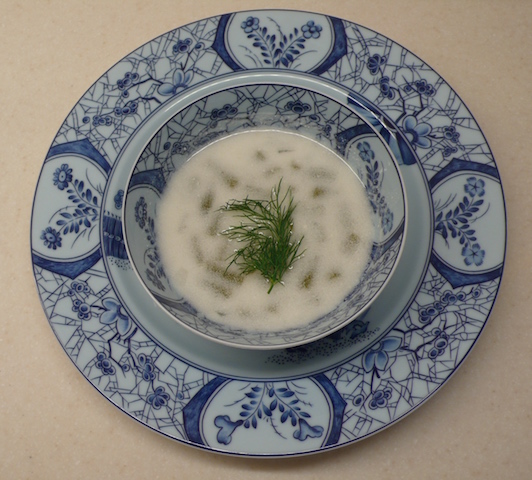
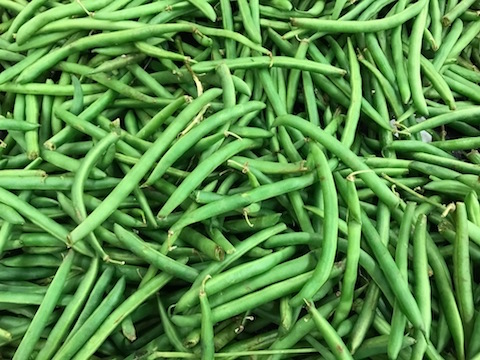
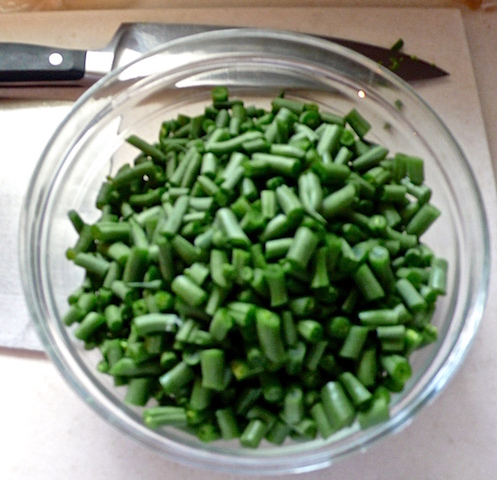
The late, great Gourmet Magazine came to my rescue one summer when it published a chilled green bean soup that proved Hungarian cuisine could shake off its heavy winter coat to reveal a sleek, shapely figure.   What set this soup apart from others was the way its delicate balance of sweet and sour flavors complemented the beans. The recipe included the obligatory cup of sour cream, but its richness was muted and welcome in this water-based soup. The beans, cooked al dente, offered a satisfying crunch.

This clean, elegant formula with its refreshing taste, as you may imagine, has made it a family favorite.  Now my father's great-grandchildren enjoy it every summer.  I consider it my contribution to our culinary heritage.


LINK TO HUNGARIAN GREEN BEAN SOUP RECIPE


IMPROVISING WITH BUTTERNUT SQUASH

A moment of enlightenment remains an indelible memory, especially when it occurs in Paris.  Ten years ago, a seemingly impossible cake recipe caught my eye as I leafed through the current  Elle Magazine in a Montmartre tabac shop.   Since when was a squash puree a main ingredient in a cake batter with diced apples piled on top?  This had to be a printing error.


As a faithful adherent to Le Cordon Bleu techniques à la Julia Child, I took a limited view to recipe substitutions.  Julia’s alterations went as far as replacing two tablespoons of butter with vegetable shortening in a pâte brisée pastry dough.  She was simply swapping out one fat for another that is easier to handle although less tasty.  Now, sixty years after the publication of Julia's first cookbook, Mastering the Art of French Cooking, I still cling to basic techniques rather than striking out on my own.


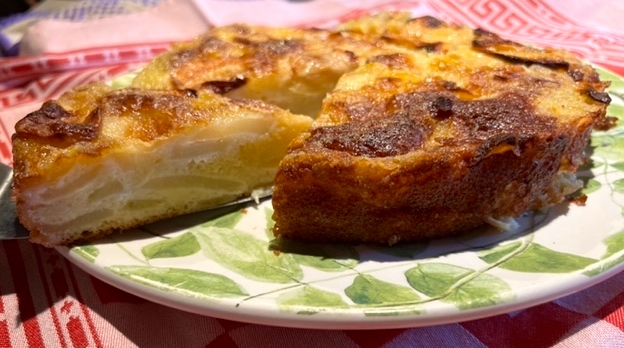
The cake I prepared  from Elle recipe back in 2012 was a marvel. It had an amazing custard-like consistency and vegetal sweetness that the tart, still-crunchy apple bits on top complemented perfectly.  One had to allow time to bake the squash and dice the apples, but adding the remaining ingredients was easy.  Butternut Cake with Diced Apples soon became a staple in my fall cooking class repertoire. I have come to admire the way French women bake at home. Their tradition takes license with culinary doctrine to create more inventive desserts.


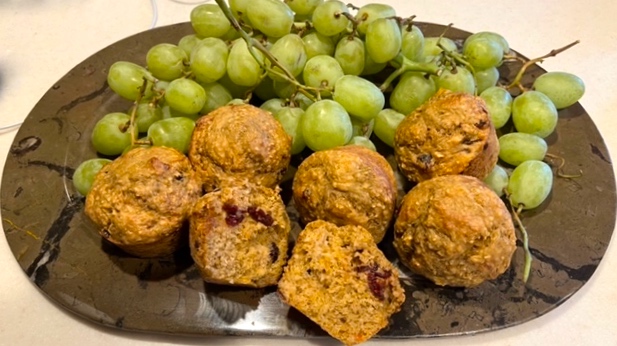
This year, for no apparent reason, I developed a serious craving for the comforting sensation of butternut squash baked in a cake.   Small  tweaks to the cake recipe itself resulted in plump, tender Butternut Pancakes to which I added a simple cranberry sauce, an even better complement than apples Emboldened by this success, I improvised Butternut Cranberry Muffins by substituting butternut squash in an existing recipe for banana pancakes, adding pumpkin spices and folding dried cranberries into the batter.  Voila!


I'm going to continue to riff on holiday home baking in an online cooking class on November 5.  This  Holiday Pie Update session will introduce ways change up traditional recipes for pumpkin pie, cheesecake and fruit tarts.  Join us to brush up your skills and learn more! 


IN PRAISE OF BLUEBERRIES


Blueberry1

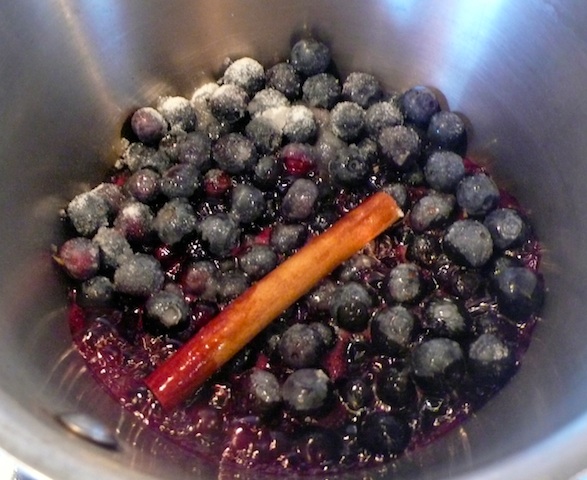
I've loved summer berries since I was eight, when my sister and I foraged for them on open suburban lots and forest preserves.  I still savor the experience: a spurt of sweet-tart juice and crunchy seeds mixed with their wild floral fragrance. The fact we were gathering fruit from thorny canes in dense mosquito-infested underbrush in the wild increased our pleasure.