QUICKEST EVER STRAWBERRY JAM

Strawberry jam is as American as apple pie with a special benefit other comfort foods lack. A fruit preserve can be enjoyed over an extended period of time. In the process of preserving fruit, its juices concentrate and flavor intensifies for later enjoyment. So, why rush to make it quickly?

Let’s look at preserving from the strawberry’s point of view. Like all fruits, the strawberry desires to be eaten raw, digested and its seeds expelled on the ground to produce the next generation. Modern indoor plumbing and commercial agriculture have messed once again with Nature’s plan to an alarming extent. Instead of foraging for scarlet berries half-hidden under trefoil leaves in the forest, we purchase clamshells of plumb, hybridized, often imported, berries in the supermarkets. Never mind. Berries are presently inexpensive and tasty eaten directly out of their plastic clamshell packaging.
The best way I have found to preserve the flavor in a food designed to be eaten uncooked is to work in small batches and quickly.  I said as much thirty-five years ago in the first edition of Gourmet Preserves Chez Madelaine. That did not rule out the inclusion of more time consuming techniques. In 1983 my point of departure was the first historic reference to eating fruit preserves found in Boccaccio’s 14th century Decameron Tales. It's most ironic that this book from the Renaissance was set a secluded estate inhabited by Florentine aristocrats during the Black Death pandemic.

Today’s pandemic requires an updated solution. The time-honored process of making preserves with whole berries steeped in concentrated juices is less appealing than the fresh, less-sweet flavor of minimally processed fruit. In the ensuing decades, I have also discovered that the nuanced flavors of jams and preserves decreases over three to six months time. It is yet another reason to make small batches of jam.

This recipe makes about one cup of jam. It’s just the right size to pour into a glass jar and store in the refrigerator. It will keep for a month easily, if you haven’t eaten it all by then. You can double the recipe and make enough eight ounce jars to share with neighbors and friends using directions for processing and sealing jars in the current version of my book, Artisanal Preserves.
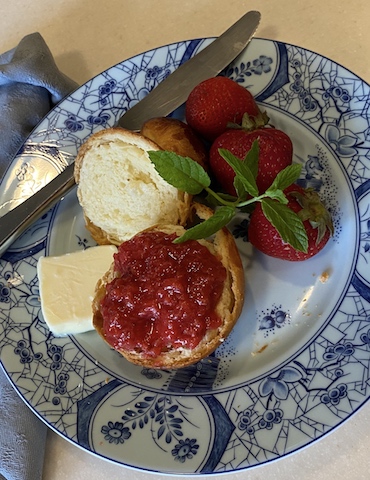
QUICKEST EVER STRAWBERRY JAM

Ingredients:

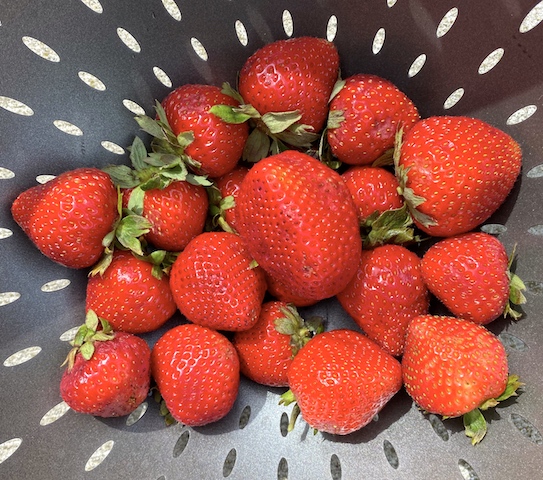
1 pound ripe strawberries

1/4 cup + granulated sugar

1 + tablespoon freshly squeezed lemon juice

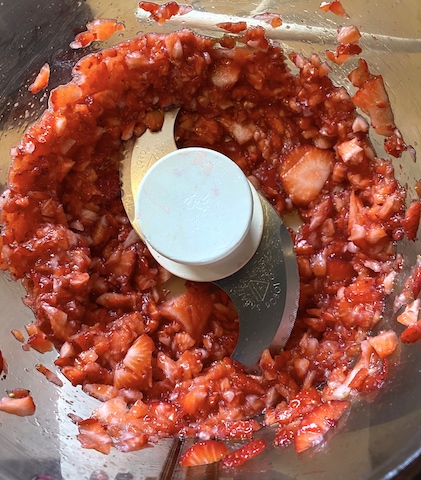
Rinse the berries well.  Trim off the green leaf portion, halve each berry and place in the work bowl of a food processor or blender.  Use the pulse function to finely dice the berries.  You can also chop them by hand into pieces the size of a pea.  Transfer the berry pieces to a 2 quart pan.  Thoroughly stir in 1/4 cup sugar, cover the pan and let the mixture stand for 20 - 30 minutes. 

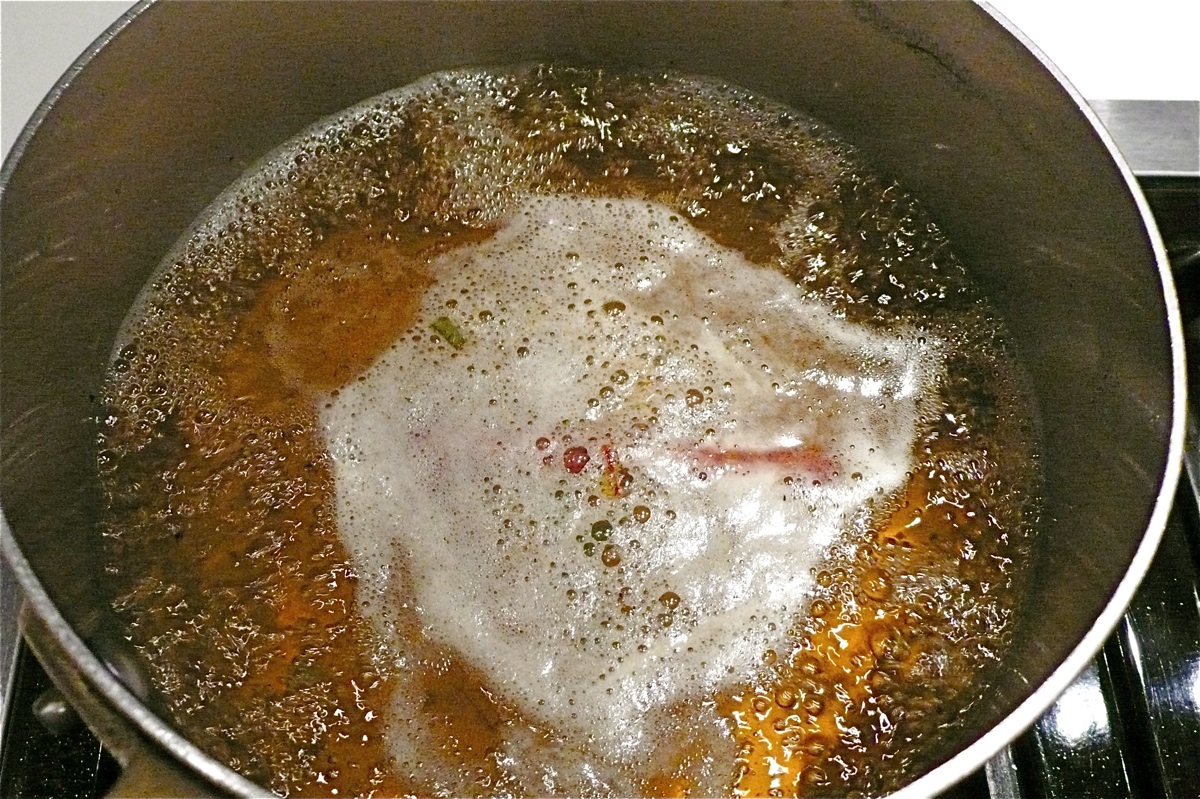
Bring the berries to a simmer over medium high heat and cook, stirring often for 5 minutes or until there is almost no residual liquid in the bottom of the pan and the berry pieces are still discernible.  Add the lemon juice and cook another 30 seconds.

Off the heat, cool down a 1/2 teaspoon of the jam and taste to determine the balance of sweet and sour.  Add more lemon juice or sugar as needed and cook another minute or two.  

Pour the hot jam into a 12 ounce glass jar, lightly cover with plastic or the jar lid, and let the jam cool on a rack.  Screw cap on tightly and refrigerate.
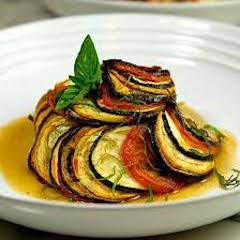
 

RATATOUILLE MAKEOVERS


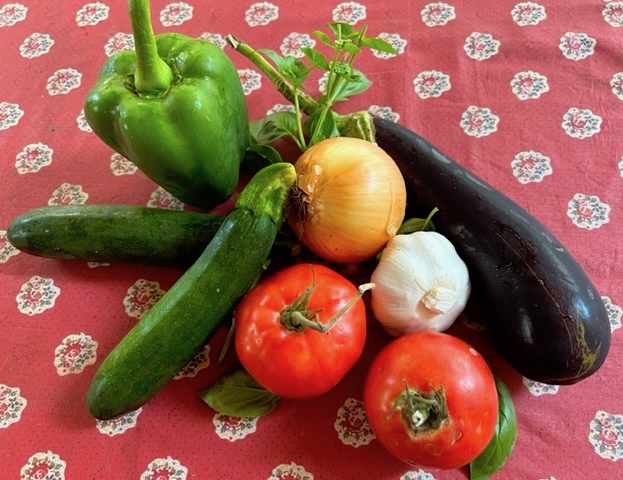
Welcome to ratatouille season. Cooks and gardeners have been waiting for late summer when this rustic vegetable stew tastes its best. Ratatouille's quirky name is a riff on French military slang for grub, ‘rata’, and ‘touille, which means to stir or toss.  The resort city of Nice claims to be ratatouille’s hometown, but mixtures of eggplant, tomatoes and peppers and onions are commonplace in countries surrounding the Mediterranean  What’s amazing is the worldwide fame this simple dish has achieved in the past fifty years.  


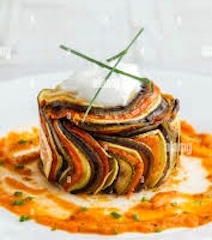
Ratatouille first drew public attention when aspiring young Chef Michel Gerard gave it a gastronomic makeover in the 1970's.  Just as her fairy godmother transformed Cinderella, Gerard thinly sliced ratatouille's

normally rough-cut vegetables and fanned layered slices in concentric circles on a plate for a glamourous presentation.  This naturally healthful dish became a signature dish in Gerard’s disruptive, low-fat cuisine, 'Cuisine Minceur'.  He christened his elegant version, Confit Byaldi, a name already given to Turkish stuffed eggplant, Imam Bayildi, which literally means the Imam fainted. 


Gerard’s spa cuisine and his Confit Byaldi might have faded in the annals of French gastronomy had Pixar Films not chosen both the original name, beginning with 'rat', and its fine dining appearance as metaphors in the storyline of their 2006 animated feature.  The film begins with an unlikely rodent hero with an equally unlikely palate who ingratiates himself with the kitchen staff of a failing French restaurant.  In addition to his keen sense of taste, rat has the uncanny ability to channel the restaurant’s chef-owner who died rather than face the decline of his restaurant Tension builds near the film’s end as we watch the rat instruct a clueless young cook in the preparation of Confit Byaldi. The dish has been ordered by the ghoulish food critic whose review will determine the restaurant's fate.   


Pixar hired American Chef Thomas Keller to update Gerard’s Confit Byaldi for this film.  Keller created a more structured presentation of vegetable slices and added two sauces. At the film’s climactic moment, critic Anton Ego casts a skeptical eye at his precious vegetable serving.  When the first bite delivers flavors that send him reeling back to beloved childhood memories of his mother’s ratatouille, he hungrily gobbles up the rest.  Anton writes a glowing review, saves the restaurant’s reputation as well as the audience’s confidence in food critics.


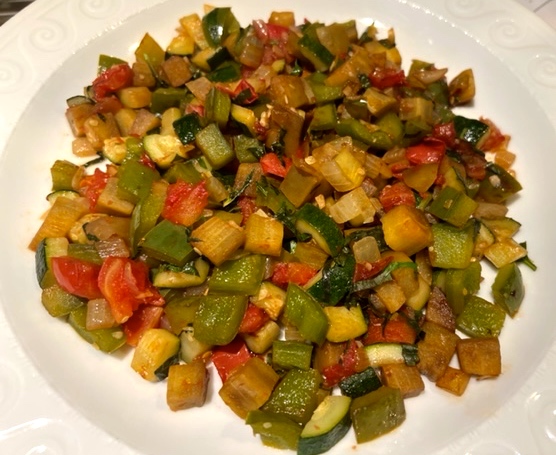
You too may want to try your hand at reinventing ratatouille in your kitchen. There's the New York Times classic recipe which is long and heavy on the olive oil.   I take a lighter hand to the vegetables, dicing and sautéing them in a skillet with a thin layer of hot olive oilThey are added to the pan according to the time it takes for them to cook through.  Stirring is a must, but the process is rapidThe veggies retain their color, shape and flavor when eaten together.  I stir in a splash of balsamic vinegar with a shower of thinly sliced basil leaves at the very end. They accentuate the natural sweetness of the vegetables and add a memorable aromatic finish. Link to my Ratatouille recipe.


REDISCOVERED RECIPES: JACKIE SHEN'S CRAB CAKES AND JALAPENO CREMA

Blog reader Bonnie Rabert wrote to thank me for posting a steady stream of recipes during the recent lockdown.  They inspired her to sort through the favorites she compiled during career as a food stylist in Chicago.  I asked if she would send me a few to share with my readers, and she did.

Among Bonnie’s “rediscovered” recipes was one that teased my memory.  It was a Crab Cakes with Jalapeño Crema from chef Jackie Shen, a name from the past that I couldn’t quite place. Thanks to Google, I did not have to agonize very long.

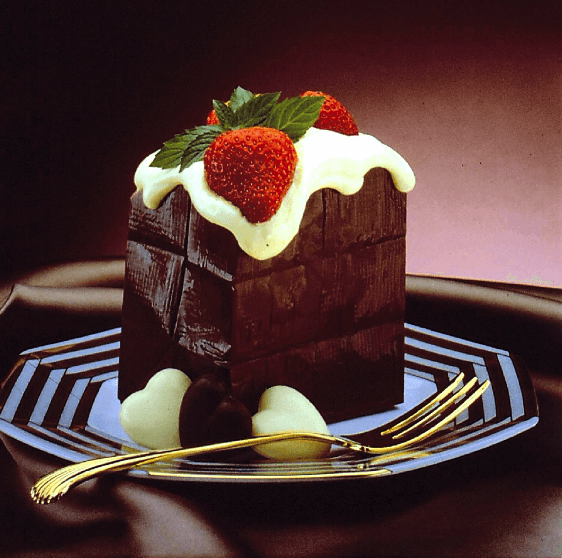
Jackie Shen came to the States from Hong Kong to study at the age of eighteen and rose to celebrity status on the Chicago food scene in the 90’s.  Her namesake restaurant in Lincoln Park introduced the city to French/Asian fusion cuisine.  Her best known creation, however, was a dessert, the chocolate bag, made by painting the inside of a popcorn bag with dark chocolate.  The bag was filled with white chocolate mousse and garnished with fresh berries.  When asked, Jackie claimed the idea came to her after watching a Julia Child program.

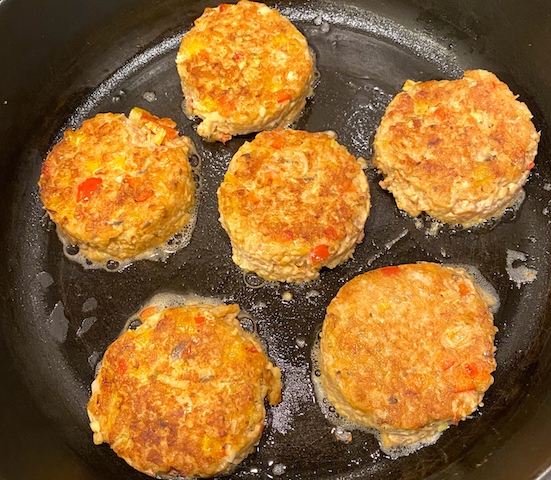
Jackie’s crab cakes and their crema turned out to be as delicious a combination as I’d hoped.  I used half lump crabmeat and half backfin to keep costs down.  The results were just as successful when I substituted a pound of canned wild salmon for crab My modifications to the recipe were minor.  I dissolved the dry mustard in a tablespoon of water before adding it to allow its flavor to develop.  I also replaced breadcrumbs with Panko.  By the way, the jalapeño crema makes an excellent base for salad dressing and a condiment spread on sandwiches.  That is, if there is any left over.

In 2012 Jackie ‘retired’ to New Buffalo, MI where she has opened Jackie’s Cafe for breakfast and lunch.  Thanks to Bonnie, I’ve rediscovered Jackie and am curious to know how her new career running a place where the locals can gather.  She’s one of those remarkable cooks whose cuisine makes you want to move next door.   Anyone up for a field trip to New Buffalo? 


CHEF JACKIE SHEN'S CRAB CAKES

2 eggs, beaten

¾ cup mayonnaise

½ teaspoon finely chopped garlic

½ teaspoon dry mustard

½ teaspoon cayenne

1 pound lump crabmeat, drained, sprinkled with lemon juice and broken into small pieces

¼ cup finely diced red pepper

¼ cup finely diced yellow pepper

2 green onions, white and light green, finely chopped

¾ to 1 cup dry bread crumbs 

Mix eggs and mayonnaise together in a bowl; add garlic, mustard and cayenne.  Add crabmeat, peppers and green onion.  Add ¾ cup dry bread crumbs to crab mixture.  If too moist, add more bread crumbs. Use a #40 scoop to portion mixture into a ring to shape.  Cover and refrigerate.  To cook, brown in a little olive oil over medium heat, turning to brown on both sides.  Finish in a 350 degree oven for 5 to 10 minutes.  Makes 12. 

Source: Chef Jackie Shen. First prepared in 1996


JALAPENO CREMA

1 small clove garlic, peeled, halved and any core removed

1 large jalapeno pepper, seeded, coarsely chopped

¼ cup fresh parsley leaves

½ cup fresh cilantro leaves

¼ cup extra virgin olive oil

2 tablespoons white vinegar

½ teaspoon salt

¼ cup sour cream

2 tablespoons mayonnaise 

In a blender, with motor running, drop garlic through opening in lid to chop finely. Repeat with the jalapeno.  Add parsley, cilantro, oil, vinegar and salt.  Cover and blend until smooth. In a bowl, combine sour cream and mayonnaise.  Whisk in jalapeno mixture until fully incorporated. Cover and chill to blend flavors. Makes 1 cup.

RHUBARB'S DARK SECRET


Rhubarb has a secret we would never suspect when we reach for its crimson stalks in the supermarketThis crop arrives before plants mature in home gardens for an unexpected reasonNature has given rhubarb the ability to grow in the dark. 


There’s a hitch, of courseRhubarb harvested in early Spring requires human help to ‘force’ its out-of-season growthThis practice was refined by English farmers in the 19th century, a recent discovery considering that the Chinese were employing its many medicinal properties in the first millennium BC.   This culinary benefit, like so many discoveries, was uncovered by accident. 


In the Spring of 1817, a staffer at London’s Chelsea Physic Garden found bright red ‘sticks’ (stalks) with small yellow leaves growing from a rhubarb plant which had been inadvertently buried in manureTheir flavor and texture were decidedly superior to those that ripened uncovered outdoors.   By 1877 the thirty square miles of Yorkshire countryside populated with windowless ‘forcing’ sheds, had earned the title, The Rhubarb TriangleThis plant would become a staple in the English diet through the Second World War and a lucrative export to all of Europe. 


There are limits to special powers, and rhubarbs forcing period is as short as it is sweet.  After spending two to three years growing outdoors, its “crown” (a root structure consisting of rhizome buds) is dug up and moved to a shed after the first frost in the fall.  Once the temperature in the shed is raised, the plant is stimulated to grow sticks from ‘eyes in the crown.  Over the next six weeks concentrated amounts of glucose, vitamins and other nutrients collect in sticks and prepare to spread into a large green leaf. 


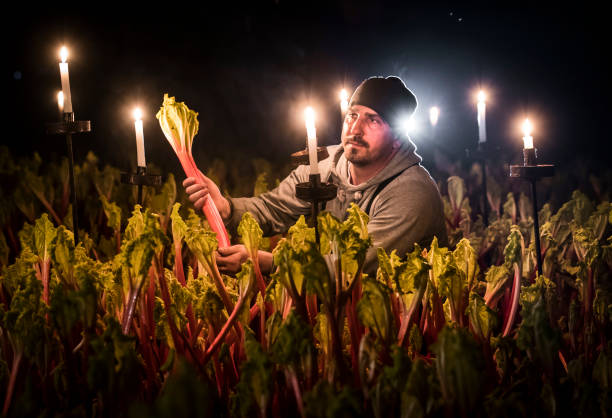
No joyWithout light and photosynthesis, a green leaf fails to develop. When sticks reach the height of 12” to 15”, they are carefully twisted free from the eyes in the crown, one by one, so another round of sticks can sprout.   The plants are so light-sensitive, they must be harvested by candlelightThe exhausted crowns can be reused after a rest period outdoors restores their starch levels.  Older crowns may also be divided into buds. 


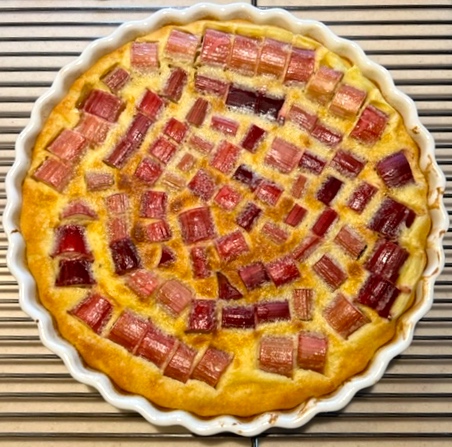
A Rhubarb Clafouti was among the recipes I prepared in a recent online class. This custard is the perfect foil for tender, sour-sweet Spring rhubarb. It's become a family favorite.


Enjoy! 


SEASONING TIPS FROM IMPERIAL ROME


simmer

If cooks can be said to have a ‘muse’ – an ethereal confidant and enabler- this season mine is Apicius the 1st century Roman gourmand.  Several hundred telegraphic descriptions of his favorite party dishes have survived him, though with a cautionary tale.  Apicius is said to have spent his entire fortune on extravagant entertaining and incessant traveling to find the best ingredients.  When his funds ran out he committed suicide rather than starve. The take-away message?  Practice excess in moderation.