PESTO PERFECT

pesto1

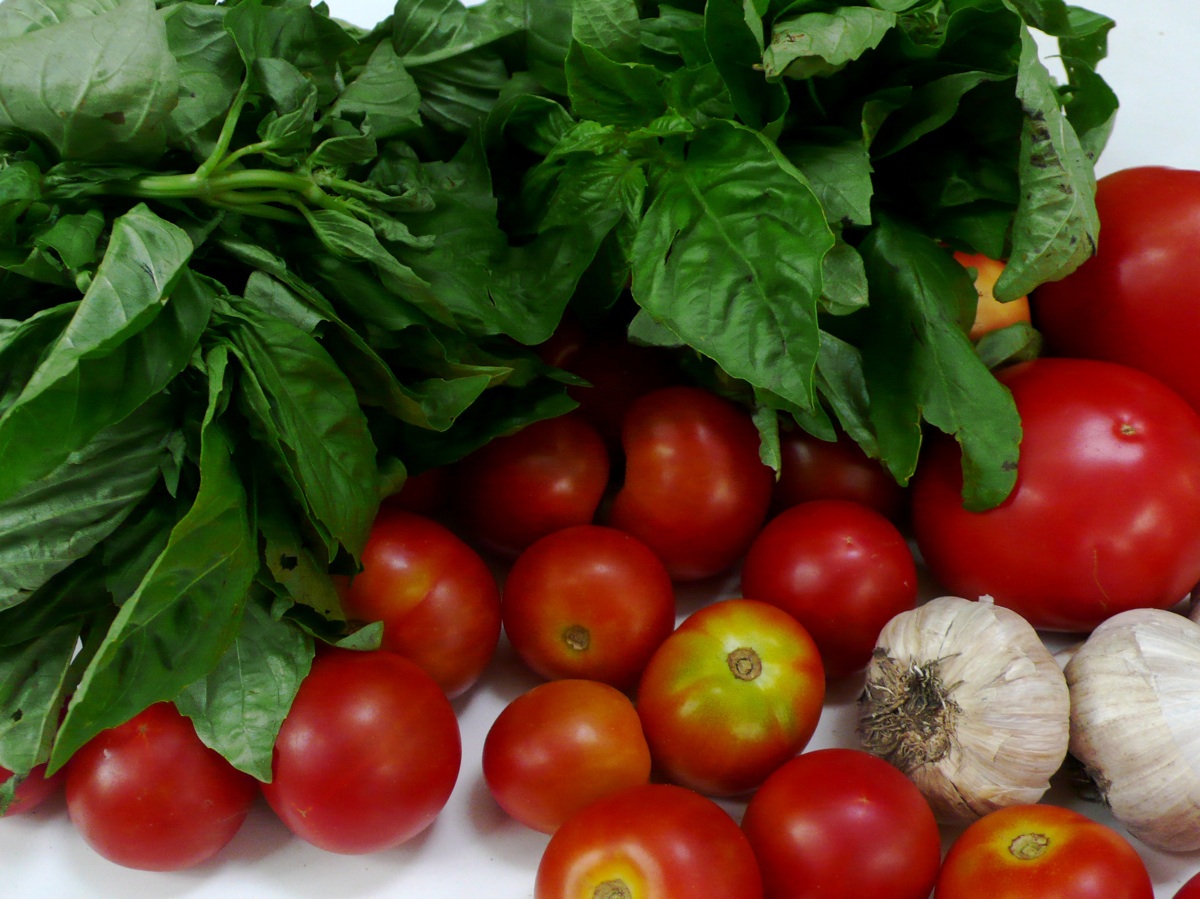
It’s August, and, thanks to our local farmers’ markets, the farm-to-fork time is a matter of hours not days.  This week, bouquets of fragrant, emerald basil and fresh garlic for pesto caught my eye.  Why decimate the basil in my small garden when I can buy an armload for little more than two-ounces in a plastic clam-shell at the supermarket?  

POMEGRANATE POWER

pom1
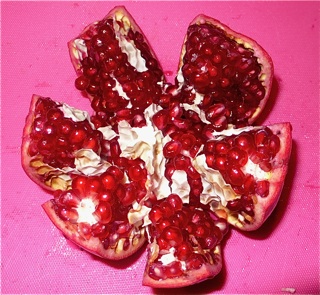
I held my breath as the young man began to dismantle a bowl of pomegranates one by one.   He was our house guest – I couldn’t tell him to take this impending mess into the backyard.  It was  twenty degrees outside!

POSTCARDS FROM PROVENCE

d99

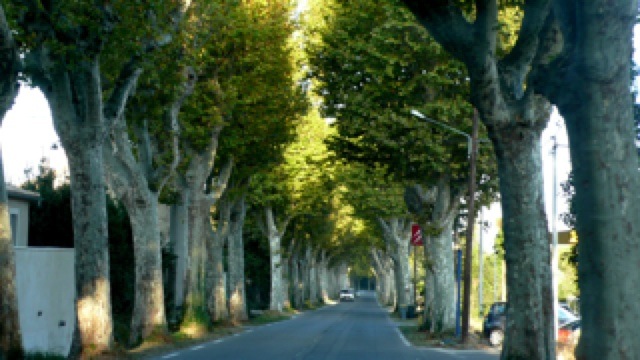
We’re on the road to St Remy on a bright October morning.  Towering plane trees shelter us from brilliant ’van Gogh’-blue skies while cool breezes ease the effects of a hot sun.   This is Indian summer in Provence.  We can’t believe our good fortune.

Potatoes in the Spotlight

 
January’s frigid temperatures and grey skies don’t get me down.  I chase the winter blues by searching culinary discoveries to share with my students.  My ingredient of choice this past month was none other than the homely potato.  It’s so easy to become complacent about the potato, as in “you want fries with that?”   It was time the potato took its turn as a culinary star.
 
When it comes to vegetable make-overs, I troll through cookbooks I’ve collected over the years rather than rather than try my luck with random Google searches on the internet.  In truth, I was on the lookout for a treasured 20 year-old paperback devoted entirely to potato recipes.  Its author, Joël Robuchon, is said to have won his first Michelin star in the 80‘s at his Paris restaurant, Jamin, with a simple potato puree.  I felt I would be in good hands.
 
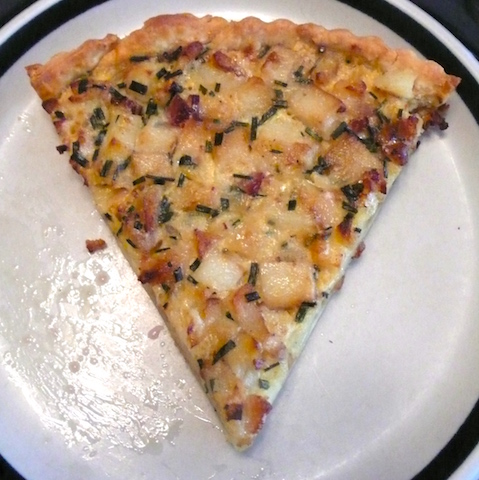
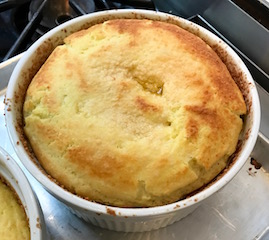
The book’s recipes for Potato Tart and Potato Soufflé suits my purposes perfectly.  Each dish makes a spectacular entrance, drawing ‘oohs’ and ‘aaahs’ of appreciation at the table.  I wondered, could a humble potato deliver the anticipated pleasure relying simply on eggs, butter, flour and milk?  Then I remembered Chef Robuchon’s famous Potato Puree contains just four ingredients: potatoes, cream, butter and salt.  It was worth a try.
 
Before starting to cook, I translated the recipe directions and metric measurements into their English equivalents.  Although the directions were helpful, they were, by necessity, concise.  The book’s authors assume the reader has a grasp of basic French culinary skills.  That’s where I come in.  These recipes made them great recipes to teach.
 
On a recent Saturday morning fifteen students joined me in the well-appointed kitchen of  Chicago’s Alliance Française kitchen.  We prepared both the potato tart and the potato soufflé with ease.  The speed with which our results were consumed confirmed my conviction that the potato can definitely take its place in the spotlight.  Links to the recipes follow.
Potato Tart 
Potato Souffle
Recipes adapted from Le Meilleur et le plus simple de la pomme de terre. by Joël Robuchon and Dr. Patrick P. Sabatier, Editions Robert Laffont, S.A. 1994

PRALINE MAGIC

Fat Tuesday is almost here, and with it the perfect occasion to conjure with Praline.  I’m all set to take a standard Sweet Potato Pie recipe and give it the ‘praline treatment’ in next week’s classes. Wait, what kind of  ‘praline’ do I have in mind?   

With all due respect, it is not the New Orleans praline, pronounced, praw-leen.  That city’s gift to the confectionery world is a stand alone product: pecan halves embedded in a cookie-like circle of sugar, butter and cream.  What I have in mind is equally addictive and contains just two ingredients.
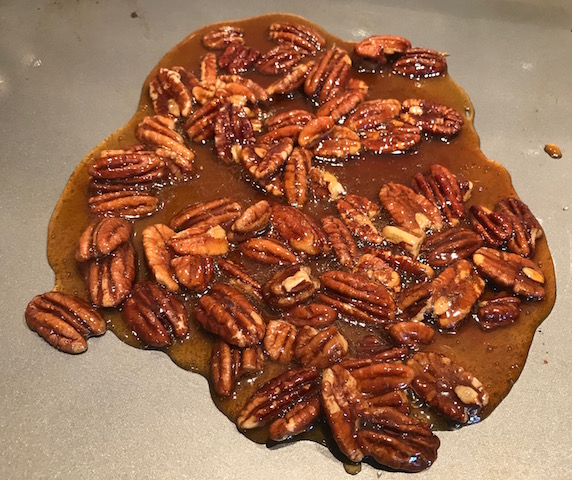
  

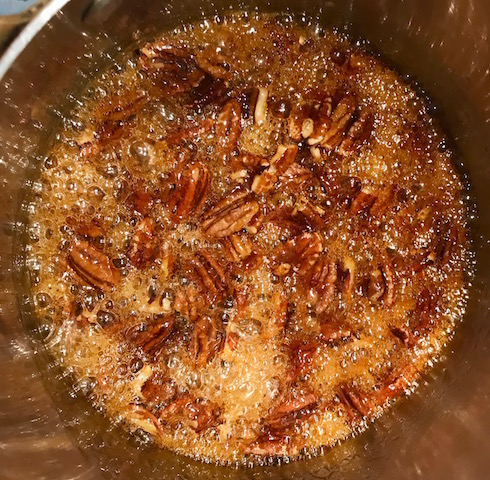
 Praline, the confectionery ingredient, consists simply of a nut (pecans, almonds or walnuts) coated with caramelized sugar.  It is coarsely ground and blended with other pastry ingredients where it has a synergetic effect but keeps a low profile.  Even when identified in a chocolate filling or buttercream, praline acts to enhance rather than stand out.

I like to think of caramelization as treating sugar to a controlled burn that leaves it with an agreeable bittersweet finish that accentuates the aroma of the nuts.   It’s a technique that has stood the test of time.  The original sugar glazed almond was created to aid in seduction in 17th century France.  Are you surprised?.  It was introduced to Louisiana from France as the Praslin in the 19th century.  Americans replaced the almond with the abundant native pecan and the rest is history. 
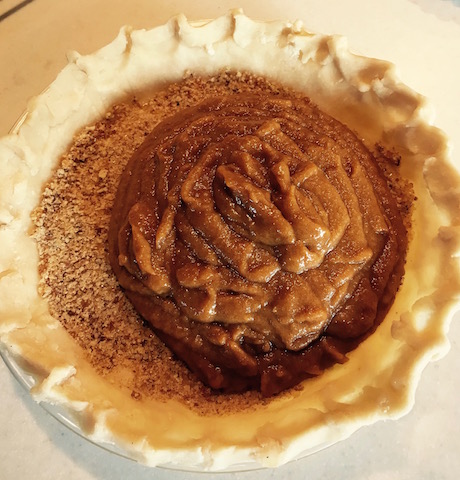
Here is the pie almost ready to bake.  I wanted to show the generous coating of praline on the bottom of the unbaked pastry shell.  The pie crust recipe is vintage Julia Child. I have mixed both butter and shortening into the flour for a tasty, easy to handle dough.  (The glass pie plate was buttered in advance to avoid sticking.)   After the puree of sweet potatoes, sugar, spices and eggs are smoothed over the praline, the pie will be ready for a 30 minute bake at 375 degrees.  At that point I remove the pie and sprinkle on another generous layer of praline powder.  The pie will bake at 350 degrees for another 30 minutes or until it is fully puffed and the crust is golden brown.
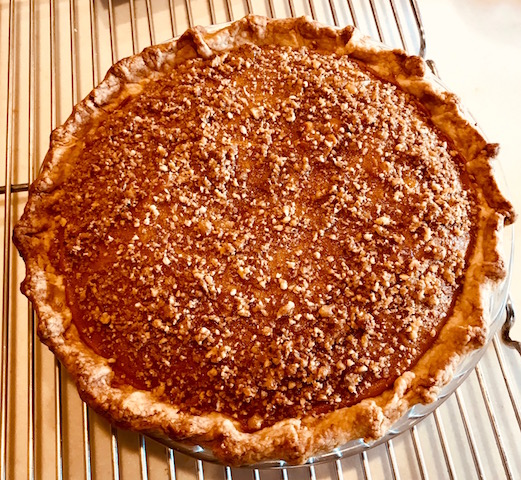
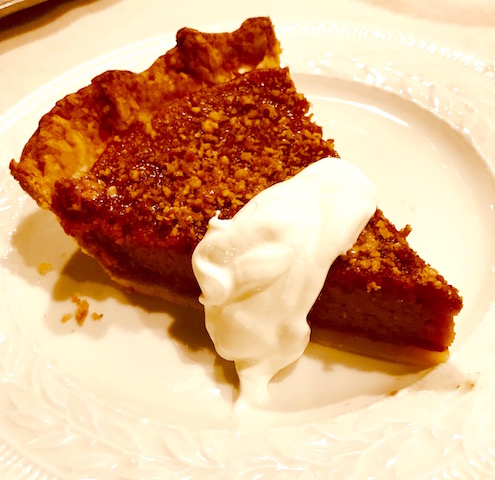
 

 A pie this festive deserves a garnish.  Ice cream and whipped cream are too sweet for my taste so we will fold several tablespoons of creme fraîche into Greek yogurt and spoon a generous amount over each serving.

 If there are leftovers, remember the day after Fat Tuesday this year is Valentine’s Day.  Better yet, make two pies!

Link to Sweet Potato Praline Pie recipe