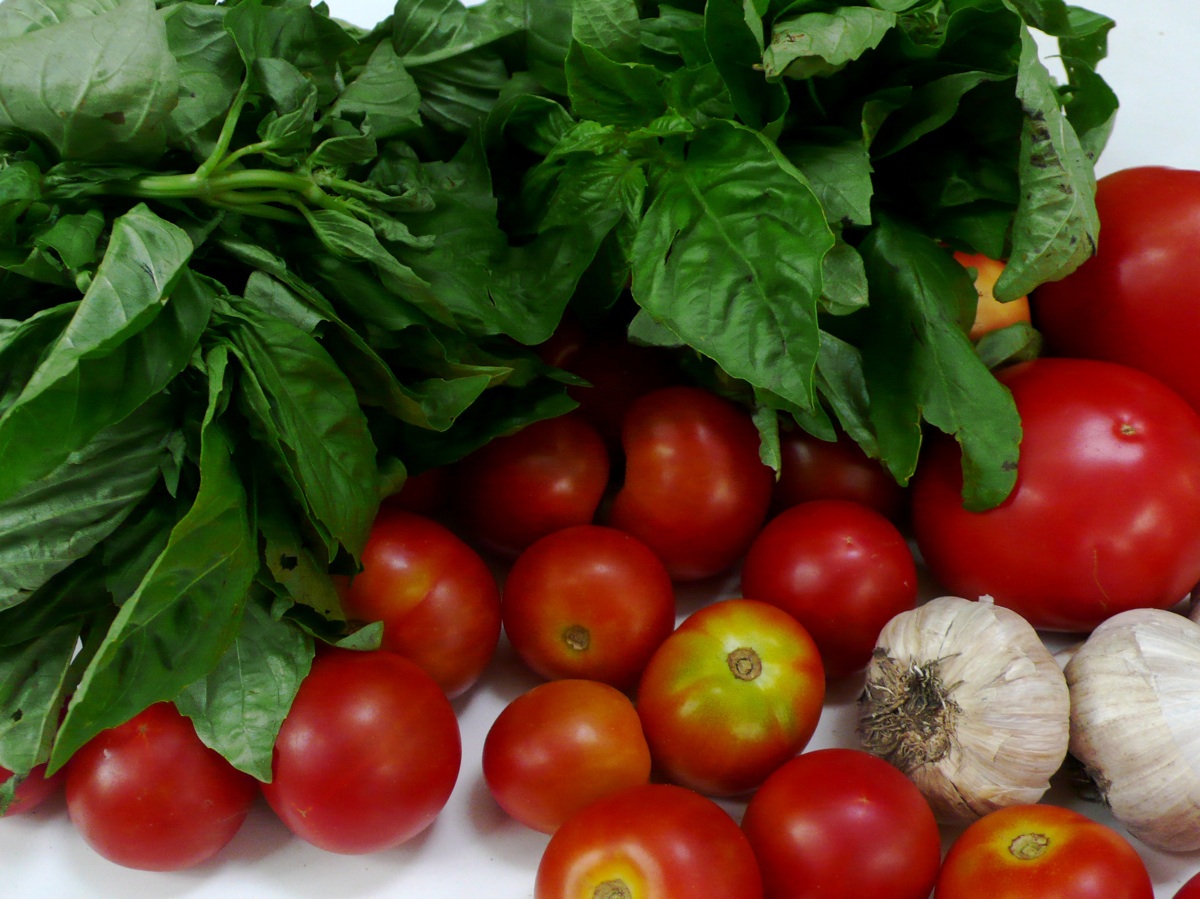
It’s August, and, thanks to our local farmers’ markets, the farm-to-fork time is a matter of hours not days. This week, bouquets of fragrant, emerald basil and fresh garlic for pesto caught my eye. Why decimate the basil in my small garden when I can buy an armload for little more than two-ounces in a plastic clam-shell at the supermarket?
Once made, I never seem to have enough of this spicy herb sauce for all my needs. I smooth it over ripe tomato slices, toss it with pasta, season vegetables and salad dressings with it and, spoon it onto cold soups and grilled meat. Am I forgetting something?
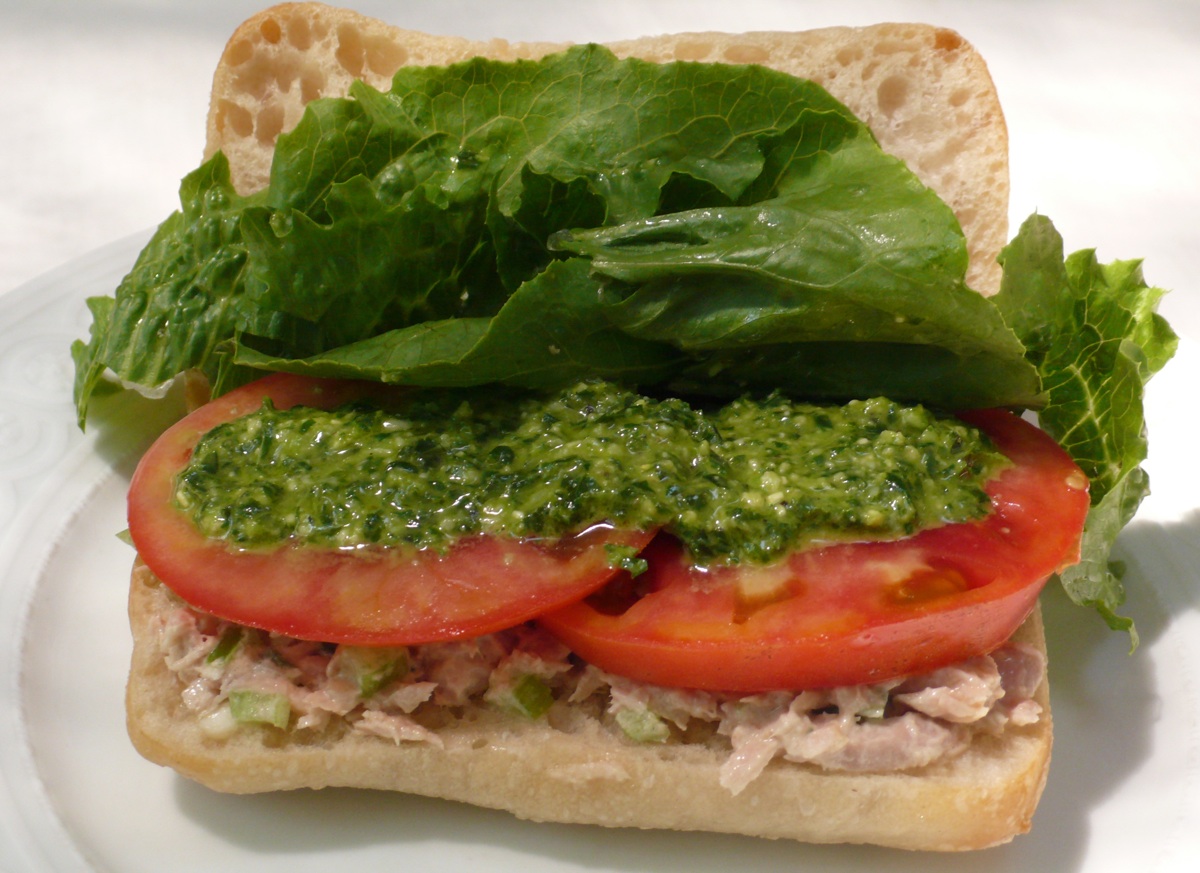
Yes, the recipe! The classic formula for pesto comes from the seaport town of Genoa in northwest Italy. I’ve made pesto every summer for so many years that the ingredients are hard-wired in my memory. However, this year I wondered, for the first time, how my pesto genovese compares with the Italian original.
Unfortunately, George nixed the idea of my taking a quick business trip to study pesto in Italy. (Why can’t I deduct it?) My travels on Google have had to suffice. It’s customary in Italy, I learned, to make small amounts of pesto by crushing small, freshly-picked ingredients in a mortar and pestle. (The name, pesto, comes from the verb pestare, to crush, to grind.) Genoans uproot small basil plants for their leaves, mix them with young garlic and hard, unaged cheese. The local Ligurian olive oil is mild and nuts from the European Stone Pine are particularly sweet.
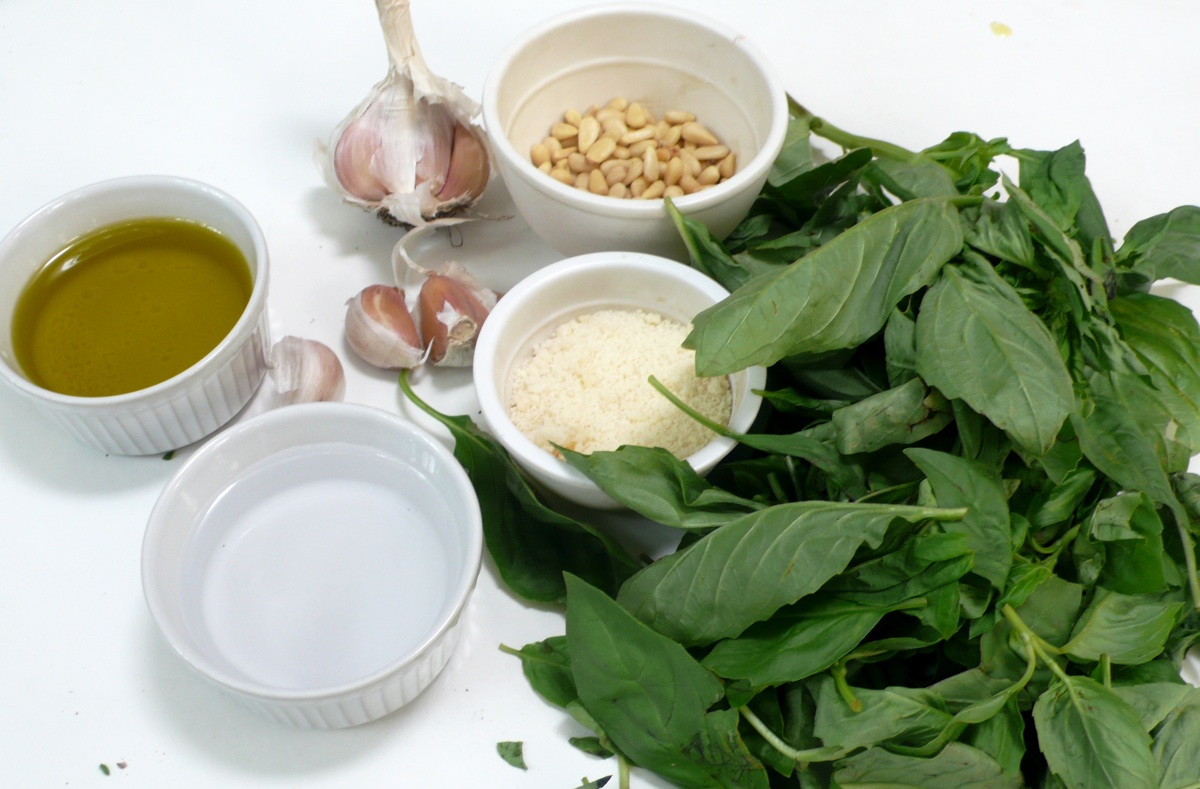
As I looked over the comparable ingredients on my kitchen counter, I realized that pesto from Genoa has as much in common with the American version as Peter Rabbit has with the Energizer Bunny. In addition to using peppery, mature basil, American cooks rely on stronger tasting pine nuts imported from Asia. Our garlic tends to have more bite as do the olive oils and the aged Parmesan we import. Purists are welcome to crush pesto, one recipe at a time, in a mortar and pestle. I rely on my willing slave, the food processor, to make by the cup.
The changes I’ve made in my pesto recipe to simulate the original seem minor now that I write them down. I blanch the garlic and basil before making a puree, and I add some cool water. The result is a less intense but more harmoniously flavored sauce that retains its brilliant color in storage. Welcome to pesto season.
LIGHT PESTO
(makes 1 cup sauce)
(makes 1 cup sauce)
2 cups Genovese basil leaves, packed
4 cloves garlic, divided
3 tablespoons pine nuts
1/4 cup grated Parmesan cheese
1/3 cup cool water
1/3 cup mild olive oil
1 teaspoon kosher salt and freshly ground pepper, to taste
- Submerge the basil leaves in boiling water for 30 seconds. Remove to an ice bath. Drain and squeeze water from the leaves. Place basil in the work bowl of a food processor or blender.
- Peel the garlic cloves. Halve three cloves lengthwise and submerge them in boiling water for 2 minutes. Drain and run cool water over them.
- Add all four garlic cloves, quartered, the pine nuts and cheese to the work bowl. Finely chop the mixture with a pulsing action. Scrape down the sides of the bowl.
- Pour in the water and oil with the machine running. Scrape down the sides of the bowl, season to taste, pulse briefly. Taste again, and adjust seasonings as needed.
- Store the sauce in a tightly covered glass jar. Refrigerate between uses. Sauce can be frozen in containers or frozen in an ice cube trays.
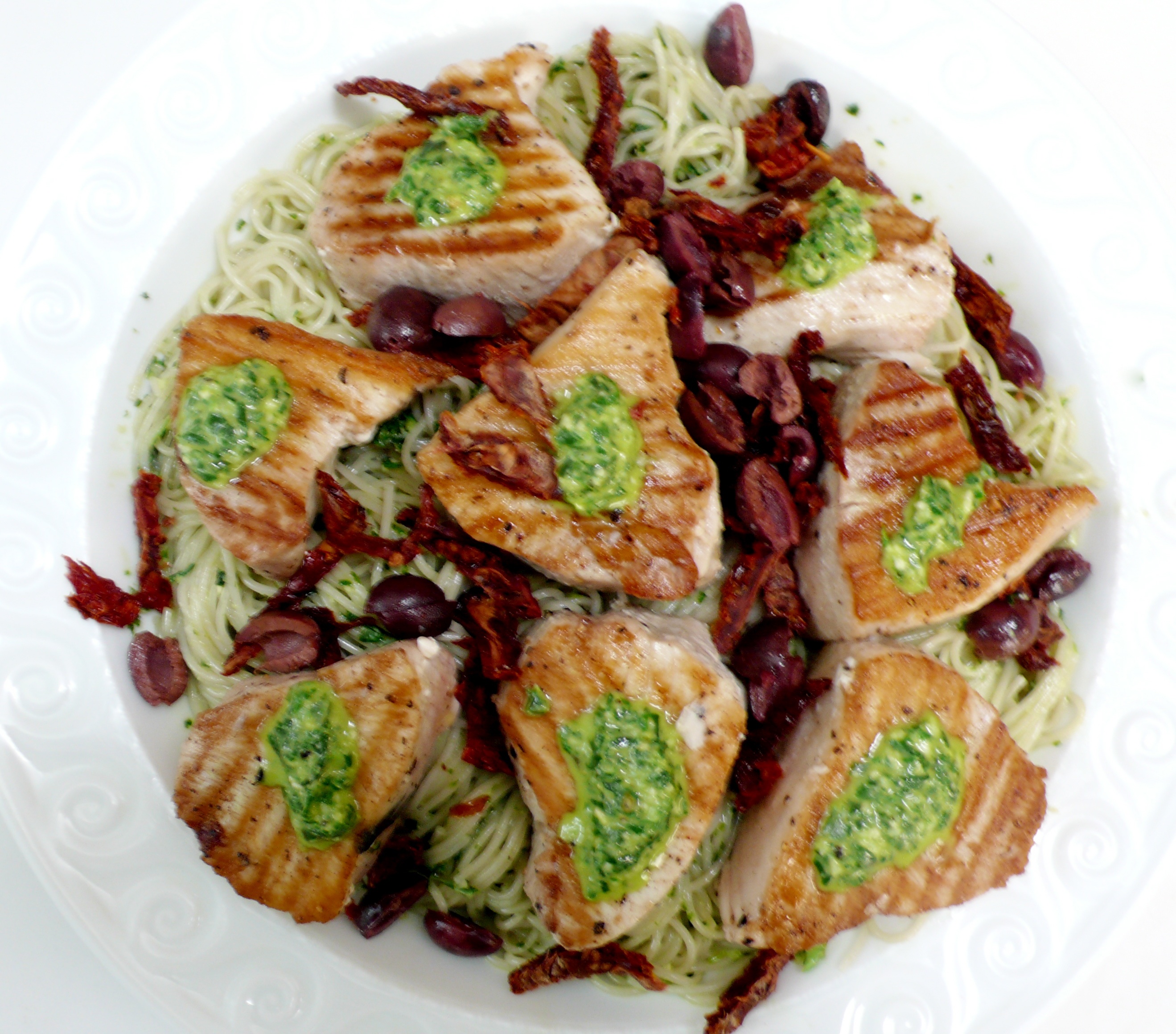
TUNA STEAKS WITH SPELT PASTA AND PESTO
(4 servings)
1 albacore tuna filet (1 1/4 pounds)(4 servings)
8 ounces spelt pasta
1/3 cup Light Pesto, more for garnish
Garnish: 1/4 cup each pitted nicoise olives, chopped and sun-dried tomato strips
- Thirty minutes in advance, remove the tuna from the refrigerator. Cut into 8 steaks, lightly salt and pepper.
- Preheat the grill. Wipe seasonings from tuna, coat surfaces with olive oil. Sear on the grill, 2 minutes each side (for 1” thick steaks). Let the tuna rest 10 minutes to complete cooking process.
- Bring 3 quarts water to a boil. Cook pasta, until it is just cooked through, about 5 minutes. Drain. Turn into a serving dish and toss with Light Pesto.
- Arrange tuna steaks over the pasta. Dab on sauce. Scatter on olives and tomatoes.

COLD TOMATO AND PEPPER SOUP WITH PESTO
(serves 6)
4 cups ripe tomatoes, cut in 1” cubes(serves 6)
1/2 cucumber, peeled and cubed
1 green pepper, seeded and cubed
1 small white onion, peeled and cubed
1 small clove garlic, peeled and chopped
1/2 cup basil leaves, rolled and thinly sliced
2 slices day-old bread, torn into small pieces
1/4 cup olive oil, divided
2 tablespoons red wine vinegar
1 tablespoon balsamic vinegar
½ cup water, or as needed
Sea salt and freshly ground black pepper
6 tablespoons Light Pesto
- Combine pieces of tomatoes, cucumber, pepper, onion, garlic, basil and bread. Pour on 2 tablespoons olive oil and both vinegars. Toss this with your hands to mix. Cover and refrigerate overnight.
- Transfer the ingredients to the work bowl of a food processor or blender. Add the remaining olive oil and ½ cup cool water and puree. Pass the soup through the fine strainer of a food mill.
- Thin the soup with more water as desired. Season it with salt and pepper. Chill for 1-2 hours. Serve with a spoonful of Light Pesto in the center of each soup bowl and stir it in as you eat.
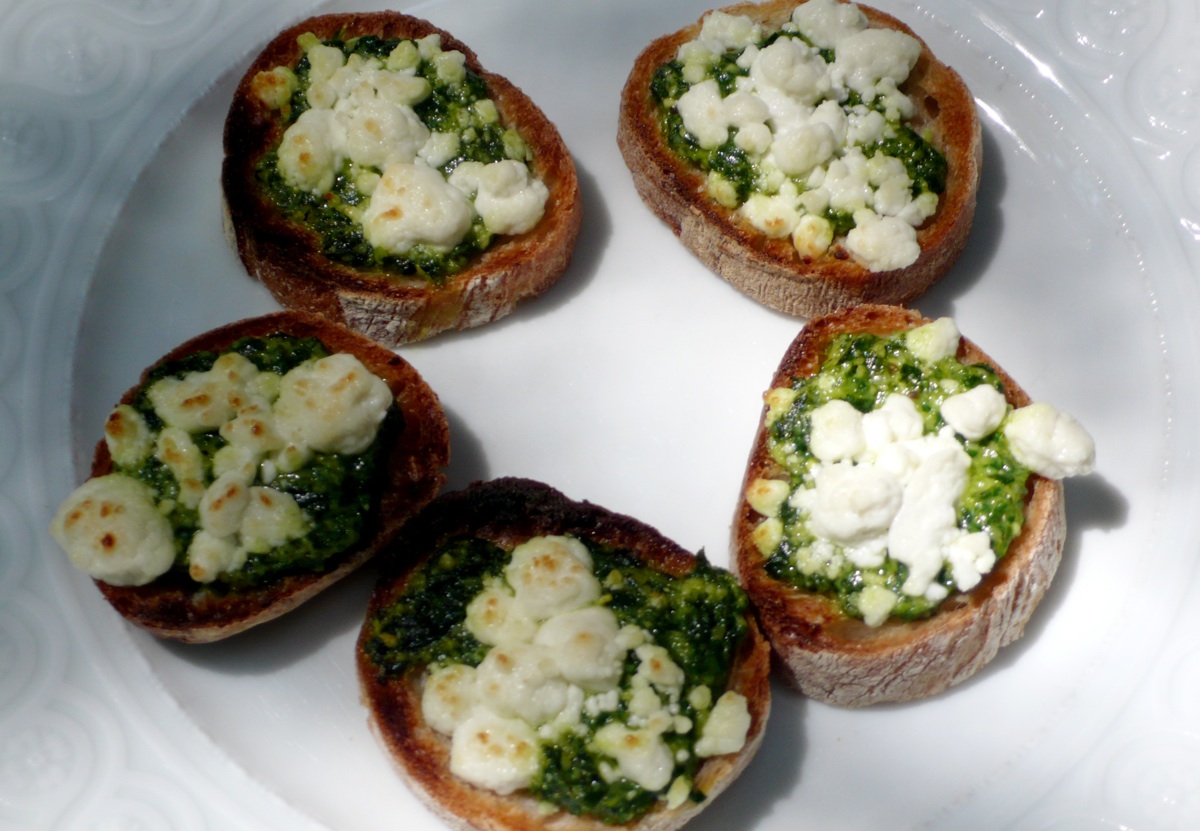
TOASTED PESTO AND GOAT CHEESE ROUNDS
(serves 4 - 8)
24 baguette rounds, toasted(serves 4 - 8)
1/3 cup Light Pesto
1/3 cup crumbled goat cheese
- Spoon pesto on each slice, top with goat cheese and brown lightly under the broiler.
- Serve warm or at room temperature.
SOURCES: "Why We Love Pesto" in the current Saveur Magazine and Nature, simple, sain et bon by Alain Ducasse.
