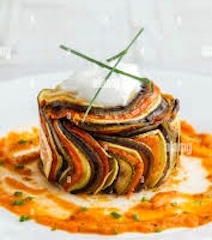
Welcome to ratatouille season. Cooks and gardeners have been waiting for late summer when this rustic vegetable stew tastes its best. Ratatouille's quirky name is a riff on French military slang for grub, ‘rata’, and ‘touille’, which means to stir or toss. The resort city of Nice claims to be ratatouille’s hometown, but mixtures of eggplant, tomatoes and peppers and onions are commonplace in countries surrounding the Mediterranean What’s amazing is the worldwide fame this simple dish has achieved in the past fifty years.
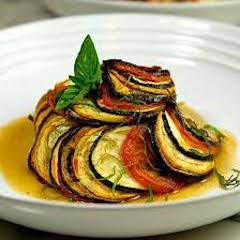
Ratatouille first drew public attention when aspiring young Chef Michel Gerard gave it a gastronomic makeover in the 1970's. Just as her fairy godmother transformed Cinderella, Gerard thinly sliced ratatouille's
normally rough-cut vegetables and fanned layered slices in concentric circles on a plate for a glamourous presentation. This naturally healthful dish became a signature dish in Gerard’s disruptive, low-fat cuisine, 'Cuisine Minceur'. He christened his elegant version, Confit Byaldi, a name already given to Turkish stuffed eggplant, Imam Bayildi, which literally means “the Imam fainted”.
Gerard’s spa cuisine and his Confit Byaldi might have faded in the annals of French gastronomy had Pixar Films not chosen both the original name, beginning with 'rat', and its fine dining appearance as metaphors in the storyline of their 2006 animated feature. The film begins with an unlikely rodent hero with an equally unlikely palate who ingratiates himself with the kitchen staff of a failing French restaurant. In addition to his keen sense of taste, rat has the uncanny ability to channel the restaurant’s chef-owner who died rather than face the decline of his restaurant. Tension builds near the film’s end as we watch the rat instruct a clueless young cook in the preparation of Confit Byaldi. The dish has been ordered by the ghoulish food critic whose review will determine the restaurant's fate.
Pixar hired American Chef Thomas Keller to update Gerard’s Confit Byaldi for this film. Keller created a more structured presentation of vegetable slices and added two sauces. At the film’s climactic moment, critic Anton Ego casts a skeptical eye at his precious vegetable serving. When the first bite delivers flavors that send him reeling back to beloved childhood memories of his mother’s ratatouille, he hungrily gobbles up the rest. Anton writes a glowing review, saves the restaurant’s reputation as well as the audience’s confidence in food critics.
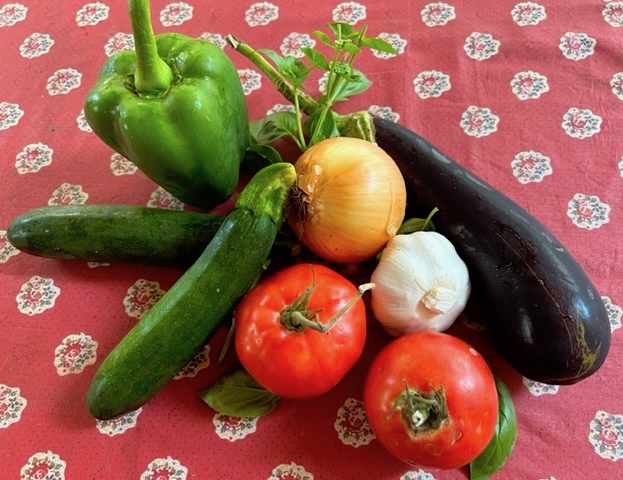
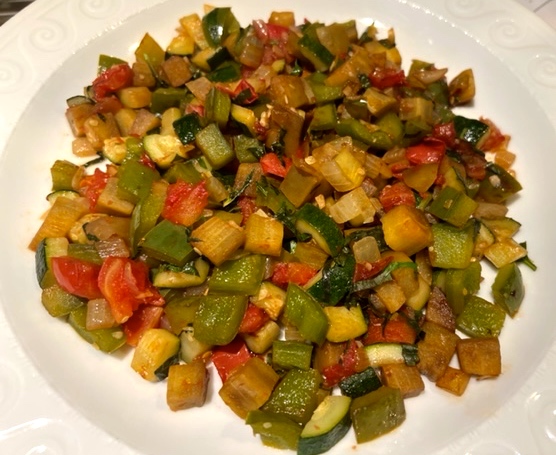
You too may want to try your hand at reinventing ratatouille in your kitchen. There's the New York Times classic recipe which is long and heavy on the olive oil. I take a lighter hand to the vegetables, dicing and sautéing them in a skillet with a thin layer of hot olive oil. They are added to the pan according to the time it takes for them to cook through. Stirring is a must, but the process is rapid. The veggies retain their color, shape and flavor when eaten together. I stir in a splash of balsamic vinegar with a shower of thinly sliced basil leaves at the very end. They accentuate the natural sweetness of the vegetables and add a memorable aromatic finish. Link to my Ratatouille recipe.