Rhubarb has a secret we would never suspect when we reach for its crimson stalks in the supermarket. This crop arrives before plants mature in home gardens for an unexpected reason. Nature has given rhubarb the ability to grow in the dark.
There’s a hitch, of course. Rhubarb harvested in early Spring requires human help to ‘force’ its out-of-season growth. This practice was refined by English farmers in the 19th century, a recent discovery considering that the Chinese were employing its many medicinal properties in the first millennium BC. This culinary benefit, like so many discoveries, was uncovered by accident.
In the Spring of 1817, a staffer at London’s Chelsea Physic Garden found bright red ‘sticks’ (stalks) with small yellow leaves growing from a rhubarb plant which had been inadvertently buried in manure. Their flavor and texture were decidedly superior to those that ripened uncovered outdoors. By 1877 the thirty square miles of Yorkshire countryside populated with windowless ‘forcing’ sheds, had earned the title, The Rhubarb Triangle. This plant would become a staple in the English diet through the Second World War and a lucrative export to all of Europe.
There are limits to special powers, and rhubarbs forcing period is as short as it is sweet. After spending two to three years growing outdoors, its “crown” (a root structure consisting of rhizome buds) is dug up and moved to a shed after the first frost in the fall. Once the temperature in the shed is raised, the plant is stimulated to grow sticks from ‘eyes’ in the crown. Over the next six weeks concentrated amounts of glucose, vitamins and other nutrients collect in sticks and prepare to spread into a large green leaf.
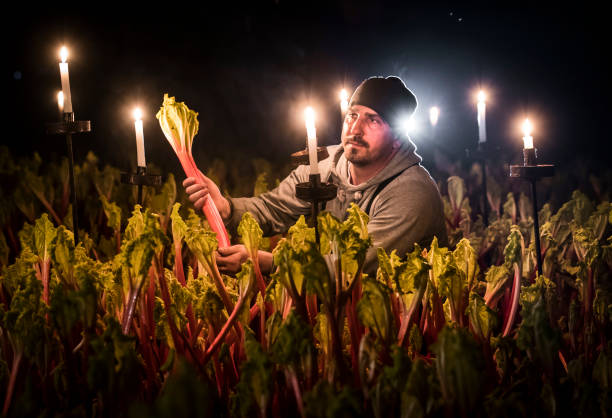
No joy. Without light and photosynthesis, a green leaf fails to develop. When sticks reach the height of 12” to 15”, they are carefully twisted free from the eyes in the crown, one by one, so another round of sticks can sprout. The plants are so light-sensitive, they must be harvested by candlelight. The exhausted crowns can be reused after a rest period outdoors restores their starch levels. Older crowns may also be divided into buds.
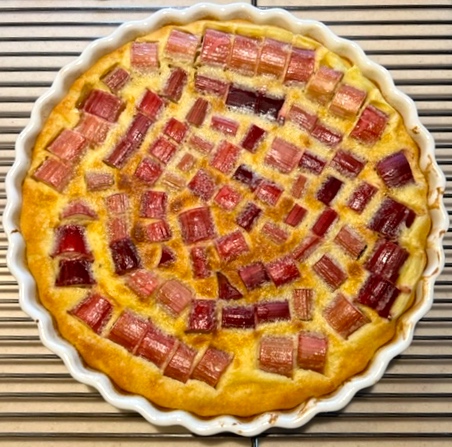
A Rhubarb Clafouti was among the recipes I prepared in a recent online class. This custard is the perfect foil for tender, sour-sweet Spring rhubarb. It's become a family favorite.
Enjoy!