If you’re tired of letting recipes run your life, this story is for you. It’s a mouthwatering tale that tracks the evolution of a Quiche Lorraine recipe from a Paris kitchen to a suburban high school and ends at Chicago’s French cultural center. You may ask, what is there to change when the recipe consists of a pastry shell, cream, eggs and bacon? More than you might imagine.
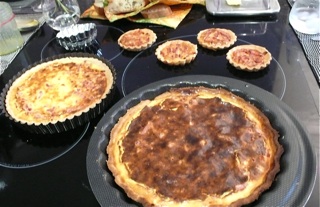
Quiche #1: I invited Paris friends to a bake-it-yourself luncheon using a “classic” Quiche Lorraine recipe from the internet. I’d forgotten one of the participants had actually grown up eating quiche in the Lorraine region of France. She told us Quiche Lorraine was usually a quick evening her mother made at home, not a big deal.
We jettisoned the printed directions and did what the natives do. We did not prebake the crust (Julia forgive me!), used the richest cream and added a tablespoon of flour to the custard. Finally, we left the QL in the oven until the top was a deeply browned.
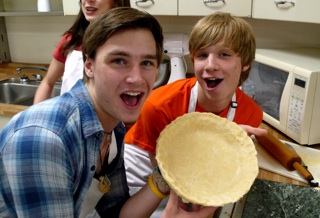
Quiche #2: Once back in the states, I took a slightly different recipe to a nearby high school for twenty French students to prepare. I substituted Crisco for a third of the butter in the crust making the dough easier to handle at room temperature. Supermarket smoked ham had to stand in for French lardons.
The teens watched me mix the dough by hand, roll it and fill the pan then assemble the custard. I explained each step in French, and teams of four carefully repeated what they’d seen at stations around the room. The results were impressive and tasty, but they knew it wasn’t the real thing. “It taste a lot like breakfast ham and eggs,” one student commented.
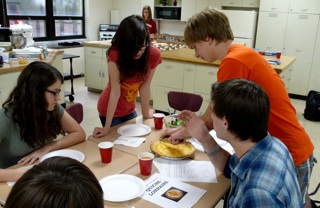
Quiche #3: This recipe underwent a major make-over for my class at the Alliance Francaise last weekend. We prepared and prebaked a crust using Joel Robuchon’s pate brisee recipe, one that’s more easily made in the food processor. In place of ham or bacon, we chose spring ingredients for our three tarts: asparagus with goat cheese, wild mushrooms and rhubarb.
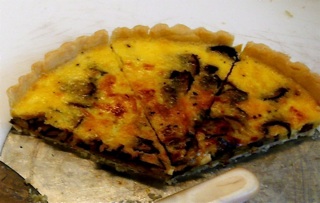
I say quiche; you might say tart, but the basic ingredients remain the same. Skip a step here, add an ingredient there – recipes are made to give way to the needs of each situation not the other way around. Just like politics, all recipes are local!
