Americans need to pull out a dictionary before ordering steak in France. We discover the French entrecote translates as a rib steak and a faux-filet as a sirloin. Just don’t order it expecting the taste of home. Anthony Bourdain described his first experience with the strong meat flavor and sinewy texture of an onglet (hanger steak) as, “a little scary”. But he was soon hooked.
The most accurate definition of terms like bavette, paleron and onglet don’ t prepare us for the taste of French beef. And, at last count, the list of possible cuts topped 30 - enough to stump even a proficient menu reader. These steaks originate in the belly of the cow, the shoulder, under the loin and at the top of the leg.
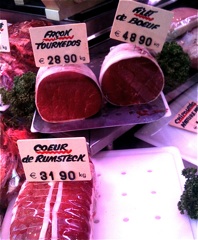
The motivation for searching tender cuts in all possible parts of the cow began in hard times. They later became the unattractive bits the butcher was likely to keep for himself. Today these morsels are as costly as steaks from loin. So why are French butchers still excavating for these unlikely bits and selling them as premium cuts?
The answer is a dirty little secret about French beef that’s recently been brought to light. The young generation of artisan butchers are protesting the split between breeding and butchering beef in France - between maintaining the purity of cattle races and meeting marketplace demands for tender, flavorful meat. French cattle, bred to produce milk and meat, can take up to 40 months to mature. The premium cuts from this purebred meat is inevitably lean, tough and expensive. That’s why steaks have to be eaten rare or rosy.
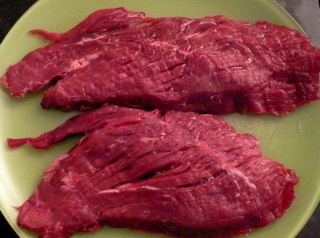
Young butchers are now demanding that cattle raisers breed animals that mature faster and develop flavorful muscle mass on a grass diet rather than energy-intensive cereals. That would mean inter-mixing the Limousin, Charolais, Saler and Aubrac races. Cattle producers resist. They feel they are upholding French patrimoine, national heritage, from intrusive marketplace values.
This debate within the French culture is making waves in the European community. Increasing amounts of French beef are exported because French consumers consider it too tough. The government has tried to help by offering price supports to farmers who raise veal that is slaughtered at three to six months. This young, less expensive French beef aggravates France’s trading partners without addressing the butchers’ complaints. Those who serve high-end customers are beginning to import Wagyu and Angus beef from Spain to sell in Paris.
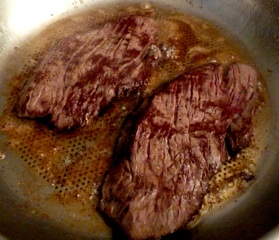
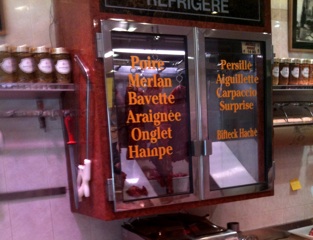
Meanwhile, small butcher shops, such as the one I frequent on rue Caulincourt, separate loin and rib roasts from the flavorful ‘“butchers’ steaks”. My butcher displays the latter in a special cabinet on the wall behind the counter. His selection is printed on the glass door: merlan, bavette, l’araignee, hampe, onglet. These odd-shaped pieces, each weighing one kilo, hang from hooks behind the glass. Exposure to air allows them to age, unlike the better-known rib and tenderloin larded roasts that sit in a case under the counter. (Why there is this difference in aging practices remains a mystery.)
When I order one of these hanging cuts, the butcher asks how many people I am serving. With one hand pressing the meat against the board, he cuts a single half inch thick slice across the grain for each person. At home, I pat the slices dry and sear both sides in a dry. preheated non-stick pan for a minute or two on each side. If the meat is just a half inch thick, I cover the slices and let them rest on a plate for five to seven minutes before serving. If the steaks are thicker, I place them in a 275 degree oven for five to ten minutes, then remove them to rest. My goal is a bright pink interior, never more cooked than a point. They don’t taste of much when cooked through to medium.
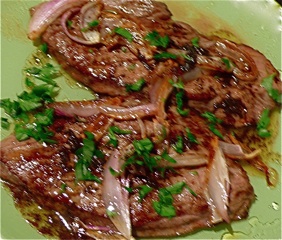
In the time it takes for the meat to rest, I can sauté shallots in butter or simmered creme fraiche and green peppercorns. Either one makes a great topping. Eating well at home doesn’t get any easier or better than this.
When I’m In Chicago, I purchase the tasty French onglet at Paulina Market on North Lincoln Ave by asking for a hanger steak. If it’s the fleshy strands of bavette I crave, then I shop for a skirt steak. My current favorite cut is the araignee or spider steak which is incredibly tender but unevenly thick with an irregular outline. It’s one of those treats you have to cook for yourself in Paris.
