
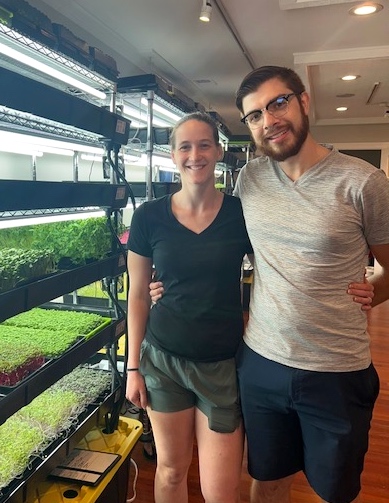
A unique farming operation is operating in downtown Lemont, Illinois, a sleepy suburb bordering the I & M Canal, thirty expressway miles southwest of Chicago. Spira Farms is housed in the kind of nondescript storefront typically occupied by an insurance agency or a shop selling sports memorabilia. In this small space Chris and Caitlyn Borek grow more than enough plants to fill the produce section of the nearby grocery store.
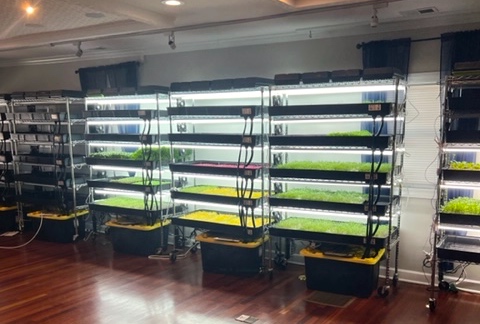
A peek in the windows reveals glowing rows of LED lights hung above Metro Racks five rows high each shelf occupied by black trays. A visitor will find the interior space otherwise empty and quiet except for the soft whirring of moveable fans set at different heights around the room. This open room is a carefully controlled ecosystem teeming with life. Each tray is packed with thousands of tiny plants.
Chris has been building out his microgreen farm, step-by-step, over the past four years when not at work as a data analyst. He is focused on creating a self-sustaining agricultural process rather than simply servicing the next food trend. In Chris’s words, he aims “to close the loop” with his farm of miniature plants.
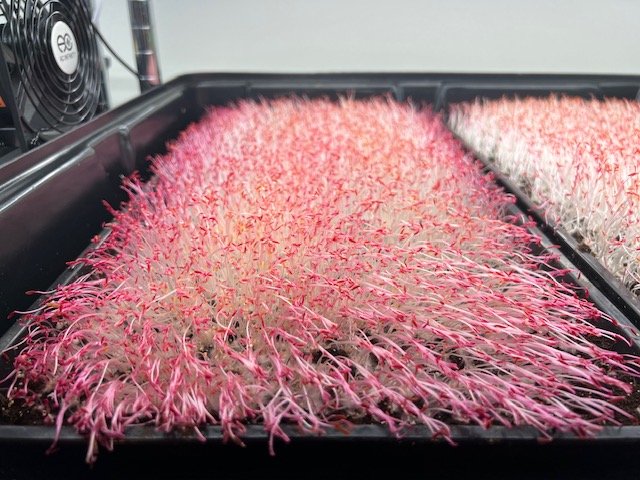
Amaranth microgreens
Among his ambitious plans, Chris hopes to offset the cost of electricity that maintains the farm’s exacting growing conditions with solar panels mounted on the building’s roof. Another project is finding a way to regenerate the soil between harvests. He has already eliminated plastic packaging by using PLA bags and clear clamshell containers made from corn or sugarcane. Caitlyn recently quit her day job to help grow, harvest and deliver their greens to surrounding markets and weekly subscribers.
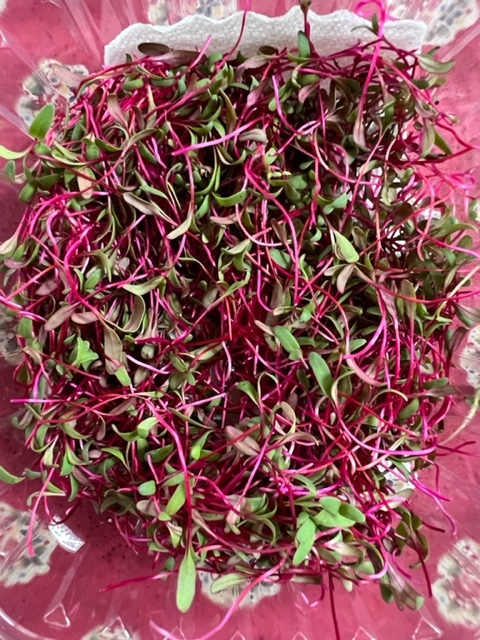
Beet microgreens
Microgreens themselves are awe-inspiring in their willfulness and efficiency. Every seed contains an embryo packed with nutrients and a growing code. By the time a plant is a week old and a four inches high, it will be easily 25 times more nutritious than when reaches maturity, even if one were to eat the entire plant. In other words, a microgreen uses 25 times fewer resources for the same nutritional content. This natural process takes just a few days in a clean, shallow layer of garden soil with the proper air temperature, lighting and water. Wait for it.......Voila!
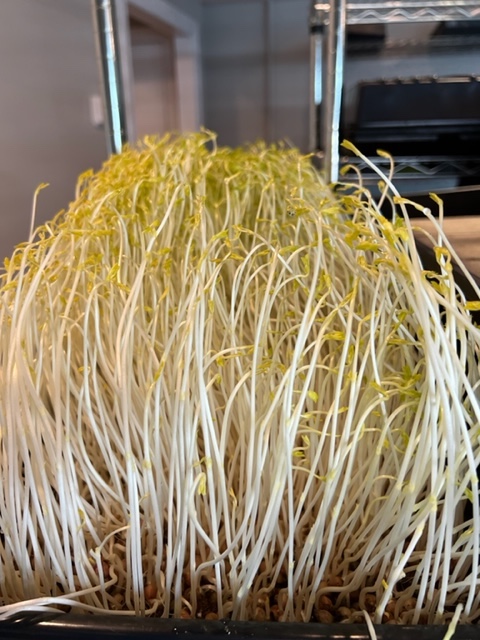
Speckled Pea sprouts grown in the dark which keeps them sweet and great for snacking
The second best reason to add microgreens to one’s diet is their intense flavor. There’s no need to consult a recipe. Eat them raw, add them just before serving any dish (except, maybe, oatmeal) and enjoy. Let me suggest adding a layer of crunchy mustard sprouts to a sandwich, folding radish sprouts into a salad or scattering arugula sprouts over seared salmon. It almost goes without saying that the the appearance of microgreens can add dramatic color and visual interest wherever they appear. A two ounce package of sprouts will garnish six servings and remain fresh for ten to twelve days when refrigerated between uses.
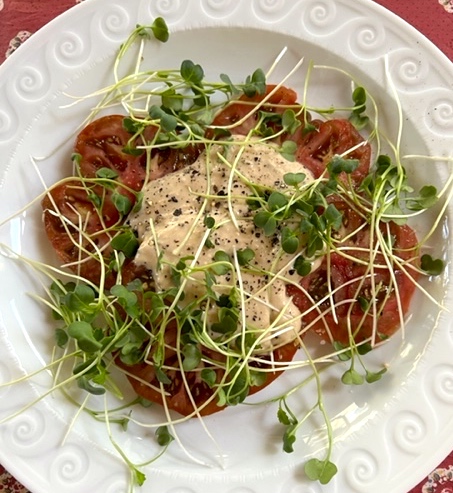
Tonnato Sauce over tomatoes with Spicy Radish greens
