
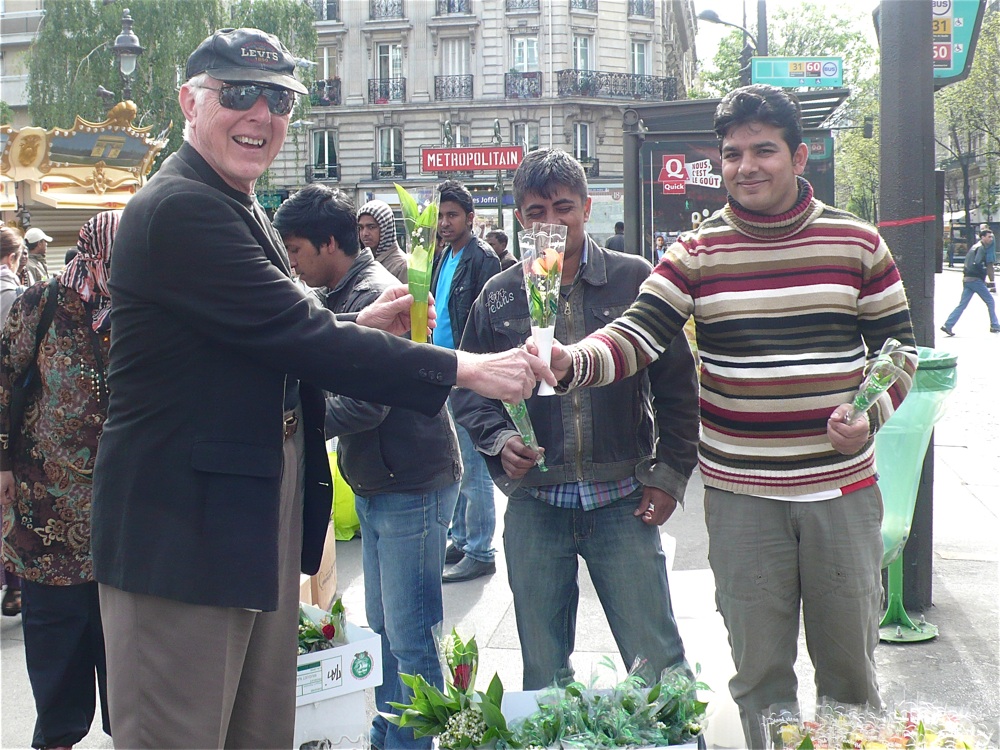
Parisiens buy an extra baguette on the last day in April. They know the town will shut down on May 1. The occasion is Workers Day, the Fête du Travail. Neighborhood cafes are packed with families enjoying a meal and the warm weather. Every second person carries a lily of-the-valley nosegay. These are sold on street corners by aid agencies. Paris waives the sales tax this one day. It's a sign spring has arrived.
Why is this holiday taken so seriously? I asked my neighbors one May 1st evening over drinks. Someone did a quick Google search and came up with the answer. I, a Chicagoan, was told that May Day commemorates the 1886 strike in Chicago at the McCormick Reaper Works. Four workers died at the hands of the police as they marched up Michigan Ave. The next day, May 1, as an angry crowd reassembled at Haymarket Square, a bomb went off killing four policeman. Although the source of the explosion was never found, four workers were later convicted.
The Chicago strikers were demanding an 8-hour work day at a time when a 100 hour work week was the norm. By 1890 union workers around the world had chosen May 1 to demand an 8 hour work day. It took 30 years to achieve this goal in Europe. Americans waited until 1938 for the passing of the Fair Labor Standards Act. Congress moved quickly, however, to separate this holiday from its international context. In 1894 Congress moved Workers Day from May 1 to the first Monday in September and renamed it Labor Day.
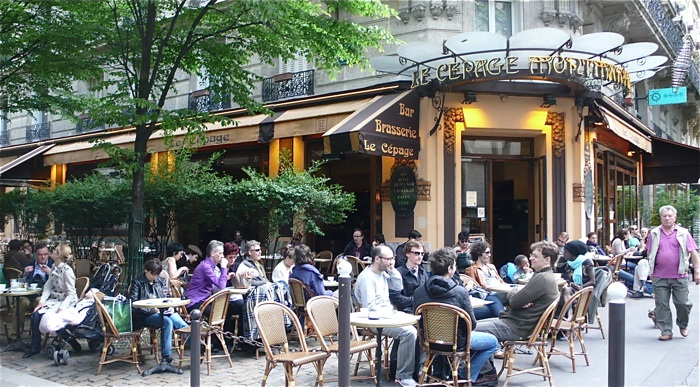
The work force in France continues the spirit of the Fete du Travail with its proud tradition of labor strikes. There were two just last week. The first, an editors strike, left Paris without its major newspapers for two days. Then, with dramatic flair, hundreds of farm tractors from all over the country converged on the Champs Elysses blocking traffic for fellow citizens and reminding the government that its current agricultural subsidies are too low.
The French take the concept of the Egalite very seriously. Whether or not these strikes have long-term consequences is an issue for another discussion.
